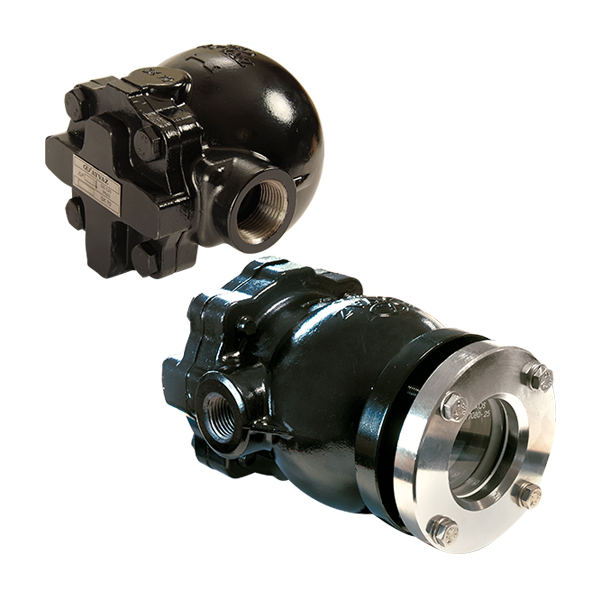
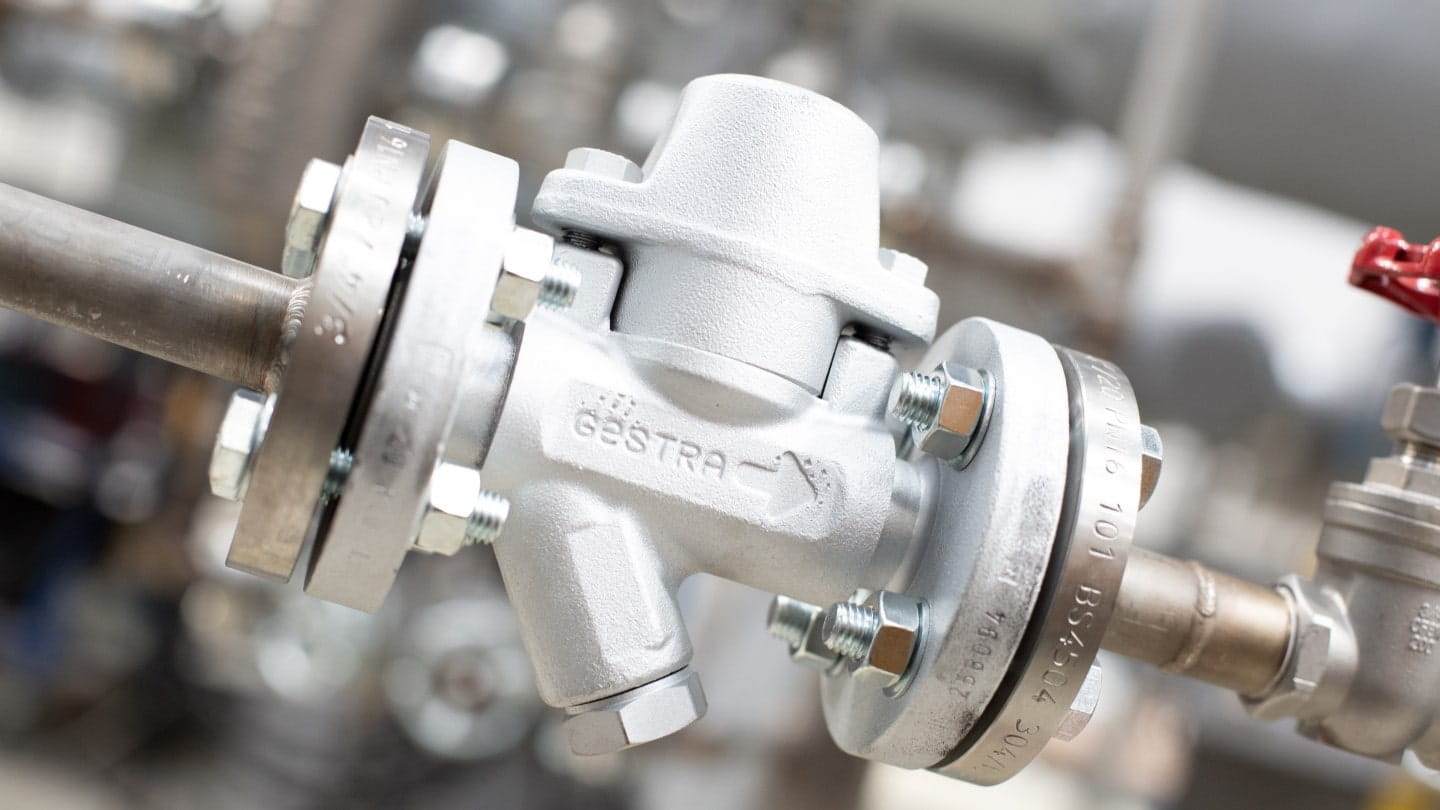
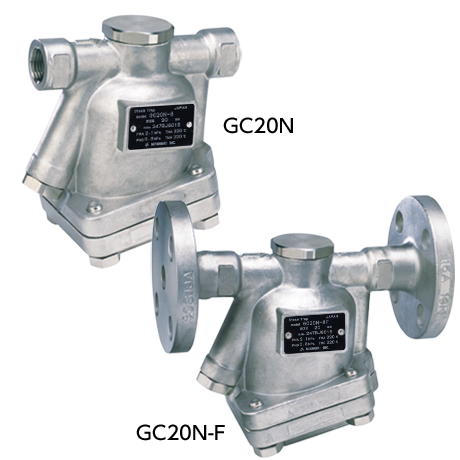
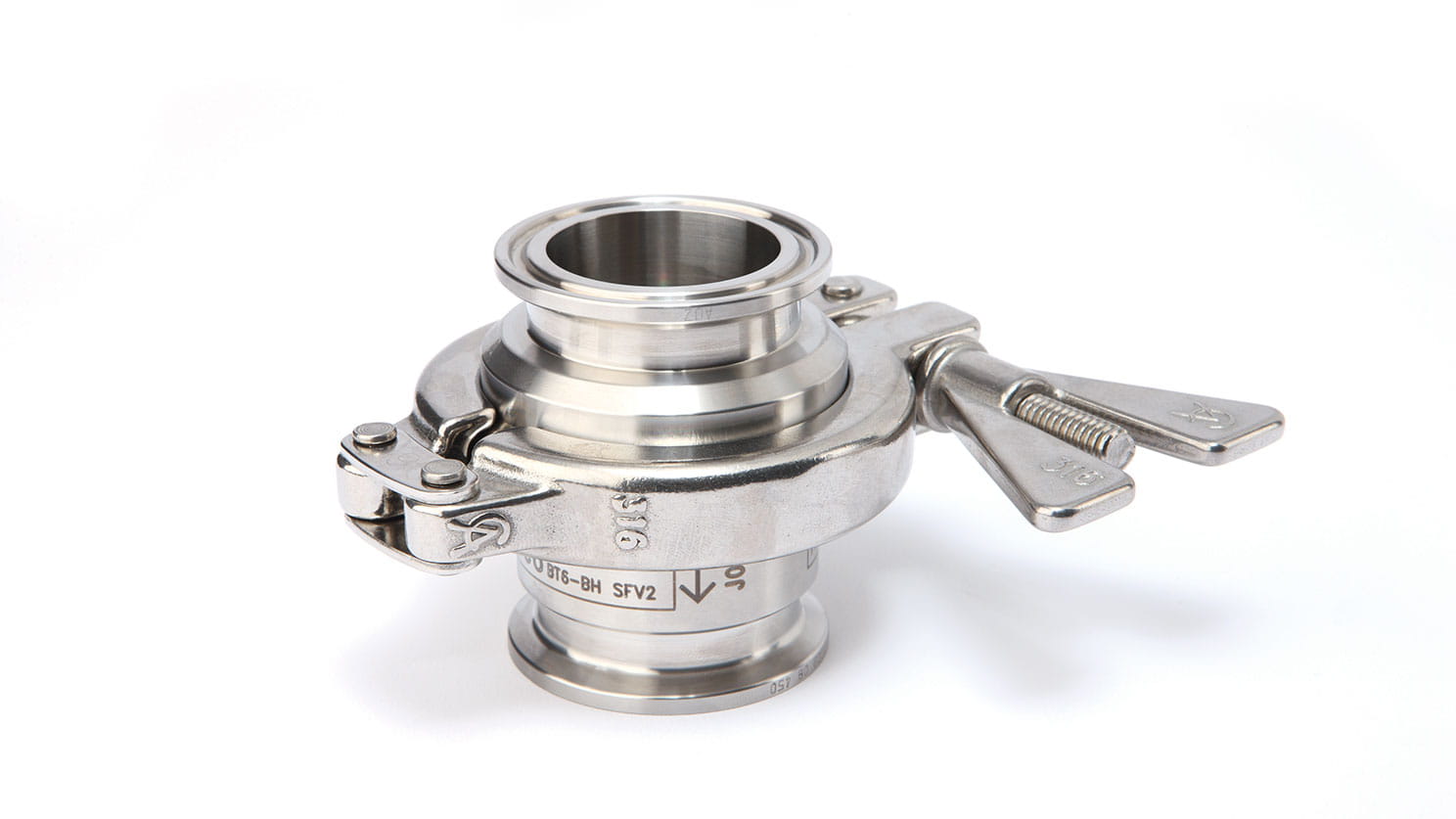
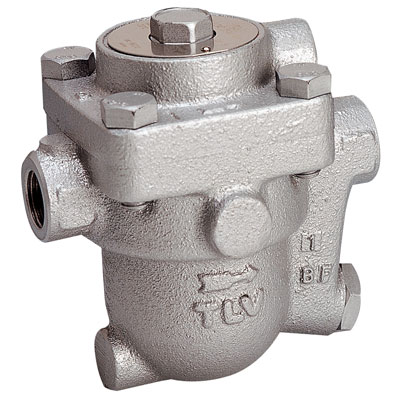
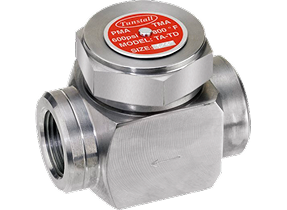
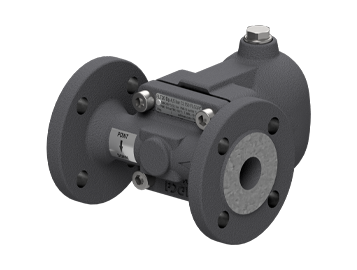
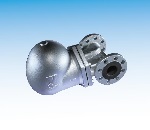
A steam trap is an automatic valve that discharges condensate and non-condensable gases from a steam system while holding back live steam. It is one of the most numerous and most neglected components in any plant that uses steam: a single facility may operate thousands of traps, and surveys repeatedly find that a large fraction of them have failed, wasting steam and corroding return lines. Correct trap type, correct sizing, and a survey program together decide how much of the energy bought as steam actually reaches the process.
Steam traps fall into three families distinguished by the physical property they sense: mechanical traps respond to density, thermostatic traps respond to temperature, and thermodynamic traps respond to flow velocity and flash steam. This guide decodes the principles, the published pressure and capacity ratings, the standards that define them, and the selection logic that maps a process duty to a specific trap.
This guide is written for industrial purchasing engineers and design engineers. It covers 6 chapters from what a steam trap does, through the mechanical, thermostatic and thermodynamic families, materials and standards, key spec-sheet parameters, to a structured selection sequence, with 7 selection FAQs and manufacturer comparisons. All parameters reference public sources: ISO 6552 (definition of terms), ISO 7841 (steam-loss test methods), ISO 6948 (production and performance tests), ASME PTC-39, and the published datasheets of Spirax Sarco, TLV, and Armstrong International.
Chapter 1 / 06
What a Steam Trap Does
When steam gives up its latent heat to a process, it condenses into water at the same temperature, called condensate. That condensate must be removed continuously: if it accumulates it occupies heat-transfer surface, slugs through pipes as damaging waterhammer, and erodes pipe walls. At the same time, air and other non-condensable gases enter the system at start-up and during operation, and these gases blanket heat-transfer surfaces and depress the effective steam temperature. The job of a steam trap is to pass condensate and non-condensable gases as fast as they form, while losing as little live steam as possible. A trap that releases steam wastes the fuel that produced it; a trap that holds condensate back floods the equipment and stops it heating.
This dual requirement, open for water and air but closed for steam, is what makes a trap fundamentally different from an ordinary valve or a check valve. A check valve only senses pressure direction and cannot tell steam from water. A steam trap must discriminate between two fluids that are at almost the same pressure and, for saturated service, almost the same temperature. The three classical solutions exploit the three properties that do differ: condensate is far denser than steam (the basis of mechanical traps), condensate that has given up its latent heat can be allowed to cool slightly below saturation before discharge (the basis of thermostatic traps), and flowing condensate moving toward an orifice flashes into high-velocity steam that behaves differently from liquid (the basis of thermodynamic traps).
The economic stakes are large because traps are numerous and individually small. A refinery or large process plant routinely operates several thousand traps, and each failed-open trap can blow steam continuously for months before anyone notices. United States Department of Energy steam tip sheets report that in facilities without a regular maintenance program, 15 to 30 percent of installed traps may be failed, the majority of them failed open and venting live steam to the condensate system. Because of this, trap selection is only half the task: a documented survey program using ultrasonic and infrared inspection is what keeps the installed population working.
The reference standards that bound this subject are international and consistent. ISO 6552 defines the technical terms used for traps and their performance, ISO 7841 specifies test methods to determine the steam loss of a trap, and ISO 6948 sets out production and performance characteristic tests. The European equivalents EN 26554 and EN 27841 mirror the ISO documents, and ASME PTC-39 gives a performance test code covering discharge capacity, air-handling capability, and steam loss. When a manufacturer states a capacity or a steam-loss class, these are the methods that give the number meaning, and a quoted figure that does not cite a test method should be treated as nominal.
Four engineering attributes ultimately decide whether a trap is correct for a duty: the trap family and its discharge behavior, the maximum operating pressure and temperature the body and mechanism will tolerate, the condensate capacity available at the actual differential pressure, and the trap response to the real-world stresses of dirt, waterhammer, freezing, and backpressure. The remaining chapters take each in turn.
Chapter 2 / 06
Trap Families and Classification
Industrial steam traps are grouped into three families by sensing principle, with two or three common designs in each. The table below summarizes the families, the designs within them, the property each senses, and the duty for which each is the natural first choice. Choosing the wrong family is the most expensive selection error: a thermostatic trap on a steam main backs condensate up the line, and an inverted bucket trap on a low-load tracer can lose its water seal and blow steam.
Family
Design
Property Sensed
Discharge Behavior
Natural First Choice For
Mechanical
Ball (lever) float and thermostatic
Density
Continuous, modulating, at saturation
Process equipment with modulating control
Mechanical
Inverted bucket
Density
Intermittent, on / off, at saturation
Steam mains, tracing, dirty condensate
Thermostatic
Balanced pressure capsule
Temperature
Intermittent, subcooled below saturation
Air venting, light tracing, low load
Thermostatic
Bimetallic
Temperature
Intermittent, heavily subcooled
Tracing, freeze service, high backpressure
Thermodynamic
Disc
Velocity and flash steam
Intermittent, blast discharge near saturation
Steam mains, superheat, high pressure
Mechanical traps work on the density difference between steam and condensate, sensed by a float. The ball float and thermostatic trap (an "F and T") uses a closed spherical float that rises as condensate fills the body, opening a valve to discharge it continuously; a separate balanced-pressure thermostatic air vent in the same body releases air at start-up. The inverted bucket trap uses an open bucket floating mouth-down: condensate keeps the bucket submerged so the valve stays open, and when steam collects under the bucket it floats up and closes the valve. Both discharge condensate at saturation temperature, so they carry away the maximum latent heat and lose very little steam, which makes the float family the efficiency benchmark.
Thermostatic traps sense temperature and deliberately allow condensate to cool a few degrees below saturation before discharging. The balanced pressure trap uses a small liquid-filled capsule whose fill boils at a temperature just below the saturated steam temperature, so the capsule expands and closes the valve in the presence of steam and contracts to open as condensate cools. The bimetallic trap uses stacked bimetal strips that deflect with temperature against a valve and seat. Subcooling recovers some sensible heat, which suits tracing and air venting, but it means condensate backs up, so thermostatic traps are not the first choice for draining equipment that must stay clear of water.
Thermodynamic traps use a single flat disc that sits over concentric inlet and outlet seats inside a control chamber. Incoming condensate lifts the disc and discharges; as the condensate flashes to high-velocity steam under the disc, the low pressure created by that velocity, combined with the higher pressure of flash steam trapped in the chamber above the disc, snaps the disc shut. The disc reopens when the chamber pressure decays. With only one moving part and a compact stainless body, the disc trap tolerates superheat, waterhammer, and very high pressure, which is why it dominates steam-main and high-pressure service even though it is less efficient than a float trap on the same duty.
Chapter 3 / 06
Operating Principles by Type
Each design behaves differently when faced with the everyday stresses of a steam system: waterlogging, air at start-up, dirt, waterhammer and superheat, freezing, and backpressure. The table below compares the five common designs against these stresses. Reading it alongside the duty is the fastest way to eliminate unsuitable types before looking at capacity curves.
Behavior
Ball Float
Inverted Bucket
Balanced Pressure
Bimetallic
Thermodynamic Disc
Air venting at start-up
Good (built-in vent)
Poor (small vent hole)
Excellent
Good
Poor
Resists waterlogging
Excellent
Good
Fair (subcools)
Fair (subcools)
Good
Tolerates dirt
Good
Good
Fair
Poor
Fair
Tolerates superheat / waterhammer
Poor
Fair
Poor
Good
Excellent
Freeze resistance (vertical line)
Poor
Poor
Good
Good
Good
Tolerates high backpressure
Good
Good
Good
Good
Poor
Ball float and thermostatic trap. Because the float modulates continuously and discharges condensate the instant it forms, the F and T trap is the preferred choice for process equipment served by a modulating control valve, where the steam pressure and the condensate load both vary widely. The built-in balanced-pressure air vent handles start-up air, and a steam-lock-release option lets it serve rotating cylinders. Its weaknesses are sensitivity to waterhammer, which can crack the float, and vulnerability to freezing because the body holds a water seal. The Spirax Sarco FT14 is a representative example: an SG iron or cast iron body with stainless internals, integral air vent, and an optional steam lock release, available across pressure variants up to a PMO of about 14 bar g, roughly 200 psig, within a PN16 rating.
Inverted bucket trap. The inverted bucket discharges intermittently and tolerates dirty condensate and waterhammer better than a float, which makes it a durable choice for steam mains, tracing, and process drainage where reliability outranks efficiency. Its limitations are slow air venting through a small hole in the top of the bucket and the risk of losing its water seal, called air binding, on sudden pressure drops or very light loads, after which it blows steam. Armstrong International inverted bucket traps illustrate the pressure span of the type: standard bodies reach about 250 psig with capacities to several thousand pounds per hour, while heavy-duty series such as the 312 extend to roughly 650 psig and capacities up to 20,000 lb/h.
Balanced pressure thermostatic trap. The liquid-filled capsule follows the steam saturation curve, so a single trap operates across a wide pressure range without adjustment, and it vents air freely, which makes it the standard automatic air vent as well as a light-duty trap for tracing. Because it discharges several degrees below saturation it backs condensate up the line, so it is not used to drain equipment that must stay clear of water. Its response is faster than a bimetallic element, and the capsule is small and light. Failure modes are capsule fatigue or rupture and seat wiredrawing by dirt.
Bimetallic trap. Stacked bimetal strips give a robust element that handles high backpressure, superheat, and freezing service, and the heavy subcooling recovers sensible heat for long tracing runs where the product can tolerate lower temperatures. The trade-offs are sluggish response, sensitivity to dirt at the small seat, and the need for the element calibration to match the working pressure, since the bimetal does not track the saturation curve as accurately as a balanced-pressure capsule. Gestra and Spirax Sarco both publish bimetallic series for tracing and high-pressure drainage.
Thermodynamic disc trap. With one moving part, a compact stainless body, and an audible cycling action that makes failure easy to hear, the disc trap is the workhorse of steam-main drainage and high-pressure service. It tolerates superheat and waterhammer and covers the widest pressure envelope of any type, but it vents air poorly, loses performance under high backpressure (typically limited to about 80 percent of inlet pressure), and can cycle rapidly and wear if oversized or starved of load. The Spirax Sarco TD42 is a representative disc trap: a stainless body in sizes from 1/2 inch to 1 inch, rated to a PMO of 42 bar g and a maximum operating temperature of 400 degrees Celsius. Specialized supercritical disc designs extend to roughly 26 MPa for power-plant service.
Chapter 4 / 06
Materials, Connections and Standards
The body material sets the pressure and temperature envelope and the corrosion resistance, while the connection style sets how the trap installs and how it is maintained. Bronze and cast iron suit low-pressure heating service, while ductile (SG) iron, carbon steel, and stainless steel are used as pressure and temperature rise. Stainless steel is also chosen for clean-steam and food, pharmaceutical, and cosmetic service where condensate must not pick up iron, and for outdoor or corrosive environments. The internals, floats, discs, bimetal stacks, and valve seats, are almost always stainless steel even in iron-bodied traps, because they must keep dimensional accuracy and resist erosion.
Connection types divide into screwed, flanged, and capsule or universal-connector designs. Screwed connections (BSP / G or NPT) in sizes from 1/2 inch to 2 inch dominate small drainage and tracing duties because they are cheap and quick to fit. Flanged connections (PN16 to PN40, or ANSI Class 150 to Class 600) are used on larger lines and where a bolted joint is mandated for the pressure class. Socket-weld ends appear on high-pressure steam mains. A growing share of float and thermodynamic traps use a universal pipeline connector, a flanged or screwed mounting block that stays in the pipe so the trap capsule can be replaced without breaking the pipework, which cuts survey and replacement labor sharply.
The table below maps body materials to typical pressure-temperature limits and best-fit service. Treat the limits as indicative class ratings: the governing value is always the specific PMA and TMA printed on the chosen model, derated for the design code and the saturated or superheated steam condition.
Body Material
Typical Pressure Class
Typical Max Temperature
Best-Fit Service
Bronze / gunmetal
PN16, to ~13 bar
~220 °C
Low-pressure heating, building services
Cast iron
PN16, to ~14 bar
~220 °C
General saturated steam, drip stations
Ductile (SG) iron
PN25, to ~25 bar
~300 °C
Process drainage, modulating duty
Carbon steel
Class 300 to 600
~425 °C
HP steam mains, superheat
Stainless steel 316
PN40, to ~42 bar
~400 °C
Disc traps, clean steam, corrosive duty
The standards framework gives these numbers a common meaning. ISO 6552 fixes the vocabulary, defining terms such as cold-water capacity, hot-condensate capacity, and steam loss, so that two manufacturer datasheets can be compared on a like basis. ISO 7841 specifies the steam-loss test, which quantifies how much live steam a trap passes when it should be closed, and ISO 6948 covers production and performance tests, including discharge capacity. EN 26554 and EN 27841 are the European adoptions of the ISO definition and steam-loss documents. ASME PTC-39 is the United States performance test code covering capacity, air handling, and steam loss. For installation, traps on pressure systems fall under the European Pressure Equipment Directive PED 2014/68/EU, and clean-steam traps are additionally judged against 3-A and EHEDG hygienic-design guidance.
Chapter 5 / 06
Key Specification Parameters
A steam trap datasheet lists many figures, but only a handful drive selection. The seven that matter are maximum operating pressure (PMO), maximum operating temperature (TMO), maximum allowable pressure and temperature (PMA / TMA), condensate capacity at differential pressure, maximum backpressure, the discharge or subcooling characteristic, and the steam-loss class. Each is explained below, with the common traps for confusing them.
PMO and TMO are the maximum pressure and temperature at which the trap is designed to operate continuously and is named accordingly: the Spirax Sarco TD42 carries a 42 in its model number because its PMO is 42 bar g, with a TMO of 400 degrees Celsius. These are distinct from PMA and TMA, the maximum allowable pressure and temperature the body can withstand, which are higher and bound the design code. Selection uses PMO and TMO against the working condition; the pressure class and PMA confirm the body is legal for the system. For superheated steam, check TMO against the actual superheated temperature, not the saturation temperature at the same pressure.
Condensate capacity is the mass of condensate the trap can discharge per hour, in kg/h or lb/h, and it is always a function of differential pressure. Manufacturer capacity curves plot capacity against the differential between inlet and outlet, and capacity falls as the differential shrinks. The crucial subtlety is that the relevant differential is the working pressure minus the backpressure in the return line, not the inlet pressure alone. Hot-condensate capacity is lower than the cold-water figure that is sometimes quoted for headline appeal, so confirm which value a datasheet shows.
Maximum backpressure is the highest downstream pressure at which the trap still functions, often given as a percentage of inlet pressure. Float and bucket traps tolerate high backpressure with only a capacity penalty, whereas thermodynamic disc traps are sensitive: backpressure above roughly 80 percent of inlet pressure prevents the disc from snapping shut, so it blows through. On installations that lift condensate or feed a pressurized return main, backpressure must be calculated before a disc trap is selected.
The discharge or subcooling characteristic describes how the trap releases condensate. Mechanical traps discharge at saturation temperature, either continuously (float) or intermittently (bucket). Thermostatic traps discharge subcooled, typically 5 to 30 degrees Celsius below saturation depending on the element, which recovers sensible heat but backs condensate up. The disc trap blasts intermittently near saturation. Match this to the duty: equipment that must run dry needs near-saturation discharge, while a long tracing line can exploit subcooling to recover heat.
The steam-loss class quantifies efficiency. Tested to ISO 7841, it states how much live steam the trap passes when it should be sealed. Float traps with a water seal approach negligible loss, inverted bucket traps lose a little through the bucket vent, and disc traps lose a small blast on each cycle plus any leakage if worn. Over a trap population numbering in the thousands, steam-loss class is the single parameter with the largest effect on the annual energy bill, and it is the metric that a survey program is designed to police.
Chapter 6 / 06
Selection Decision Factors
To turn the preceding chapters into a specific model, follow the decision sequence below. Most selection mistakes come not from a single wrong answer but from skipping a step or fixing the type before the load is known. These steps double as an RFQ template.
Define the application: identify the duty as steam-main drip, tracing, or process equipment, and note whether the steam pressure is constant or modulated. The duty narrows the family before any number is chosen: modulating process favors a float trap, steam mains favor a disc or bucket trap, tracing favors a thermostatic or bimetallic trap.
Calculate the condensate load: compute the maximum running load in kg/h, then the start-up (warm-up) load, which is often two to three times higher. Size on the larger of the two for warm-up critical equipment.
Establish the differential pressure: determine inlet working pressure and the backpressure in the return line, and use the net differential to read the capacity curve. For lifts or pressurized returns, add the static head and downstream pressure as backpressure.
Apply a safety factor: typically 2x on the calculated load for process equipment and up to 3x for steam-main drip and start-up duty. Avoid gross oversizing of disc and bucket traps, which causes rapid cycling and wear.
Confirm pressure and temperature ratings: verify that PMO exceeds the maximum working pressure and that TMO covers the actual (superheated if applicable) temperature, then confirm the body PMA and pressure class against the system design code.
Select body material and connection: choose the material per Chapter 4 for pressure, temperature, and corrosion, and the connection (screwed, flanged, socket-weld, or universal connector) for the line size and maintenance approach. A universal connector pays back quickly where survey labor is high.
Add protection and accessories: specify an upstream Y-strainer for disc and bimetallic traps, a sight glass or test valve for survey, a check valve where backflow is possible, and air-venting capability for batch equipment.
Specify certifications and standards: require capacity and steam-loss data tested to ISO 6948 and ISO 7841, PED conformity for pressure systems, and 3-A or EHEDG for clean-steam duty. Request the steam-loss class, not just a nominal capacity.
One dimension that is easy to overlook at the purchasing stage but decisive over the trap life is serviceability and survey support. Because a plant operates so many traps and a large fraction fail silently, the practical questions are whether the trap can be replaced without breaking the pipe (universal connector), whether the maker supplies replacement capsules and survey services, and whether the failure mode is detectable by ultrasonic and infrared inspection. Spirax Sarco, TLV, Armstrong International, Watson McDaniel, Yarway by Emerson, and Gestra by Flowserve all publish capacity curves to ISO terminology and offer survey programs, which is why they are the default choice for large steam estates; regional and Chinese suppliers can serve non-critical duties at lower cost provided their PMO, body material, and capacity claims are tested to the same ISO methods rather than catalog nominals.
FAQ
What is the difference between a steam trap and a check valve?
A check valve simply prevents reverse flow: it opens whenever upstream pressure exceeds downstream pressure, regardless of whether the fluid is steam, condensate, or air. A steam trap is a discriminating automatic valve that opens for condensate and non-condensable gases but closes against live steam. It distinguishes the two media using density (mechanical traps), temperature (thermostatic traps), or velocity and flash-steam dynamics (thermodynamic traps). A check valve cannot tell steam from water and so cannot conserve steam. Many condensate return lines use both: a trap to discharge condensate and a separate check valve downstream to stop backflow during shutdown.
What is the difference between mechanical, thermostatic, and thermodynamic steam traps?
The three families differ by the physical property they sense. Mechanical traps (ball float, inverted bucket) sense the density difference between steam and condensate using a float, and discharge condensate at or near saturation temperature with little subcooling. Thermostatic traps (balanced pressure, bimetallic, liquid expansion) sense temperature: they hold condensate until it cools several degrees below saturation, then open, which recovers some sensible heat. Thermodynamic disc traps sense the velocity and flash-steam difference between liquid and vapor with a single moving disc, giving a compact, rugged trap that handles superheat and very high pressure. No single family is best for all duties.
How do I size a steam trap correctly?
Size by required condensate capacity at the actual differential pressure, never by pipe size. First calculate the maximum condensate load in kg/h (start-up load is often two to three times the running load). Then apply a safety factor: typically 2x for process equipment and 3x for steam main drip and start-up duty. Read the trap capacity from the manufacturer curve at the real differential pressure (inlet minus backpressure), because float and disc capacities fall sharply as differential drops. Oversizing a float trap wastes nothing but money, while oversizing a thermodynamic or inverted bucket trap can cause rapid cycling, wear, and steam loss. Always confirm the trap PMO exceeds the maximum system pressure.
Which steam trap is best for steam main drip legs?
For steam distribution mains and drip legs the thermodynamic disc trap is the traditional first choice: it is compact, tolerates superheat and waterhammer, works over a wide pressure range up to 42 bar g or higher, and fails in a way that is easy to detect by sound. Where the main carries a high or fluctuating condensate load, or where energy loss must be minimized, a ball float trap or an inverted bucket trap is preferred because both discharge at saturation temperature with very low steam loss. Balanced pressure thermostatic traps are generally not recommended as the primary drip trap because their subcooling causes condensate to back up in the line.
Why do steam traps fail and how do I detect it?
Traps fail open (blowing live steam) or failed closed (waterlogging the equipment). Common causes are dirt and scale wiredrawing the seat, worn disc or valve faces, frozen mechanisms, fatigue of bimetal or capsule elements, and oversizing that drives rapid cycling. US Department of Energy steam tip sheets report that in plants without a maintenance program 15 to 30 percent of traps may have failed, most of them open and wasting steam. Detection uses three methods together: ultrasonic listening for continuous flow versus intermittent cycling, surface temperature with an infrared thermometer at inlet versus outlet, and a sight glass or test valve in the condensate line. A failed-open trap shows a hot, continuously flowing discharge.
What pressure and temperature can steam traps handle?
It depends on the type and body rating. Cast iron and ductile iron float traps such as the Spirax Sarco FT14 are rated to roughly 14 bar g (about 200 psig) within PN16. Stainless steel float traps and inverted bucket traps extend higher: Armstrong inverted bucket traps reach 250 psig in standard bodies and up to 650 psig in heavy series. Thermodynamic disc traps cover the widest envelope, with the Spirax Sarco TD42 rated to a PMO of 42 bar g and a maximum operating temperature of 400 degrees Celsius, and supercritical disc designs reaching about 26 MPa. Always read the body PMA and PMO, not the connection size, and confirm both pressure and temperature against the saturated or superheated steam condition.
Do steam traps need a strainer in front of them?
Yes for most installations. Dirt, pipe scale, and weld slag are the leading cause of premature trap failure, particularly for thermodynamic disc traps and bimetallic traps whose small seats are easily wiredrawn. A Y-type strainer with a 100 mesh screen installed immediately upstream protects the seat and is standard practice on steam main and process drainage stations. Some traps integrate a built-in strainer to save space. The strainer should be fitted on its side, not pointing down, so the pocket does not fill with condensate, and it should be blown down periodically. Float traps tolerate dirt better than disc or bimetal traps but still benefit from upstream straining.
Steam Trap Manufacturers
Source-backed product routes. Open a company dossier for procurement scope and cited evidence.