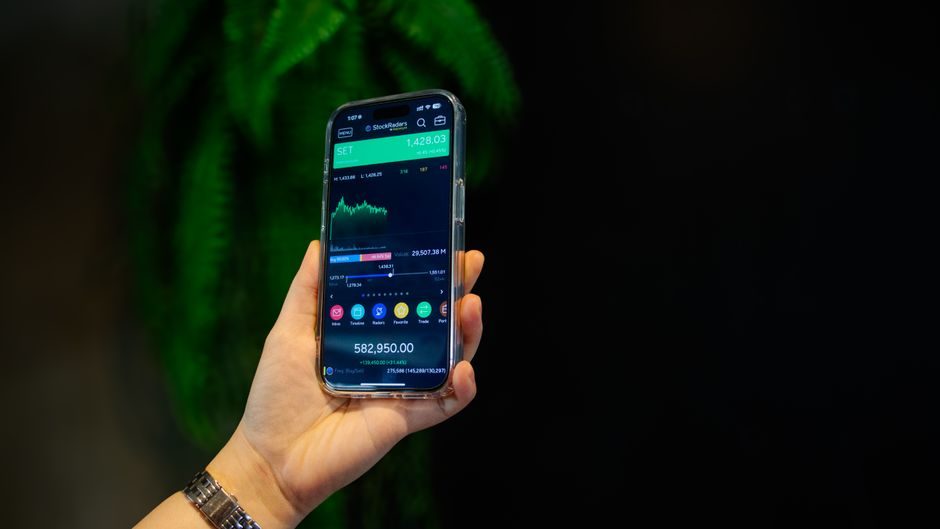
As of 2026-06-22, observed factory-gate reference prices for new industrial conductivity meters cluster into two distinct bands: portable single/dual-parameter units quoted from US$160 (1-piece MOQ) and modular multi-parameter benchtop systems listed at US$1,800-US$1,940 [S9].
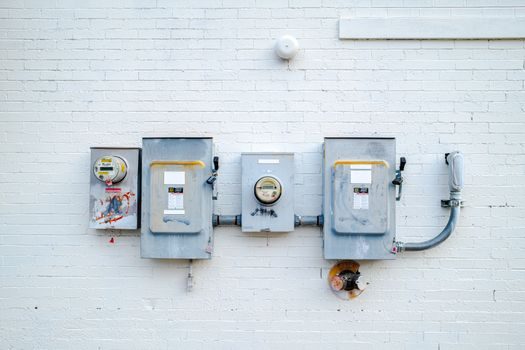
The price spread is governed by three engineering axes, not brand premium alone: cell-constant range and electrode material, output protocol stack (analog 4-20 mA, HART, USB, Bluetooth), and enclosure/IP rating [S1][S5]. For cross-instrument context, the same cost principles apply to electricity meters and energy meters where basic vs. multi-function variants diverge by a factor of 10 or more.
Observed 2026 Price Bands And What They Buy
A 2026-05-12 factory listing for a Chinese portable conductivity/DO unit shows US$482 at 5+ pieces and US$507 at 1-4 pieces (FOB), with USB and Bluetooth output, 1000-set data storage, IP54 enclosure, 12V/1A supply, and 85% RH operating humidity [S1]. The IP54 rating and digital LED display place it in the mid-range portable tier, not a low-cost bare probe.
At the upper bench end, a 2026-05-15 distributor catalog shows modular multi-parameter benchtop systems (pH/ORP/ISE/EC/TDS) at sale prices of US$1,805.95 CAD (regular US$1,901.00 CAD) and US$1,842.05 CAD (regular US$1,939.00 CAD), with 3-4 week availability [S9]. These units add ISE (ion-selective electrode) channels and modular expansion that the portable tier does not offer.
A 2026-01-28 listing for a simplified industrial conductivity meter advertises "special price advantages" from a stripped feature set while retaining "high measuring performance" for continuous water/solution monitoring [S5]. This is the entry-industrial SKU: lower cost, fewer outputs, designed for fixed-line continuous monitoring rather than laboratory precision.
Cost Drivers: Cell Constant, Protocol, Certification
Cell constant is the single largest sensor-side cost lever. Low-conductivity (0.01 cm⁻¹) and high-purity water cells use specialized electrode geometry and price materially above 1.0 cm⁻¹ general-purpose cells; the modular benchtop tier typically accepts multiple cell constants via interchangeable probes, while portable units ship with a fixed cell [S9].
Output protocol stack is the second lever. The 2026 portable listing at US$482 carries USB plus Bluetooth, but no documented HART or Foundation Fieldbus [S1]. Industrial plants running flow meters and analyzers on HART will spec analog 4-20 mA plus HART by default, which moves pricing into the mid-tier and above. Foundation Fieldbus and PROFIBUS PA compatibility further raises the quote.
For comparison, similar cost banding shows up in adjacent instruments: a portable DO/temperature probe was listed at US$160-US$450 (1-piece MOQ) in 2026, while a multi-parameter water-quality meter (pH/DO/conductivity/turbidity) was quoted at US$800-US$1,100 per set in the same period [S8]. The pattern — single-parameter portable sub-US$500, multi-parameter benchtop US$800-US$1,900 — repeats across this instrument class.
Selection Criteria: Portable Bench Vs Industrial Inline

For field spot-checks and CIP verification, a portable bench unit with IP54, USB logging, and Bluetooth transfer is the cost-optimal choice; observed 2026 pricing sits at US$160-US$507 across single-DO and dual conductivity/DO SKUs [S1][S8]. These match the use profile covered in our turbidity meter selection criteria for clean-in-place verification article — short-duration, high-accuracy, logged data.
For continuous inline monitoring on a process line, an industrial conductivity meter with simplified operation and continuous-output capability is the right tier; the 2026-01-28 factory SKU targets exactly this application with "high cost performance" framing [S5]. Buyers should pair it with an appropriate counter meter for pulse/batch integration where required.
For laboratory R&D or QA/QC requiring pH, ORP, ISE, EC, and TDS in one chassis, modular multi-parameter benchtop systems at US$1,800-US$1,940 are the only tier that delivers all channels simultaneously; the 2026 distributor listing shows 3-4 week lead time, consistent with built-to-order modular configuration [S9].
Who A Given Price Band Is For, And Who It Is Not
The US$160-US$500 portable band fits plant operators running spot-checks, field service teams, and small water-treatment shops. It is not suitable for hazardous-area Zone 1/Class I Div 1 installations, where ATEX/IECEx certification adds cost layers that this tier does not carry [S1].
The US$500-US$1,200 mid-tier covers industrial inline continuous monitors with analog output and basic digital protocols. It is not the right pick for ultra-low-conductivity (ultra-pure water, semiconductor rinse) applications, which demand specialized cells and temperature compensation beyond what mid-tier SKUs ship with [S5][S9].
The US$1,800+ modular benchtop tier targets laboratories, pharmaceutical QA, and multi-parameter R&D. It is overkill for a single-parameter field task and under-spec'd for direct inline process control in a Class I Div 2 plant without an enclosure re-rate.
Limitations And Failure Modes That Affect Total Cost
Operating humidity is a documented spec gate: the 2026 portable unit is rated to 85% RH [S1], which excludes direct steam or boiler-drum mounting without additional enclosure protection. Storage of 1,000 data sets is a useful but not unlimited buffer — continuous-logging applications need external polling.
Discontinued product risk is real and recurrent in this segment. METTLER TOLEDO's S70 SevenMulti conductivity meter, a long-running modular platform, was phased out in October 2012 [S4]. Buyers pricing a multi-year deployment should verify the OEM's product lifecycle statement and second-source the probe geometry, not just the meter chassis.
Tariff and HS-code exposure is a hidden cost layer for cross-border procurement. The 2026-04-29 and 2026-05-11 China customs HS-code lookups for "multifunctional-conductivity-meter" and "online-conductivity-meter" returned no matching tariff lines, indicating the codes are aggregated under broader instrument categories rather than split out [S7][S10]. Procurement should confirm the applicable HS code with the broker before locking FOB vs. CIF pricing.
Comparison Across Decision Criteria
Three reference 2026 listings, lined up against four decision criteria: [S1]
Portable conductivity/DO (US$482 FOB, 5+ pcs) [S1]: Cell constant — fixed (not stated); Protocols — USB, Bluetooth; Enclosure — IP54; Best fit — field/spot-check.
Industrial inline simplified (factory-direct, "special price") [S5]: Cell constant — fixed industrial range; Protocols — analog continuous output; Enclosure — industrial panel-mount; Best fit — continuous process water monitoring.
Modular multi-parameter benchtop (US$1,805.95 CAD sale) [S9]: Cell constant — interchangeable multi-cell; Protocols — full lab suite (pH/ORP/ISE/EC/TDS); Enclosure — benchtop; Best fit — lab and multi-parameter QA.
The data confirms the cost levers: cell-constant flexibility, protocol count, and enclosure rating together account for the ~3.7x price ratio between the cheapest and the most expensive SKU in this 2026 sample. Buyers should map their actual requirement to these three axes before accepting a higher quote. For a parallel instrument-class benchmark on pricing methodology, see the surface roughness tester pricing 2026 breakdown, which applies the same cost-axis framework.
Sourcing And Standard Anchors

No specific IEC or ISO conductivity-meter standard number is named in the public 2026 listing material reviewed; general engineering practice references cell-constant calibration against KCl solutions of documented conductivity, but the exact standard revision governing 2026 procurement should be confirmed with the OEM datasheet rather than inferred from price pages [S5][S9].
For procurement-side price/cost analysis methodology, USPS SPP 2-253 documents the standard practice of comparing proposed prices against reasonable price benchmarks, without evaluating separate cost elements and profit — a directly transferable framework for instrument buyers comparing FOB quotes [S2].
For a deeper sensor-and-protocol discussion beyond price, the related internal reference Industrial conductivity meter buying guide 2026: sensor type, cell constant, protocol covers the spec-side selection in more depth, and the pressure transmitter buying guide 2026 applies the same protocol-plus-certification cost logic to a different instrument class.
Trackable 2026 signals to watch: (1) whether Chinese factory FOB prices for the US$482 portable tier hold through Q3 2026 given the 5+ piece break shown at US$482 vs. US$507 [S1]; (2) whether the US$1,800+ modular benchtop listings move on the 3-4 week lead-time window as modular-platform lifecycles evolve (cf. the 2012 S70 phase-out [S4]).