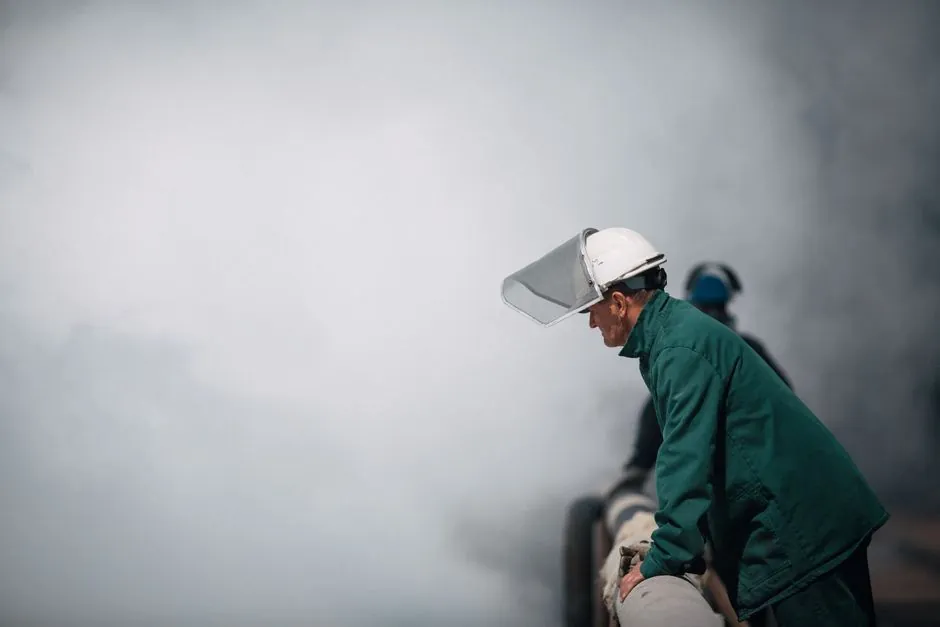
A confined space entry garment is a system, not a single coverall: chemical barrier fabric, mechanical strength, ignition resistance, and a fall-protection harness that physically interfaces with the suit must all be specified together under CEN/TR 15419:2017 [S2].
The scope covered here is the PPE layer worn inside permit-required confined spaces (vessels, tanks, pits, sewer reaches, reactors), excluding supplied-air respirator selection and gas monitoring, which sit on a parallel instrument spec track covered by a separate pressure transmitter and flow meter review.
Definition and scope of confined space garments
Confined space protective clothing is defined under CEN/TR 15419:2017 as chemical protective clothing (CPC) selected through a four-step pathway: hazard assessment, risk assessment, definition of need (the product specification), and garment material criteria including chemical barrier, mechanical, and ignition-resistance properties [S2].
The 49-page technical report, published 31 December 2017 by BSI as PD CEN/TR 15419:2017, supersedes the 2006 edition and was drawn up by CEN/TC 162 to cover selection, use, care, and maintenance of CPC across CEN member states [S2]. For confined space work, the relevant section is clause 4.6 on garment material criteria, plus the in-use obligations in clause 5 covering information, training, and documentation [S2].
Selection criteria and material properties
Clause 4.6 of CEN/TR 15419:2017 sets three material criteria a confined space CPC must satisfy: chemical barrier properties (permeation and penetration against the specific contaminant), mechanical properties (tensile, tear, puncture, seam strength), and resistance to ignition for flammable atmosphere work [S2].
For lower-hazard dust and splash work, breathable SMS (spunbond-meltblown-spunbond) laminate coveralls remain a common catalogue option, offering clean-protection and durability at single-use price points [S1]. For higher-hazard chemical or hydrocarbon exposure, the spec moves to Type 3/4/6 chemical suits with sealed seams, tested against the relevant EN 14325 permeation tables. Comparing the three on four decision criteria: SMS coverall wins on comfort and cost, loses on chemical barrier and ignition resistance; Type 4 taped-seam chemical suit wins on barrier and ignition, loses on thermal comfort and unit cost; fully encapsulating Type 1 gas-tight suit wins on total barrier, loses on dexterity, training burden, and the need for a separate supplied-air source [S2].
Fall protection and confined space entry hardware

Anchor points, harnesses, body straps, and retrieval systems are the mechanical half of the confined space PPE system: Fisher Scientific's Fall Protection and Confined Space Entry category lists 1,474 harness SKUs, 559 body belts, 502 lanyard SKUs, 284 rope hardware items, 275 lifeline SKUs, 209 descent and rescue kits, 175 anchors, and 72 confined space ventilation products [S4].
Brand mix is broad: 3M (396 SKUs), Honeywell Safety Products (100), Mine Safety Appliances (377), and Ergodyne (86) dominate the harness and lanyard listings, while CMC Rescue (35) and Air Systems International hold the niche of descent and retrieval hardware used for permit-required entry [S4]. The same clothing specification that passes CEN/TR 15419:2017 must interface with this hardware, specifically the dorsal D-ring on a full-body harness, which is why clause 4.7.4 of the report flags usability and compatibility with other equipment as a hard selection gate, not an optional consideration [S2][S4].
Standards and sourcing for 2026 procurement
Three published standards govern the clothing half of confined space PPE: EN 14325 for chemical permeation test methods, EN ISO 13982 for particulate-protective Type 5 suits, and EN 13034 for limited-spray Type 6 suits, all referenced through CEN/TR 15419:2017 as the selection framework [S2]. On the harness side, EN 361 (full-body harnesses) and EN 1496 (rescue lifting devices) apply to the mechanical subsystem that the garment must physically integrate with [S2][S4].
For US permit-required confined spaces, OSHA 29 CFR 1910.146 sets the entry program rules that drive these PPE specifications, and any protective clothing procurement should reference the full PPE category page rather than ordering coveralls in isolation. Procurement teams who treat the garment, the harness, and the tripod/ventilation subsystem as one integrated spec line, rather than three separate requisitions, close the compatibility gap that clause 4.7.4 of CEN/TR 15419:2017 was written to surface [S2][S4].
Limitations and failure modes
CPC selection failures in confined space work cluster in three patterns: barrier failure from chemical permeation beyond the tested chemical family, mechanical failure at seams under flexing or snagging, and ignition failure when antistatic or flame-retardant properties are not specified for flammable-vapor spaces [S2].
A fourth, less obvious failure is logistics: clause 4.5.3 of CEN/TR 15419:2017 covers supply continuity, storage, and replacement, and clause 7.2 covers inspection plus ageing factors that drive a service-life limit on reusable chemical suits [S2]. Buyers who skip the inspection and storage clauses end up reusing suits past permeation-breakthrough life, which is the most common audit finding on confined space PPE programs.
Real use cases and who the spec is for
The spec is for: refinery and petrochemical vessel entry teams, wastewater treatment plant operators entering wet wells and digesters, brewery and food processing CIP crew entering fermenters, and power plant boiler and ash pit workers. The spec is NOT for: routine outdoor work in open air (use general workwear), asbestos abatement (use EN ISO 13982 Type 5 with face-seal integrity), or electrical work above 1 kV where arc-rated clothing with ATPV ratings is the controlling layer, a separate decision covered in the protective clothing for electrical work spec map. [S2]
Food plant fermenters and clean-room pharmaceutical suites are a useful cross-reference: the same SMS breathable coverall that handles dust and splash in a fermenter entry is the lower-cost option in a food processing protective clothing selection, so procurement teams running both confined space and food-grade programs can standardize on one SKU for low-hazard work and reserve Type 3/4 chemical suits for true chemical-entry tasks [S1][S2].
Signals to track next
Watch the CEN/TC 162 work program for any revision of TR 15419, and the OSHA 1910.146 update docket for changes to permit-required confined space program requirements; either would shift the selection gates laid out in clause 4 of the 2017 report [S2]. A practical tracking signal: SKU counts in the Fisher Scientific Fall Protection and Confined Space Entry category, where harness listings sit at 1,474 and descent and rescue kits at 209 as of the 29 July 2026 page snapshot, and a move in those counts would indicate supplier consolidation or new entrants into the European and US confined space PPE market [S4].