Selection of protective clothing for live or adjacent-to-live electrical tasks is governed by incident-energy calculation, arc thermal performance value (ATPV), and the applicable IEC or NFPA framework, not by generic "flame-resistant" marketing claims.
The four families that appear on 2026 purchase orders for utilities, switchgear assembly, and rail traction substations are: arc-rated long-sleeve shirt and trouser kits (woven or knit), arc-rated multi-layer flash suits, voltage-rated insulating gloves with leather protectors, and arc-rated face shields / balaclava hoods. Each maps to a different zone of the electrical automation and low-voltage electrical workspace, and the spec engineer has to lock the ATPV class to the calculated incident energy before the garment is cut.
Spec gate map: IEC 61482-1-1 vs IEC 61482-1-2 vs NFPA 70E
IEC 61482-1-1 (open-arc test, ATPV or EBT in cal/cm²) and IEC 61482-1-2 (box-test, Class 1 = 4 kA / 0.5 s, Class 2 = 7 kA / 0.5 s) are the two principal arc-test methods cited in European and Asia-Pacific tenders, with NFPA 70E Hazard Risk Categories 1–4 layered on top for North American sites [S1]. A Class 2 box-test garment corresponds to roughly an 8–10 cal/cm² ATPV window, but the two ratings are not directly interchangeable: box-test measures a constrained plasma, open-arc measures a free-arc, so a vendor's class-2 label and ATPV number must be cross-checked against the actual incident-energy study at the busbar or terminal [S1].
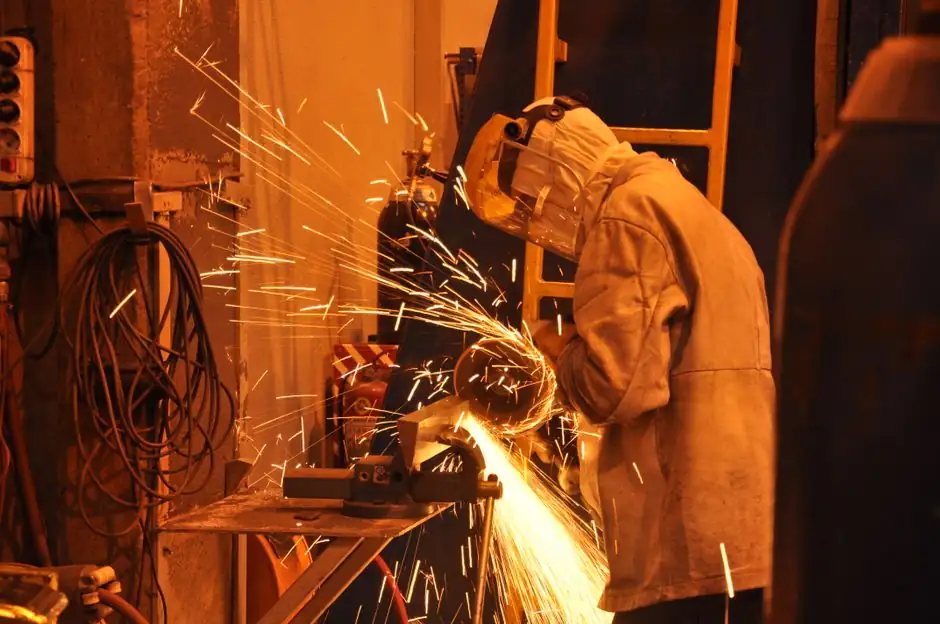
EN ISO 11611:2015 (Class 1 / Class 2 welders' clothing) is sometimes dual-purposed for hot-work adjacent to energised busbars, but Class 1 only addresses low-risk welding (≤ 25 spatter drops, ≤ 5 g of molten metal) and Class 2 is the heavier process window; if the primary hazard is arc flash rather than welding spatter, IEC 61482 is the correct reference, not EN ISO 11611 [S2]. Specifiers pulling a single garment to cover both welding and switching duties should confirm the EN ISO 11611 class is printed alongside the IEC 61482 marking on the label, since most arc-rated workwear is only tested to one of the two frameworks.
Incident-energy to garment class: a decision matrix
For a 480 V switchgear lineup with a typical 18 in working distance and 0.18 s clearing time, calculated incident energy commonly lands between 1.2 and 4 cal/cm², which is below the 4 cal/cm² ATPV threshold of a basic 4-rated kit but inside the 8 cal/cm² ATPV window of a standard 8-rated kit; a 600 V class draw-out breaker cubicle at the same distance with a 0.35 s clearing time routinely pushes 6–8 cal/cm², which is the crossover where HRC 2 / ATPV 8 is the minimum acceptable and HRC 3 / ATPV 25–40 is the safe target [S1].
For 11 kV and 33 kV outdoor substations, the incident-energy study is dominated by the longer arc duration and the bus geometry, with published field calculations in the 20–60 cal/cm² range at the open-air air-break switch, which is the working point for a full arc-flash suit with a 40–100 cal/cm² ATPV hood and coat combination [S1]. The decision matrix that holds in 2026 practice: ≤ 1.2 cal/cm² untreated cotton acceptable for "minimal" exposure tasks with no switching; 1.2–4 cal/cm² ATPV 4 shirt+trouser; 4–8 cal/cm² ATPV 8 kit; 8–25 cal/cm² ATPV 25 kit; 25–40 cal/cm² ATPV 40 kit; > 40 cal/cm² a full suit with hood and the additional rule that no live work is performed, only remote racking.
Material selection: treated cotton, aramid blends, and modacrylic
The three fibre families that dominate 2026 arc-rated workwear are FR-treated cotton (treated with a phosphorus-based retardant such as Proban or Pyrovatex), meta-aramid / para-aramid blends (Nomex, Kevlar, or equivalent), and modacrylic / lyocell blends; each has a different arc-test result, laundering tolerance, and weight-to-ATPV ratio [S1]. FR-treated cotton in a 7–9 oz/yd² weave lands at ATPV 6.5–8.6 cal/cm², meta-aramid in a 4.5–6.5 oz/yd² weave at ATPV 4.1–8.5, and dual-layer aramid systems (inner knit + outer woven) reach ATPV 25–40 at roughly 11–14 oz/yd² total, with the trade-off that aramid kits cost 3–5× the per-garment price of treated cotton and require line-dry or low-temperature tumble to preserve the finish [S1][S3].
Laundering endurance is the spec trap on FR cotton: the phosphorus treatment survives 50–100 industrial wash cycles before the ATPV drops measurably, and the spec must call out a wash-cycle count cap (commonly 100 cycles) plus a laundering vendor that documents water temperature ≤ 75 °C and no chlorine bleach; an aramid kit tolerates 200+ cycles with no chemistry, so the total cost of ownership crossover usually sits around year 2 of a utility fleet [S1]. Conductive thread closures (snap, hook-and-loop) on the front placket and cuff must also be non-metallic or arc-rated; standard metal snaps can become a secondary ignition point on a high-energy event, and the IEC 61482 series explicitly calls out closure construction in the test article [S1].
Insulating gloves and leather protectors: the other half of the kit
Live-line work on 1 kV AC and above is paired with voltage-rated insulating rubber gloves to IEC 60903 (now republished as IEC 60903:2014) or ASTM D120, with class 0 (5 kV use), class 1 (7.5 kV), class 2 (17 kV), class 3 (26.5 kV), and class 4 (36 kV) defining the maximum use voltage; class 00 (500 V AC) and class 0 are the two classes that appear on the majority of indoor switchgear and MCC work orders, while class 2 and 3 are standard for 11 kV and 33 kV outdoor work [S1].
ASTM D120 / IEC 60903 rubber gloves must always be worn under a leather protector glove sized one half-size larger; the leather is not for electrical insulation, it is mechanical protection against cuts and abrasion that would otherwise expose the dielectric rubber, and any puncture of the leather means the rubber glove has to be air-tested and dielectrically retested before reuse. In-service testing of the rubber glove is typically every 6 months for class 00/0 and every 3 months for class 1 and above, with the inflation visual + air-leak check in the field and a dielectric bench test at the certified lab.
Real use cases from 2024–2026 utility and rail tenders
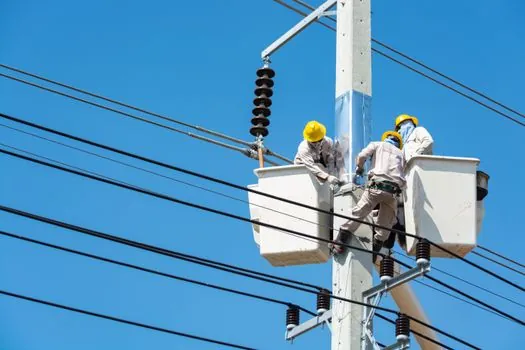
A 33 kV rail-traction substation retrofit tendered in 2025 specified a Class 2 (7 kA / 0.5 s) arc-rated flash suit with ATPV ≥ 40 cal/cm², a double-layer Nomex balaclava with face shield rated to the same ATPV, class 2 insulating gloves (17 kV) with leather protectors, and arc-rated 8 in boots with a non-metallic toe; the kit was issued per switching team with a documented 100-wash-cycle cap on the cotton-rich underlayer and a 200-wash-cycle cap on the outer aramid coverall [S3].
A 480 V motor control centre inspection job, by contrast, tenders to a Nomex IIIA long-sleeve shirt and trouser at ATPV 4.1–8.5 cal/cm², class 00 (500 V) or class 0 (5 kV) gloves, safety glasses, and an arc-rated face shield for tasks inside the arc flash boundary; the calculation at 18 in working distance and 0.06 s clearing time lands the incident energy at 0.7–1.4 cal/cm², which is well under the kit's ATPV margin and the reason the lighter kit is acceptable here [S3]. A third case, a wind-farm pad-mount transformer switching routine at 34.5 kV, specifies class 4 (36 kV) gloves and a remote racking tool so the operator is outside the calculated 4 ft arc flash boundary; the protective clothing on the operator in that case is a backup ATPV 8 kit, not the primary protection, and the spec has to call out which PPE is mandatory versus standby. Selection of FR clothing also commonly appears in process plants where ex-certified motors, drives, and enclosures tie back to the electrical automation control panel, with the same incident-energy study driving the kit.
Failure modes, inspection cycles, and disposal rules
The failure modes that drive 2026 recall and disposal rules on arc-rated workwear are: (1) contamination with hydrocarbon or solvent that breaks down the FR finish on treated cotton, (2) mechanical damage (rips, melt damage from incidental contact welding) that exposes the underlayer, (3) wash-cycle count exceeded without retest, and (4) closure-system failure (melted snap, delaminated hook-and-loop) on a real arc event [S1].
Inspection cadence is typically pre-use visual, monthly documented check, and post-incident inspection with mandatory retirement if the garment was exposed to a real arc event (garments exposed to an actual arc are not returned to service, regardless of visible damage, because the dielectric integrity of the fibre system is compromised in ways that do not show on visual inspection) [S1]. Storage must keep the kit away from direct sunlight and UV, which degrades aramid fibre over a 2–3 year window if the kit is stored on a line truck dashboard, and that storage rule alone is the cause of a non-trivial fraction of fleet replacement budgets in 2024–2026 audits.
Standards and sourcing checklist for the 2026 purchase order

The minimum document set a spec engineer should require from a vendor before accepting a 2026 electrical PPE shipment: (1) IEC 61482-1-1 test report with ATPV or EBT in cal/cm², (2) IEC 61482-1-2 box-test class where applicable, (3) EN ISO 11611 class if welders' protection is dual-purposed, (4) IEC 60903 / ASTM D120 class and dated in-service test for insulating gloves, (5) laundering instructions and certified wash-cycle count, (6) seam and closure construction documentation, and (7) country of origin plus REACH / OEKO-TEX statement for the FR chemistry [S1][S2].
Two field signals worth monitoring are the spread of dual-rated garments (EN ISO 11611 Class 2 + IEC 61482-2 Class 2) on switchgear-and-welding hybrid sites, and the move by several large utilities to retire FR-treated cotton from substation PPE in favour of aramid systems on a total-cost-of-ownership basis, with the wash-cycle economics being the deciding factor [S1][S2][S3].
For related coverage, see PTFE Selection for Oil and Gas: Spec Gates, Grades, and Failure Modes.