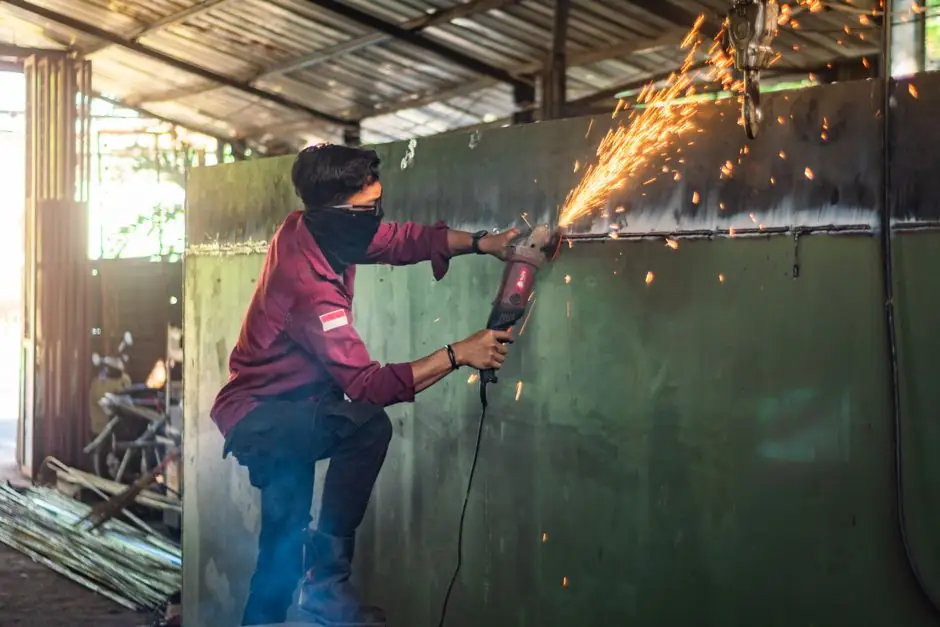
Welding protective clothing must be specified against ISO 11611 (protective clothing for use in welding and allied processes) and EN ISO 11612 for clothing protecting against heat and flame, with class 1 triggered by lighter duty and class 2 by heavier welding or wider spatter risk [S2]. Selection gates on the welding process, the parent-metal mass, and the weld geometry, not on the fabric alone.
For shop-floor buyers and welding supervisors, the practical map is: TIG/micro-plasma on thin stainless points to class 1 with treated FR cotton or light goatskin; structural MIG, Stick (SMAW) on heavy plate, flux-cored arc, and plasma cutting above 30 A point to class 2 with heavier split-leather or multi-layer FR systems. The 2026 field pattern across European fabrication shops confirms that pairing the wrong class to process is the most common audit finding, not raw garment failure.
ISO 11611 Class 1 vs Class 2: When Each One Applies
ISO 11611 class 1 covers manual welding with light spatter and low radiant heat, including Tungsten Inert Gas (TIG) and Gas Metal Arc Welding (GMAW/MIG) on thin-gauge steel, plus Micro Plasma welding below 15 A. ISO 11611 class 2 covers heavier GMAW/MIG, manual metal arc (Stick/SMAW) on heavy plate, flux-cored arc welding (FCAW), air-carbon arc gouging, and plasma cutting, where spatter is hotter, larger, and longer-lived. Specifying class 1 to a structural welder is the single most common failure mode; the under-rating shows up as spatter burn-through on the front panel within hours of production work. [S1]
Class 2 also raises the minimum leather split thickness for aprons, spats, and sleeve covers, and tightens the requirement on afterflame and afterglow times on textile panels. Buyers should require the manufacturer to print the class number and the standard reference (e.g. "ISO 11611 class 2") on the garment label, not just "FR" or "welding jacket", and should reject any welding PPE that does not declare the ISO 11611 class on the certificate of conformity.
Fabric and Leather: What Real Spec Numbers Look Like
FR-treated cotton for welding jackets is commonly specified in the 300-450 g/m² weight range; lighter weights below 250 g/m² do not survive full-shift class 2 use without burn-through. Goatskin and cowhide leathers used in premium welding gloves and aprons typically run 1.0-1.3 mm thickness for dexterity, while heavy split-leather aprons and spats use 1.6-2.0 mm for spatter and slag containment. Welding helmet shells are specified by EN 175 (eye and face protection during welding) for the optical/auto-darkening filter and shell impact performance, with auto-darkening shade ranges commonly 9-13 for arc welding. [S4]
Underlayer discipline matters as much as the outer shell: synthetic undergarments (polyester, nylon) can melt into the skin under a welding spatter event even when the outer jacket passes ISO 11611. The 2026 procurement trend is to pair ISO 11611 outerwear with EN ISO 11612 base layers, and to prohibit non-FR synthetic T-shirts, hoodies, and high-visibility vests under welding jackets on the shop floor. Standard leather welding gloves fall into EN 388 categories for mechanical hazards and EN 407 categories for thermal hazards, with the latter grading 0-4 on contact heat, convective heat, and small splashes of molten metal.
Process-to-Garment Mapping: TIG, MIG, Stick, Plasma, Oxy-Fuel
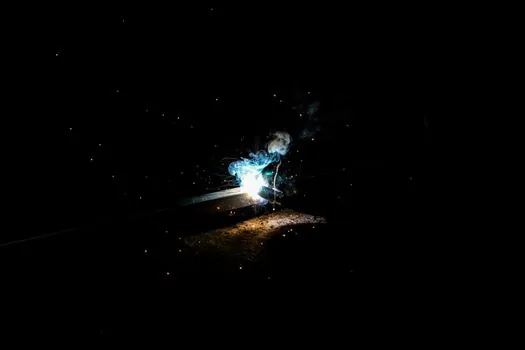
Process-driven selection is more reliable than fabric-driven selection. The typical mapping used in 2026 European fabrication shops: TIG and micro-plasma use class 1 goatskin gloves, 300 g/m² FR cotton or light leather jacket, and a passive or auto-darkening helmet at shade 9-11. MIG on thin steel uses class 1 to low class 2, with cowhide or goatskin MIG-specific gloves reinforced at the thumb crotch. Stick (SMAW) on structural plate, FCAW, and plasma above 30 A drive class 2 with split-leather aprons extending from chest to below the knee, leather spats covering the boot, and sleeve covers fully overlapping the glove cuff with no exposed wrist. [S4]
Oxy-fuel cutting and brazing sit outside ISO 11611 in some specifications, but EN 407 protective gloves and EN ISO 11612 aprons still apply; for heavy flame gouging the same class 2 leather kit used for Stick welding is widely reused. A related reference covering construction-site PPE selection, including the higher-visibility requirements, is summarised in this construction-site protective clothing 2026 spec map; the flame/arc overlap between welding and oil and gas PPE is detailed in this protective clothing selection for oil and gas facilities reference.
Welding PPE vs General FR vs Arc-Rated PPE: A Real Comparison
Welding PPE (ISO 11611) is optimized for spatter, radiant heat from the arc, and small splashes of molten metal; it is rated for thermal exposure but not for the radiant energy of an arc flash event. Flame-Resistant (FR) workwear under EN ISO 11612 is optimized for short-duration flash fire and contact heat, with categories A1-A3 for limited flame spread and B1-B3 for convective heat exposure. Arc-rated PPE is engineered to ATPV (Arc Thermal Performance Value) levels in cal/cm² under IEC 61482-1-1 or IEC 61482-1-2 (box test class 1 or 2), with common industrial specifications of 8, 12, 25, and 40 cal/cm² for live electrical work. The four-way contrast: ISO 11611 passes spatter and radiant-heat tests but does not assign an ATPV; EN ISO 11612 covers flame and heat but not arc-rated exposure; IEC 61482 arc-rated kits cover the electrical arc event but add cost and weight that are not justified for routine welding; general FR cotton alone (e.g. a flame-resistant coverall without welding-class leather reinforcement) fails spatter burn-through within hours of class 2 welding. [S5]
For electrical work adjacent to welding, a separate arc-rated kit is mandatory, and the protective clothing for electrical work spec gates reference covers ATPV and box-test selection in detail. The base principle on a multi-hazard site: do not substitute one kit for the other, and do not let "FR" on a label stand in for an ISO 11611 class number on a welding certificate.
Common Failures in the Field: Burn-Through, Seam Failure, and Underlayer Ignition
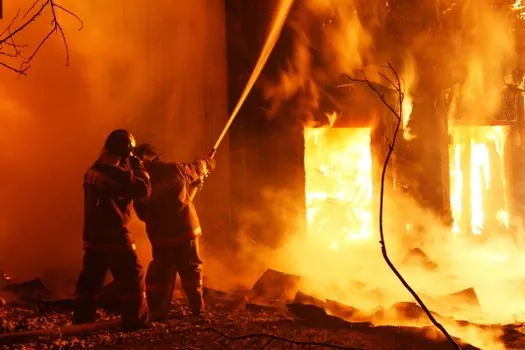
The three failure modes that drive 2026 shop-floor complaints are: spatter burn-through on FR cotton jackets below 300 g/m² (class 2 conditions), seam failure at the shoulder and side-seam where thread is not FR-rated, and synthetic underlayer melt when workers wear non-FR hoodies or hi-vis vests under a class 1 jacket. Leather aprons and spats fail first at the buckle/strap rather than the leather itself, which points to specifying metal or FR-rated plastic hardware rather than standard plastic buckles. [S5]
Seam thread should be aramid (e.g. Kevlar, Nomex) or equivalent FR-treated thread; standard polyester thread melts at the temperature of a welding spatter droplet and the seam opens under load. Glove cuff length should overlap the jacket sleeve by at least 50 mm; shorter overlaps are a common source of wrist burns in Stick and FCAW work. For related work on adjacent process PPE, the PA nylon grade selection for automotive reference covers the material side of selection discipline in a different domain but applies the same ISO-class and certificate-of-conformity logic.
Standards, Documentation, and What the Certificate Must Show
Every welding PPE garment and glove supplied to a professional user should carry a certificate of conformity that names the standard (ISO 11611 class 1 or 2, EN 407 level, EN 388 mechanical level), the test house, the date of manufacture, and the manufacturer's lot number. Gloves additionally need EN 407 grading (a-f, 0-4) on at minimum contact heat, convective heat, and small splashes of molten metal. Helmets and auto-darkening filters must reference EN 175 and EN 169 (welding filter shade scale). The protective clothing reference page on welding cutting tool safety apparel catalogues the gear families that sit under these standards. [S5]
For procurement teams, the verification path is: pull the certificate PDF from the manufacturer for each lot, cross-check the standard number and revision year against the issuing test house register, and inspect three random garments per lot for the printed class label, FR thread, and seam overlap. Garments without a class number, without a printed standard reference, or with a lot number that does not match the certificate should be rejected at goods-in. The general protective clothing family reference is the parent page that links to all category-specific selection guidance including welding, electrical, and chemical domains.
Trackable next signals: any update to the ISO 11611 revision (last major revision was 2015, with amendment work ongoing at technical committee level), the EN 407 revision applying to welding gloves, and the cross-recognition between EN ISO 11612 and ISO 11611 for combined welding-and-thermal work. Buyers should treat 2026 lot certificates as the baseline and flag any supplier issuing garments with only "FR" or "welding" labels without the ISO 11611 class number.
Spec-level background on the components involved: pressure transmitter.