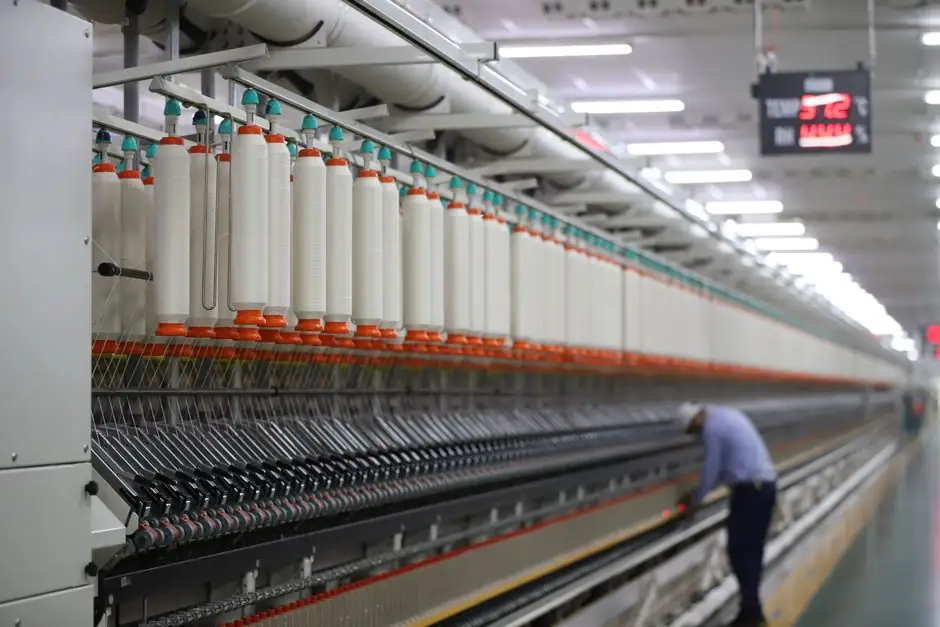
Connector quality in 2026 is governed by four reference layers: ISO 9001 quality management, MIL-STD performance specifications, IEC electrical and safety rules, and inline process control systems that the most automated plants use to push defect rates below 50 parts per million [S1].
The full production chain runs through stamping, plating, injection molding, and assembly, and each stage carries its own failure modes, so the standards stack is applied per stage rather than as a single end-of-line audit [S1][S2].
ISO 9001 as the Floor, Not the Ceiling
ISO 9001 sits at the base of every credible connector QMS in 2026, defining the process discipline and document control that downstream standards inherit [S1][S2].
The standard covers change control, calibration, traceability of raw copper alloy strip, corrective action, and internal audit cadence; it does not, by itself, define electrical or mechanical acceptance limits, so buyers need to layer it with product-specific specs [S1][S2].
For high-reliability hermetic parts, ISO 9001 is paired with MIL-STD and IEC documents that fix the real pass/fail criteria, including leak rate, insulation resistance, and contact resistance [S2].
MIL-STD and IEC: Where the Pass/Fail Numbers Live
MIL-STD and IEC documents carry the quantitative pass/fail criteria, including vibration, shock, temperature cycling, pressure, and dielectric withstand, that ISO 9001 references but does not define [S2].
Hermetic connector programs in aerospace, defense, and medical devices are required to comply with MIL-STD for extreme vibration, shock, temperature, and pressure survival, and with IEC for insulation resistance, creepage, and clearance on the contact system [S2].
U.S. federal solicitations issued in August 2026 still bind connector deliveries to the MIL SPEC documentation referenced in the contract, meaning the part paperwork, not just the part, must match the standard cited on the drawing [S6].
The Four Process Stages and Their Defect Signatures
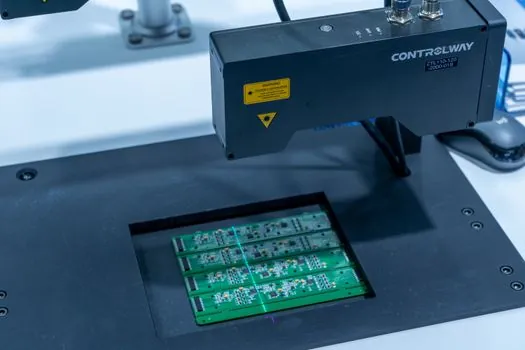
Each of the four manufacturing stages, stamping, plating, injection molding, and assembly, has a distinct defect signature and a distinct inspection stack, with progressive-die stamping running above 1,000 strokes per minute on copper alloy strip [S1].
Stamping defects read as pin twisting, edge chipping, bent pins, and dimensional drift from worn tooling, and the inline response is machine vision, laser micrometers, SPC charts, and 100% AOI before the part leaves the press [S1].
Plating is the harder inspection problem because the defects are small scratches, pinholes, and nodules on a reflective metal surface; the typical stack is a 1-3 μm nickel barrier under 0.05-2.5 μm of gold, tin, or palladium, followed by anti-tarnish and lubricant [S1].
Hermetic connector builds add glass-to-metal or ceramic-to-metal sealing stages on top of the standard four, which is why the leak-rate and thermal-cycle tests sit alongside the usual electrical tests in the QA plan [S5].
Environmental and Mechanical Test Matrix
Environmental and mechanical test matrices for hermetic connectors are standardized around temperature cycling, humidity, pressure and vacuum, corrosion, vibration, shock, and pull/stress tests, with each test mapped to a specific failure mode [S2].
Temperature cycling and humidity tests target seal failure and moisture ingress, pressure and vacuum tests target the leak rate that defines a hermetic part, and corrosion tests target plating and base-metal compatibility in salt or chemical exposure [S2].
Vibration, shock, and pull/stress tests target the mechanical retention of the contact and the seal, which is the most common field failure cause when the production lot skipped the matrix [S2][S4].
Electrical Performance Tests Buyers Should Require

Electrical performance tests on connectors fall into four repeatable checks: contact resistance, insulation resistance, dielectric withstand, and current rating, all of which should be traceable to a specific IEC clause or MIL-STD paragraph on the CoC [S2].
Buyers should require a Certificate of Conformance that names the test method, the sample size, and the lot number, because lot-level traceability is what makes a field failure actionable instead of just a warranty event [S1][S2][S6].
For RF connector lots, the same logic extends to VSWR, insertion loss, and shielding effectiveness data taken on the actual lot, not generic catalog curves, since RF performance is sensitive to plating thickness and contact geometry [S3].
How Production Delays and Quality Interact
Production delays and quality issues move together: a connector industry backlog that was about 6 weeks at the end of 2019 stretched to 14.7 weeks by February 2022, and the same supply pressure that lengthened lead times also pushed some suppliers to skip inspection steps [S4].
The same article documents the underlying drivers, copper, steel, and thermoplastic costs at multi-year highs, and a U.S. manufacturing labor gap averaging more than half a million open positions since late 2020, both of which directly affect stamping and plating line uptime [S4].
The practical buyer response in 2026 is to consolidate the supplier list, hold a single accountable point for the MIL-STD paperwork, and lock the inspection plan to the drawing revision before release, rather than negotiating it during a delay [S4][S6].
Where Connector QA Fits in a Wider Plant Program
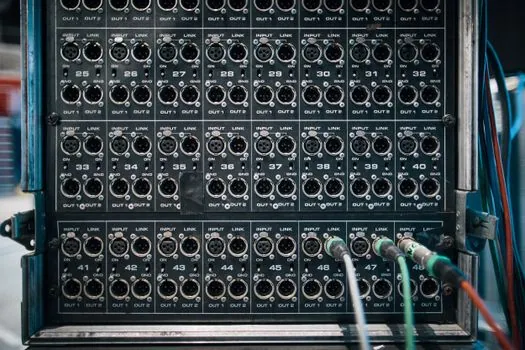
Connector QA rarely sits alone on a bill of materials; it usually arrives alongside cabling, sensors, and enclosure specs that share the same IEC and ISO references, so the same QMS audit can cover multiple line items. [S1]
Plants that are standardizing on a single QMS for cable and wire assemblies, including the Industry 4.0 sensor stack for cable plants, can usually extend the same audit cadence to connector suppliers without adding headcount, provided the connector CoC follows the same IEC paragraph structure as the cable test report.
For buyers sourcing raw materials from China, the 2026 petrochemical buyer spec map is the right reference for plastics and lubricant specifications on the insulation and housing side, while the connector-specific tests stay bound to MIL-STD and IEC clauses on the contact side.
The next trackable signals are the September 2026 update cycle for connector MIL-STD revisions, the Q4 2026 backlog data from the major U.S. distributors, and any new IEC clauses on high-frequency performance above 65 GHz, all of which feed directly into the 2027 supplier audit plan.
For the relevant spec sheets and selection criteria, see additive manufacturing material, air quality monitor, and power quality analyzer.