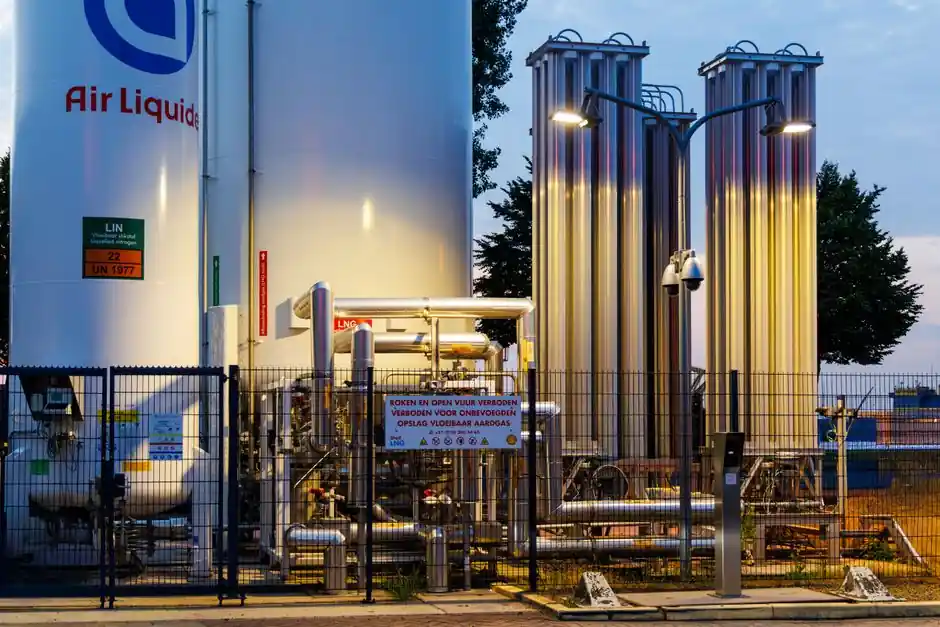
For a procurement engineer, the buying question is no longer whether China can deliver volume (it can) but which supplier cluster matches the spec, the documentation regime, and the logistics risk the project will carry.
The scale is hard to overstate. China alone accounts for 43% of global chemical output, and the petrochemical block represented 15% of global industrial direct CO2 emissions in 2021 [S2]. That concentration is why documentation failures, not product failures, drive the majority of cross-border shipment rejections, and why buyers who treat Chinese sources as interchangeable pay a hidden 20-40% premium in total landed cost [S1].
Supplier landscape: state-owned majors vs private specialists
Sector-wide revenue reached C¥14.5 tn (~US$2 tn) in 2024, but the industry-wide margin has slipped to just 4.5%, which compresses the room any single supplier has to absorb a buyer's change order without an LC-backed PO [S3]. For ethylene, aromatics, and polyolefins the state-owned cluster is the default; for specialty additives, catalysts, and fine chemicals, the private tier now sets lead time and MOQ reality.
The state vs private split also drives where buyers should expect pressure transmitter and flow meter instrumentation to be bundled versus separately sourced: state-owned turnkey packages usually include ISA-rated instruments pre-piped on skids, while private chemical plants more often follow a process-equipment-only model and leave the industrial valve and instrument scope to the EPC.
Documentation is the rejection vector, not the product
Industry data cited in 2026 supplier-compliance guidance puts the share of rejected chemical shipments caused by documentation gaps at 73%, not by the product itself failing to meet the registered spec [S1]. For food-additive and chemical-buyer programmes, batch-specific traceability and raw-material chain-of-custody are the recurring failure points; regulatory approval stamps on certificates often mask missing batch records [S1]. The practical fix buyers apply is to demand per-batch Certificate of Analysis (COA), Safety Data Sheet (SDS) aligned to GHS, and a mill-issued REACH or FDA registration number, depending on destination market, before issuing the deposit.
EU-bound volumes in particular need a separate compliance layer. Customs rejections of food-additive shipments commonly involve fully approved ingredients that fail on documentation, with one widely cited estimate placing preventable customs delays at US$2.1M annually per mid-sized importer [S1]. The same pattern repeats in petrochemical side-streams (plasticizers, antioxidants, intermediates) where the chemistry is identical to EU-grade stock but the paperwork does not satisfy the importing Member State's competent-authority review.
Pricing, MOQ, and the landed-cost reality
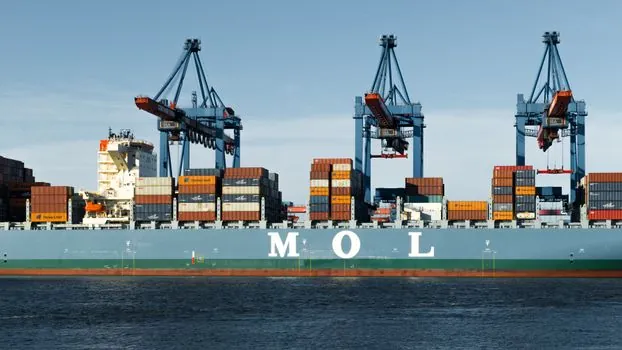
The lowest-priced quote on a China-origin chemical is not the lowest landed cost. Compliance-guide estimates put the hidden-cost gap at 22% for a typical additive PO and up to 40% for the cheapest citric acid offer on open B2B platforms, once demurrage, emergency reorders, and rejected-batch replacement are tallied [S1]. Price alone is reported to determine only 17% of total landed cost for food-grade chemicals, with quality-documentation gaps and batch inconsistency driving the rest [S1].
MOQ is more negotiable than the open-market reputation suggests. Platform-audited Chinese mills have shipped 200 kg sorbic acid and 50 kg trial batches at 18% lower unit cost than open-market listings, by pooling regional orders into shared containers; that container-sharing model is reported to slash per-unit cost by about 5% for small orders [S1]. For petrochemical side-streams, the same logic argues for an FOB Shanghai or FOB Qingdao trial of 1-5 tonnes before scaling to the 20-tonne container minimum that most private plants prefer for export runs.
Feedstock and logistics context for 2026 buyers
China remained the largest petroleum importer and the second-largest consumer, with domestic crude output above 200 million tonnes per year even as imports stayed the marginal supply source [S4]. During the April 2026 Hormuz disruption, Chinese crude imports fell from around 11.7 mb/d in February to under 9 mb/d by late May, drawing on strategic reserves of about 1.4 billion barrels, which kept Brent near US$100 rather than the US$200 some analysts had forecast [S3]. For a downstream buyer, that matters because feedstock cost stability, not headline plant-gate price, is what determines whether a Chinese offer will hold for the 60-90 day order-to-shipment window.
Domestic crude hit a record 216 million tonnes in 2025, electric vehicles displaced almost 70 million tonnes of petrol and diesel demand, and Beijing is moving the sector from a "large nation" of petrochemicals to a "powerhouse", per CNPC chief economist Wang Zengye's framing of bloc trading, marine insurance, and resource nationalism as long-run upward pressure on crude prices [S3]. The upshot for a 2026 sourcing plan: plan on higher underlying oil cost, and lock feedstock-linked contracts with a price-cap clause where the seller's terms allow it.
Selection criteria: a four-axis comparison
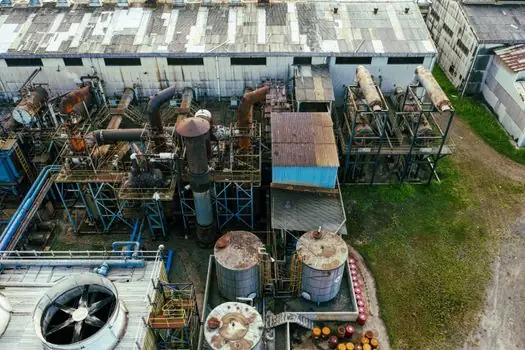
Comparing the main supplier clusters on the four criteria that drive a 2026 buyer's risk model:
1. State-owned majors (CNPC/Sinopec/CNOOC/Sinochem) on capacity: highest in ethylene, aromatics, polyolefins; on documentation: ISO 9001 + GB standard, plus internal traceability systems; on MOQ: full-container (20-25 t) and ISO-tank; on lead time: 30-60 days FOB. Best fit for: high-volume base chemicals where the buyer's QA team can audit the mill and the buyer's LC is large enough to meet the plant's order floor.
2. Private chemical specialists on capacity: strong in specialty additives, catalysts, plasticizers, intermediates; on documentation: variable, often ISO 9001 but inconsistent on REACH/FDA per-batch file; on MOQ: 200 kg-5 t via shared-container programmes; on lead time: 15-30 days FOB. Best fit for: mid-volume specialty orders where the buyer's QC lab can run inbound identity and impurity panels.
3. Trading companies / export agents on capacity: limited own production, broker access to multiple mills; on documentation: weakest link in the chain, often re-issuing COA without batch linkage; on MOQ: most flexible; on lead time: 7-21 days but with re-routing risk. Best fit for: small-lot R&D and qualification volumes, with a hard rule of never accepting a COA that does not name the producing mill.
4. Integrated platform-audited networks (a newer tier flagged in 2026 compliance guidance) on capacity: pooled across hundreds of regional factories; on documentation: platform-issued batch COA with raw-material traceability; on MOQ: 50-200 kg via container sharing; on lead time: 20-40 days. Best fit for: EU and North America buyers who need per-batch documentation rigor without the audit cost of running their own China QA team [S1].
Standards and verification buyers should require
For REACH-bound cargoes, ask for the mill's REACH registration number and a tonnage-band confirmation, not just a "REACH-compliant" claim on a marketing PDF. For FDA-bound food-contact or pharma intermediates, request the FDA Food Facility Registration (FFR) number and a Drug Master File reference where applicable. For shipments crossing EU customs, insist on a GHS-aligned SDS in the destination language and an expiry/retest date printed on the COA, not just on the box label. [S1]
For instrumentation and process-equipment packages sourced alongside the chemicals (skid-mounted dosing, crossed-roller guide indexing tables, linear guide rails on filling lines), keep the certification chain separate from the chemical COA: ISO 9001 on the equipment maker, ATEX 2014/34/EU or IECEx for hazardous-area skids, and a separate mill traceability file for any wetted parts. Conflating equipment CE/ATEX files with chemical REACH/FDA files is one of the fastest ways to lose a customs hold, and a buyer who separates them at the RFQ stage avoids the rework.
Risks and failure modes to price in
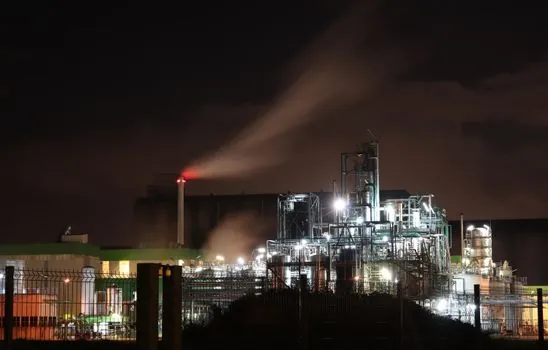
The dominant 2026 failure modes reported across compliance guidance are: undocumented raw-material traceability, batch inconsistency between qualification sample and production lot, and re-issued COAs from a mill that did not actually produce the batch [S1]. Sector-level margin compression to 4.5% raises the chance a smaller private supplier renegotiates mid-contract if feedstock spikes, so credit terms (30% deposit, 70% against copy of B/L) are the standard defence, with an LC recommended for any single PO above US$200k.
Logistics risk has not gone away. The Hormuz episode showed that even with 1.4 billion barrels of strategic reserves and 216 million tonnes of domestic crude, China's import-dependent petrochemical chain is exposed to chokepoint closures of about a fifth of world flows [S3]. For a buyer, the practical hedge is dual-sourcing at the SKU level for any input that, if short, would idle a production line, plus a 45-60 day safety stock on the highest-risk intermediates.
A useful parallel reference on building a spec-driven sourcing playbook is this China LNG sourcing spec map for replacing lost Qatari volume, which applies the same documentation-and-feedstock-resilience logic to LNG; the aerospace procurement strategy on spec gates and supplier maps is the closer analogue for buyers building a multi-tier Chinese supplier audit programme.