
On a packaging line, the conveyor chain sets the throughput ceiling: chain pitch, tensile rating, and attachment geometry decide case rate, changeover time, and how often the line stops for lubrication or stretch take-up [S5][S8].
This guide covers the four filter questions that resolve most pack-line chain choices, the four chain families that cover routine duty (roller, double-pitch conveyor, stainless, engineering/attachment), and the comparison criteria (load, speed, environment, maintenance) engineers should score before issuing a purchase order [S3][S6].
Four Filter Questions Before You Pick a Chain
End-of-line conveyor selection comes down to four filters, in this order: what you are moving (weight, footprint, fragility), what the next machine needs (continuous flow vs accumulation), the environment (dry, washdown, cold), and total cost of ownership including lubrication, spares, and downtime, not just purchase price [S3].
For chain specifically, those four filters map to chain pitch, roller diameter, material, and lubrication interval: a 40 cases-per-minute case sealer feeding a variable-cycle palletizer needs a chain that can stop-and-start under load without stretch runaway, while a continuous labeler needs a chain that runs at constant velocity with minimal whip [S3][S7]. Conveyor chain selection depends on the specific load, speed, environment, and layout of the conveyor system, and an incompatible chain is the dominant root cause of premature wear and unplanned stoppages [S8].
Roller Chain vs Double-Pitch Conveyor Chain vs Stainless vs Engineering Attachment
ISO 606 roller chain (sizes 08B-24B, pitch 12.7-38.1 mm) is the default drive chain on mid-speed packaging equipment where compactness matters, and is available in carbon steel, stainless, and matched-and-tagged sets for multi-strand packaging machinery [S1]. Double-pitch conveyor chain (C2040-C2102 series, pitch 25.4-101.6 mm) carries the lighter loads of long, slow carton and bottle transfer runs where roller diameter and chain mass are oversized for the duty [S1][S5].
Stainless chain (AISI 304 or 316) is specified for washdown, food-contact, and pharmaceutical packaging lines, where corrosion resistance and cleanability outweigh the roughly 2x cost premium versus carbon steel [S1][S6]. Engineering and attachment chains, with extended pins, K-type or M-type attachments, and custom flights, are built for bulk-product and pallet-handling duty where the chain must grip, push, or lift the product rather than carry it on a belt [S2][S5].
Attachment chains for packaging cover drive and conveyor duty with individual attachment components (K, M, A, SA series), letting engineers add flights, grippers, or pushers to a standard chain without redesigning the line [S2].
Material and Environment: Carbon Steel, Plated, Stainless, or Polymer
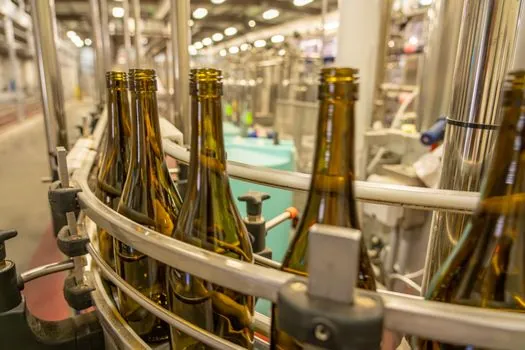
Carbon steel roller chain is the cheapest option and the most common on dry packaging lines, but it rusts in humid or washdown conditions and is not suitable where condensate, CIP chemicals, or product residue can sit on the chain [S1][S6].
Nickel-plated or zinc-plated carbon steel extends life in mildly corrosive indoor air (typical bottling hall humidity 60-80% RH) and is a common mid-cost step between plain carbon and full stainless [S1]. AISI 304 stainless handles routine washdown and food contact, while 316 stainless is specified for chloride-rich or aggressive CIP environments where pitting and crevice corrosion would otherwise eat a 304 chain in 12-24 months [S1][S5]. Polymer or engineering-plastic roller chain (acetal, UHMW) appears on cleanroom and high-humidity lines where lubrication is forbidden, at the cost of lower tensile capacity and temperature limits near 80-100 deg C continuous [S5]. For broader context on how chain selection ties into conveyor architecture, the conveyor chain reference covers the full duty envelope.
Speed, Load, and Lubrication: The Operating Triangle
Chain speed in packaging rarely exceeds 60 m/min on conveyors (compared to 120-180 m/min in industrial power transmission), but the cyclic stop-start duty at accumulation zones generates fatigue loads that a steady-state rating does not capture [S7].
For a 50 kg/m distributed load at 30 m/min, an ISO 12B-1 chain (pitch 19.05 mm, roller diameter 12.07 mm) is the typical minimum on a packaging conveyor; for the same load at 60 m/min, a 16B-1 or 20B-1 chain is the next step up [S1][S5]. Lubrication interval is the dominant operating-cost variable: a sealed Sapphire-type or maintenance-free chain runs 5,000-10,000 hours between interventions, while a standard carbon-steel chain on a washdown line needs re-lubrication every 250-500 hours to keep the pin-bushing interface alive [S1]. When conveyors carry packaged goods rather than raw product, the chain conveyor architecture page covers the matching drive and take-up logic.
Layout and Attachment Geometry
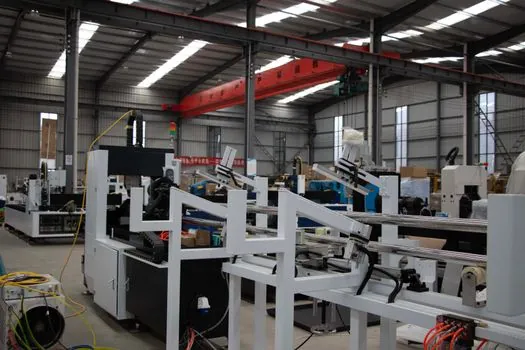
Packaging-line conveyor layouts split into straight, L-shape, U-shape, incline, and curved sections, and the chain choice must match each section rather than the line as a whole [S4].
Curved conveyors use chain with side-flexing plates (e.g. 08BF-24BF series) where the link geometry allows lateral articulation without binding on the sprocket teeth; using a straight-run chain on a curve causes edge loading, premature pin wear, and stretch on the outer strand [S1][S7]. Incline conveyors above 15-20 deg need attachments or flights to prevent the product from sliding back, and the chain pitch must be short enough that flight spacing stays below half the package length [S2][S4]. For accumulation zones before a palletizer or case packer, zero-pressure accumulation requires chain with controlled friction back-pressure or dedicated accumulation chain, not a standard roller chain retrofitted with brakes [S3][S6].
Failure Modes and Pitfalls on Pack Lines
The four most common pack-line chain failures are elongation past the 3% take-up limit, pin-bushing wear from lubrication starvation, attachment loosening from shock load, and corrosion pitting on stainless or plated chain used outside its chemistry envelope [S7][S8].
Elongation past 3% on a chain's nominal pitch means the sprocket teeth are riding out on the pitch line, and continuing to run accelerates wear on both the chain and the sprocket; a worn chain on a new sprocket (or vice versa) is the most common mismatch and halves the life of the new part [S7]. Pin-bushing wear shows up as the chain running past its tensioner, and on washdown lines is usually traced back to water displacing the factory lubricant within the first 100-200 hours [S7]. Choosing an incompatible chain, for example a general-industry chain on a freezer-line at -25 deg C, causes brittle fracture at the plate hole, where standard carbon steel loses impact toughness below roughly -20 deg C [S8].
Standards and Sourcing
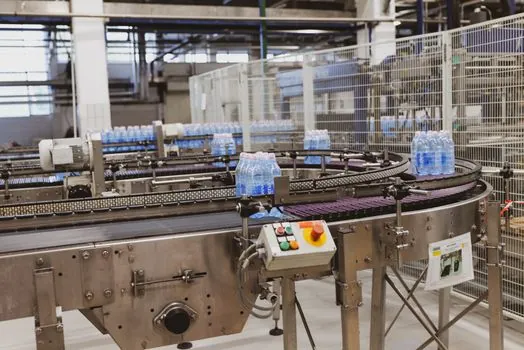
Packaging-line conveyor chain is governed by ISO 606 (short-pitch transmission roller chain and bush chain), ISO 1275 (short-pitch conveyor chain with attachments), and ANSI B29.1 for the US parallel market; matching chain and sprocket to the same standard is a hard requirement, not a preference, because ISO and ANSI chain do not interchange on the same sprocket [S1].
Food-contact chains additionally need to satisfy the regional hygiene framework (FDA 21 CFR for the US, EU 1935/2004 for Europe) and lines running in hazardous areas (solvent, dust, or ATEX zones 1/21) need chain with documented material traceability and, where sparking is a risk, non-sparking materials [S1][S2]. Sourcing from the OEM's packaging-industry catalog (Diamond, Wippermann, Tsubaki, Sedis, Can-Am) typically delivers matched-and-tagged sets and pre-engineered attachment chains that are already validated against the four filter questions above [S1][S2][S5]. For the broader machine-side context including vacuum and form-fill-seal lines that these chains feed, the packaging machine reference covers the downstream interfaces. Trackable signals for the next 6 months: uptake of maintenance-free stainless chain on washdown FMCG lines, and broader adoption of side-flexing attachment chain on compact U-shaped end-of-line layouts documented in OEM case studies [S2][S5]. For the wider procurement landscape shaping this category, see the Riyadh cement industrial-automation digest which captures parallel capex signals in adjacent heavy-industry sectors.