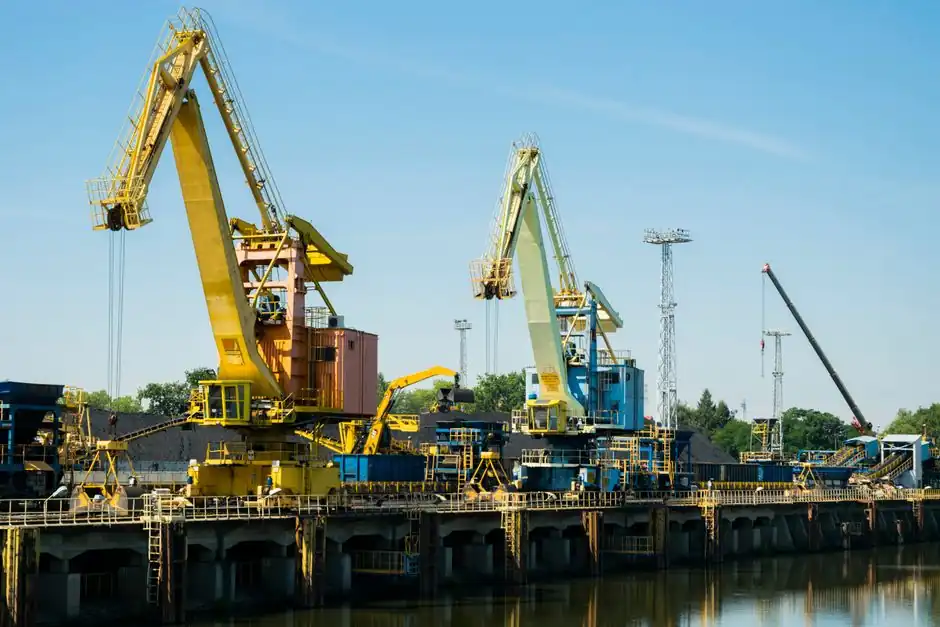
In a cement works, jaw couplings are not the universal answer: a single 15,000 Nm polyurethane-spider unit can carry a motor-to-fan drive on a preheater tower, but the same coupling will be destroyed inside a week on a ball-mill pinion. The selection question is therefore not "is a jaw coupling good", it is "where in the plant does its torque, speed, and misalignment envelope actually fit" [S1][S2].
Cement plant duty cycles put four stresses on every coupling: continuous 24/7 loading, cement-dust ingress, ambient temperatures typically 40 to 80 °C around the kiln and clinker cooler, and shock transients on crushers and mills. Jaw couplings with shore-hardness 80A to 95A elastomer spiders absorb those transients and tolerate angular misalignment up to about 1° and parallel misalignment of 0.2 to 0.4 mm, depending on size, which is why the format is the default for general-purpose auxiliaries rather than primary mills [S2][S5].
Spider Material and Shore Hardness: The Fuse Inside the Coupling
The elastomeric spider is the wear item and the torsional fuse, and its shore hardness is the single most leveraged selection variable on a jaw coupling: 80A to 90A compounds give the highest damping and the lowest torque density, 95A to 98A shifts the curve toward higher torque with less vibration absorption, and 64D polyurethane or Hytrel variants push the torque ceiling further while losing the soft-start cushion [S5]. Lovejoy's published jaw-coupling range (December 2025 catalog JW-11/JW-12) lays out seven product families: L, LC, Al, SS, RRS/RRSC, C, and RRC, with C and RRC positioned as medium and spacer types for heavier torque than the L/LC general-purpose line [S2].
For a cement-plant pump or fan on a standard foot-mounted motor, an L or LC jaw coupling in 92A or 95A shore is the typical spec, bored to a transition fit on both shafts. Spider failure is normally a replacement event, not a coupling-replacement event, which is one reason jaw couplings earn their keep on auxiliaries: a 5-minute spider swap is far cheaper than a gearbox rebuild. The catalog also warns explicitly that the coupling must never be operated with a damaged or worn elastomer, and that any beating sound or vibration on startup is a stop-and-realign signal, not a "run it for another week" signal [S2].
Service Factor: Where the Catalog Rating Stops Being Enough
Cement-plant service factors are not optional multipliers: a bucket elevator driven by a motor with normal starting torque still calls for at least a 1.5 service factor on the coupling rating, a heavy shock-loaded crusher or mill feeder typically sits between 2.0 and 3.0, and reversing or frequent-start drives (some cooler feeders, certain apron feeders) are sized against 3.0 or above [S2][S3]. Lovejoy's selection process uses the driven machine's horsepower (or kW), service factor, and the motor's peak torque to land on a coupling size, then checks that the chosen spider's continuous torque rating exceeds the modified load [S2].
For a 75 kW, 1,480 rpm motor on a preheater ID fan, the catalog's published ratings and a 1.5 service factor usually resolve to a mid-range L or LC jaw coupling with a 95A spider; for a 250 kW cooler drive, the same calculation tends to push the spec up into a C-type (medium) jaw coupling or out of jaw couplings entirely into a gear or grid coupling, because the catalog torque ceiling of an L/LC unit is not the right tool for that job [S2]. This is also why the jaw coupling product family is rarely specified on the kiln or main mill: the catalog envelope and the cement duty cycle do not overlap on the heaviest nodes.
Comparison: Coupling Families Against Cement-Plant Decision Criteria
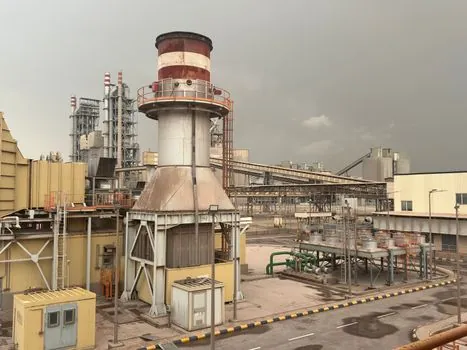
Across the four families discussed in cement-industry selection guides, the decision matrix looks like this: gear couplings such as the GHR (0 to 116,750 Nm) and LX (2,060 to 2,900,000 Nm) win on torque capacity and are the usual spec for ball mills, kilns, and heavy conveyors; grid couplings win on shock absorption and are favored on crushers and high-power conveyors; flexible elastomer couplings, including jaw couplings, win on misalignment tolerance, no-lube operation, and installed cost, which makes them the default on pumps, fans, blowers, and bucket-elevator auxiliaries; and disc couplings win on high-speed precision and zero maintenance where the budget supports them [S1][S3][S4].
A useful cement-side rule of thumb from the published product data: a single jaw coupling is generally the lowest-cost and lowest-maintenance option up to roughly 15,000 Nm and 19,000 rpm on continuous-duty, well-aligned auxiliaries, but once torque and shock duty cross into ball-mill or kiln territory, the spec must step up to a gear, grid, or disc design rather than scale a jaw coupling to its absolute maximum [S1][S3]. A related reference, the jaw coupling selection for agricultural machinery guide, shows the same envelope logic playing out in a different dusty, 24/7 environment, with the same spider-hardness trade-offs and the same failure pattern (worn spider, not catastrophic hub failure).
Where Jaw Couplings Fit, and Where They Don't, in a Cement Plant
Jaw couplings are a strong fit on: motor-to-pump drives for cooler water and process water pumps; motor-to-fan drives on preheater, cooler, and bag-filter ID fans within the catalog envelope; small to mid-size conveyor and bucket-elevator drives; and gearbox input shafts on auxiliary units. They are a poor fit on: ball-mill pinion and gearbox output shafts (use gear couplings), primary crusher drives under peak shock (use grid or gear couplings), kiln drive trains (use gear couplings), and high-speed separator fans at the top of the speed range where a disc coupling's torsional stiffness is preferred [S3][S4].
The relevant cement plant equipment context and the broader cement and concrete processing reference both underline why this split exists: cement manufacturing is dominated by heavy, dusty, continuous-duty rotating equipment, and the coupling that survives the longest on each node is the one whose strength matches the node's dominant stress, not the one with the widest catalog range. A useful related read on the special cement and clinker handling side covers the dust and temperature profile that drives the spider-compound choice on those auxiliary drives.
Installation Reality: Alignment, Bore, and ATEX Around the Cooler
Two installation issues decide whether a jaw coupling lives or dies in cement service. First, alignment: parallel and angular misalignment must be within the catalog's published limits, otherwise the spider heats up, the hubs wear, and the unit fails well before its calculated service life; Lovejoy's catalog section explicitly tells the operator to shut down and recheck alignment if the running coupling vibrates or beats [S2]. Second, bore and keyway: the standard practice is a transition fit on both shafts with a key, never an interference fit on a standard foot-mounted motor shaft, because a jaw coupling is meant to be removable for spider service.
Around the clinker cooler and any coal-grinding or bag-filter section, the local area classification can be Zone 21 (dust) or Zone 1/2 (gas), in which case the coupling itself must be specified against ATEX 2014/34/EU category 2 or 3, with non-sparking spider materials and metallic hubs that will not become an ignition source on spider failure. The Lovejoy SS-type (stainless) jaw coupling is the line of choice where dust corrosion or washdown is a concern, while the Al (aluminium) line is weight-sensitive but not always suitable for Zone 21 dust without a documented compatibility note from the manufacturer [S2][S5].
Selection Checklist and Sourcing Signals
For an engineer writing a jaw-coupling spec for a cement-plant auxiliary, the verifiable checkpoints are: (1) driven machine kW and rpm at the coupling; (2) service factor from the driven machine class, usually 1.5 to 3.0; (3) catalog torque rating of the chosen size after service factor, never the un-modified rating; (4) spider shore hardness, typically 92A or 95A for general cement auxiliaries, harder compounds only if torque density demands it; (5) bore size and keyway per ISO 773 / ISO 774 for shaft diameters typically 20 to 80 mm; (6) ATEX/IECEx zone classification if the drive is inside mill or coal-grinding enclosures; (7) spare-spider stocking plan, because the spider is the consumable, not the hubs [S2][S5].
Trackable signals for the next procurement cycle: confirm with each bidder whether the quoted jaw coupling is the L/LC general-purpose line or the C/RRC medium-torque line, request the published continuous-torque and peak-torque values for the specific size and spider compound, and ask for a written service-factor recommendation on the specific driven machine rather than a generic table. The jaw coupling encyclopedia page carries the format-specific construction and material data, while the coupling and clutch reference frames where jaw couplings sit against gear, grid, and disc alternatives when the duty cycle crosses the jaw-coupling envelope.