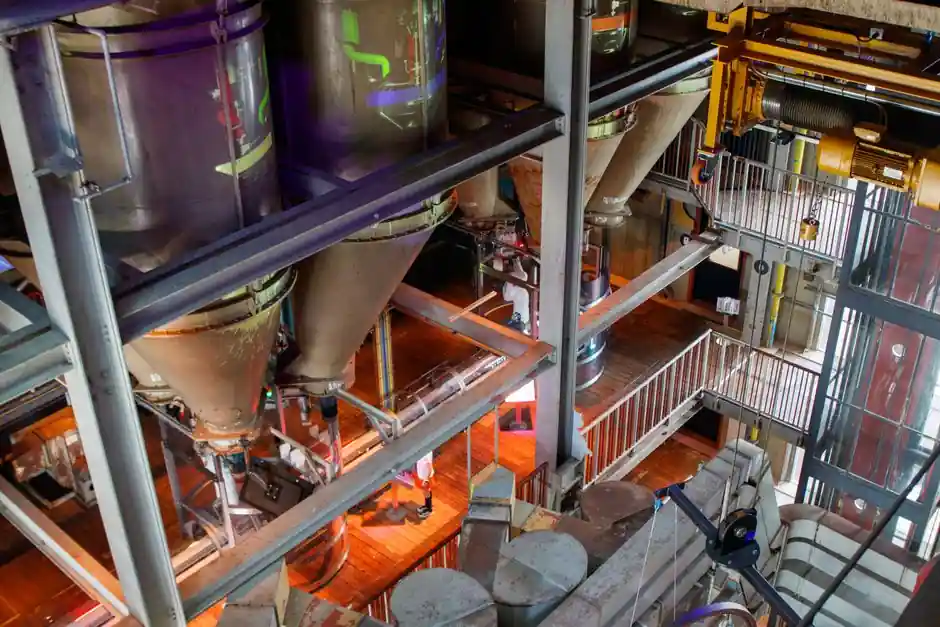
High-throughput sorter systems in commercial fulfillment commonly deliver 9,000 to 27,000 items per hour on a single sorter, and top-tier distribution centers push 40,000 to 50,000 sorts per hour, with one cited case clearing roughly one million units per day at the upper bound [S3][S1].
Throughput is measured in parcels or items processed per hour, with conveyor speed, sorter capacity, induction quality, and destination count all contributing to the figure, so real-world sustained rates sit below the vendor's rated capacity once singulation, recirculation, and chute-swap losses are accounted for [S2][S4].
Sorter Class vs. Items Per Hour: Where Each Architecture Lands
Cross-belt sorters span a wide envelope, from a few thousand to well over 20,000 parcels per hour depending on carriage count, loop speed, and parcel size, with rated capacity assuming a perfectly singulated, gap-controlled feed that production floors rarely sustain for a full shift [S4].
Honeywell/Intelligrated-style automated sortation systems quote up to 27,000 items per hour with 99%+ sortation accuracy when the system is fully integrated with scanners and controls [S1]. Pivotal and swivel-wheel sorters, a mid-tier architecture, cap out near 90 items per minute, which translates to roughly 5,400 items per hour as a single-machine limit [S7].
Older but still-installed high-throughput carton sorters land at 75 to 225 cartons per minute, equivalent to 4,500 to 13,500 cartons per hour, and are the workhorse class for apparel and retail replenishment [S5]. For an order-fulfillment cut, sortation system selection follows destination count, average parcel weight, and peak-shift sustained rate more than top-line speed.
Why Rated Capacity Is Not Sustained Throughput
Vendor-rated parcels-per-hour numbers assume gap-controlled induction and full destination availability; in practice, adding a second induction point to a loop sorter doubles raw throughput but halves usable destinations per batch, and recirculation of un-discharged items wastes 10 to 20% of nameplate capacity [S3].
Speed-only thinking breaks down at chute level. A sorter running 20,000 sorts per hour into 200 destinations fills chutes faster than workers can swap containers, so the constraint shifts from the sorter to the discharge end, and accuracy under pressure falls from 99% automated to 96% or worse when manual put-walls are added as overflow [S3]. A practitioner guide on singulator sizing is laid out in singulator-induction rate sizing for conveyor sortation, since induction sets the ceiling regardless of loop speed.
Sustained throughput also depends on parcel mix: thin polybags and irregular soft packs that do not seat flat on a belt fail to discharge cleanly, so any spec must walk the full length, width, height, and weight envelope rather than the average parcel [S4].
Comparison: Sorter Types on Throughput, Footprint, and Fit
Cross-belt sorters offer gentle discharge and high destination density on a small footprint, typically clearing 9,000 to 20,000+ items per hour with parcel-friendly handling, but they need a tightly singulated infeed and a weight envelope that excludes very small or very soft items [S4].
Loop and tilt-tray sorters share the cross-belt throughput ceiling but discharge more aggressively, which suits rigid cartons and apparel but increases parcel tumble risk, and they hit the same destination-split problem when a second induction is added [S3].
Swivel-wheel and pivot sorters, at up to 90 items per minute (about 5,400/hour), are a fit for medium-throughput zones and downstream sort points where a cross-belt loop would be overkill [S7]. A 40,000 to 50,000 sorts-per-hour operation typically layers multiple sorter classes rather than scaling one machine, since modular AMR-based approaches can hit 22,500+ sorts per hour without expanding the fixed-conveyor footprint [S3]. The cross-belt sub-type is one option under the broader conveyor sorting line family.
Layout and Induction: The Real Throughput Levers
Bottlenecks in a parcel hub concentrate at induction points, merge zones, and sortation destinations, so any throughput audit starts there before touching the sorter itself [S2].
Gap-controlled induction and an upstream singulator buy more real throughput on a cross-belt loop than a faster belt does, because the sorter idles waiting for clean gaps when parcels arrive in clumps [S4]. Modular conveyor platforms let operators scale capacity incrementally by adding induction or discharge points without a full re-build, which keeps capital outlay and downtime lower than a one-shot replacement [S2].
Space-constrained sites push sortation vertical with overhead conveyor routing and compact accumulation zones, a layout pattern that protects floor area without sacrificing items-per-hour density [S2]. The automatic molding line and molding line encyclopedia pages cover analogous modular-scale logic for a different process class, but the principle of staging capacity at the constraint station is the same.
Selection Criteria: Who a High-Items-Per-Hour Sorter Is For
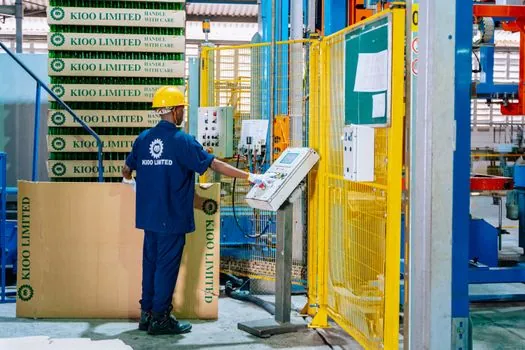
Operations aiming at 9,000+ items per hour on a single sorter are typically parcel and e-commerce hubs with high destination counts (150 to 400+ chutes), a sustained 16 to 24-hour shift pattern, and a parcel mix dominated by rigid cartons and polybags in the 0.5 to 30 kg range [S4][S2].
Facilities with fewer than 100 destinations, highly variable parcel sizes, or soft-pack-dominant volume are poor fits for a single high-throughput cross-belt loop, and a layered scheme of mid-tier pivot sorters feeding a smaller main loop usually returns better items-per-hour per dollar [S7][S4]. Operations targeting 40,000+ sorts per hour almost always run multiple sorters in parallel rather than one oversized machine, with the 22,500+ sorts-per-hour modular AMR benchmark cited as the floor for that tier [S3]. The line-frequency furnace and line-scan camera references are unrelated process equipment but document the same staged-capacity logic applied to other continuous-flow lines.
Trackable Signals for the Next Planning Cycle
Two verifiable items are worth tracking: vendor disclosures of new modular conveyor and sorter platforms released in 2026 with published per-hour ratings, and benchmarked case studies of facilities running parallel-sorter schemes above 30,000 sorts per hour with documented destination counts and recirculation losses. [S3]