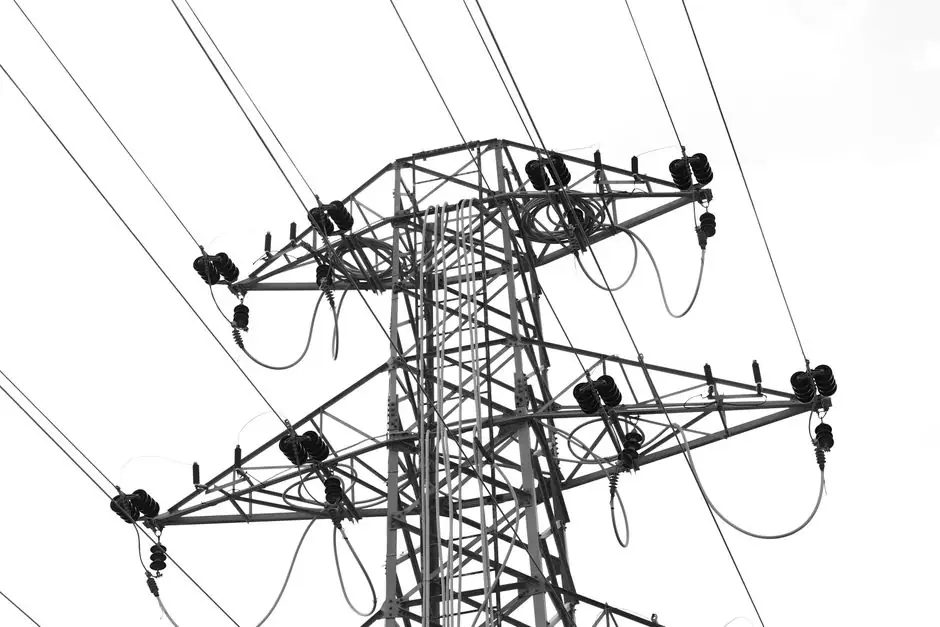
For new automated stacker crane (AS/RS) installations, enclosed conductor rail is now the default electrification on runway lengths above 60 m, while flat-cable festoon remains the lowest-cost path for short bridge runs under 30 m with light duty [S1][S2].
The three viable systems for moving power onto a stacker crane are rigid conductor bar, flat-cable festoon on trolleys, and motor or spring-driven cable reel; each has a different break-even on run length, speed, duty cycle, and headroom [S1][S5]. Picking on first-cost alone is the most common specification mistake: festoon hardware is cheap, but the cable it consumes is replaced on a 3 to 5 year cycle in AS/RS duty [S2].
System Comparison: Conductor Rail vs Festoon vs Cable Reel
Conductor bar systems for overhead cranes generally consist of four linear bars (three live phases plus a dedicated ground), sliding collector shoes, and the mechanical hardware for mounting, with protective guarding and grounding options sized to the building classification [S5].
Festoon systems, in contrast, carry flat or round cable looped between trolleys that stack together as the crane parks and extend as it travels toward the opposite end of the runway, giving a simple mechanical layout but a moving cable that wears on every cycle [S1][S6]. Cable reels are spring- or motor-driven spools that pay out and retrieve a multi-conductor round cable, and are most often chosen for very long monorail or yard crane runs where a continuous bar would be uneconomic [S1][S5].
On a head-to-head spec basis, conductor rail is rated for higher travel speeds (commonly up to 300 m/min on enclosed bar systems), supports higher amperage without voltage drop penalties, and is enclosed to IP2X finger-safe as standard, while festoon is mechanically simpler, cheaper to install, and easier to extend in the field but limits speed to roughly 120 m/min and introduces a cable-loop that consumes headroom [S1][S3][S5].
Selection Criteria for Stacker Crane Duty
Stacker cranes in AS/RS warehouses typically run 50 to 200 cycles per aisle per day at 60 to 180 m/min with aisle lengths of 40 to 120 m, which puts them at the upper end of what festoon cable can absorb before the loop becomes a maintenance liability [S2][S3].
The four criteria that actually drive the choice are runway length, travel speed and duty cycle, available headroom and side clearance, and environment (dust, cold store, outdoor, or galvanic atmosphere). The Electrification and Controls Manufacturers Association publishes ANSI/ECMA 35 covering minimum requirements for AC and DC electrification on electric overhead traveling cranes, monorails, gantries and workstation cranes, and is the U.S. reference document most OEM quotation engineers cite first [S5].
Conductor rail is the correct pick when any of the following are true: runway above 60 m, continuous duty above roughly 120 cycles per shift, ambient below 0 °C (PVC festoon jackets stiffen), or the aisle must remain clear of hanging loops to protect personnel and racking. Festoon remains the correct pick when the bridge is short (under 30 m), the duty is light, headroom is generous, and the buyer wants the lowest installed cost [S2][S4].
Headroom, Sag, and Mechanical Footprint
Festoon cable stacks in loops that hang below the runway support, and the loop depth grows with the runway length and cable cross-section; for a 40 ft (12 m) bridge using 6/4 SEO cord the loop length is typically about twice the festoon run, so a 12 m span needs roughly 24 m of cable in coils [S4]. That loop mass also pulls the moving trolley toward the festoon anchor point, producing a constant lateral moment that the bridge structure must resist [S4].
Conductor rail is mounted on a bracket at or near the runway beam, so its vertical footprint is essentially the bar height (commonly 60 to 90 mm for multi-pole enclosed bar) plus the collector arm, with no sag envelope to budget for [S1][S3]. In tight AS/RS aisles where the crane passes within millimetres of rack uprights, that footprint difference is usually the deciding factor, not first cost [S2].
Maintenance, Wear, and Failure Modes
Festoon systems fail by cable fatigue: the cable is the wear part, and is rated for a finite number of bend cycles before the conductors fracture inside the jacket; once a single conductor opens, the entire festoon string is usually replaced, not spliced [S2].
Conductor bar systems fail by collector-shoe wear and by contamination of the contact surface, which is why most maintenance routines specify a wipe-down interval and a collector-shoe replacement at a defined wear-line rather than a calendar interval [S2]. Sparking during travel is the most common conductor bar complaint and almost always traces to a worn shoe, a misaligned joint between bar segments, or a dust build-up on the contact surface rather than to the bar itself [S2]. Cable reels sit between the two on maintenance burden: the spring or motor is mechanically more complex than a festoon trolley, but the cable sees far less flexing than in a festoon [S1][S2].
Standards, Safety, and Integration Notes
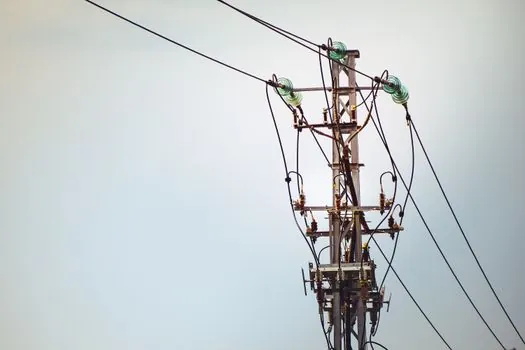
ANSI/ECMA 35 is the U.S. national standard for crane electrification and is the document most North American OEM quotation engineers work to, while IEC 60204-32 covers electrical equipment of hoisting machines and is the parallel reference on most European and Asian AS/RS builds [S5]. Enclosed conductor bar typically meets finger-safe (IP2X) requirements out of the box, which simplifies the safety case versus an open collector on a bare bar [S3][S5].
Control circuit voltage on overhead cranes is intentionally kept lower than the main power circuit to limit shock hazard to the operator, and that lower-voltage control feed can share the same festoon string or the same conductor bar housing as the main phases, provided the insulation class and creepage distance are sized for the higher of the two voltages [S1]. For modern AS/RS controls, both festoon and conductor bar can carry data alongside power, and vendor data sheets for multi-pole enclosed bar list options for signal pairs or bus protocols that ride in the same housing [S1][S5].
Cost and Lifecycle Trade-Off
First-cost ranking is consistent across the sources: festoon is cheapest on hardware, conductor bar is in the middle, and motor-driven cable reel is the most expensive on a like-for-like runway length [S1][S4][S5].
Lifecycle cost runs in the opposite order on heavy AS/RS duty. A festoon string on a 60 m runway running two shifts at high cycle counts is realistically on a 3 to 5 year replacement cycle, with each changeout requiring aisle downtime and a rigger; conductor bar collector shoes are a fraction of that cost and are replaced without disturbing the bar itself [S2][S3]. Buyers should request a 10-year parts-and-labour lifecycle quote from the OEM, not just an installed price, before locking the spec [S2][S5].
When Festoon Is Still the Right Answer
Festoon is not a bad system; it is the right system when the duty matches its limits. A 12 to 30 m bridge on a workstation crane, a maintenance bay, or a light-duty stacker in a parts warehouse running one shift is a textbook festoon application, and a home-built festoon of SEO cord on a wire rope with bent-rod hangers has been documented to run 25 years essentially unmaintained in light reciprocating service [S4].
The mistake to avoid is scaling that template up to a 100 m AS/RS aisle running two shifts, where the cable loop mass, the bend-cycle count, and the headroom loss all push the design out of its comfort zone [S2][S3]. When in doubt, get the electrification supplier into the layout review at the same time as the stacker crane OEM, because electrifying a finished aisle is the most expensive way to do it [S5].
Track the next revision of ANSI/ECMA 35 and any updates to IEC 60204-32 creepage and finger-safe test criteria before issuing purchase specs on long AS/RS runs, and confirm with the OEM whether the quoted conductor bar is rated for the aisle's peak ambient (cold store, paint shop, galvanizing line) before sign-off.
For the relevant spec sheets and selection criteria, see power supply, and dc power supply.
This topic is covered further in Concrete Mixer Truck Drum RPM: Mixing vs Agitation Specs.