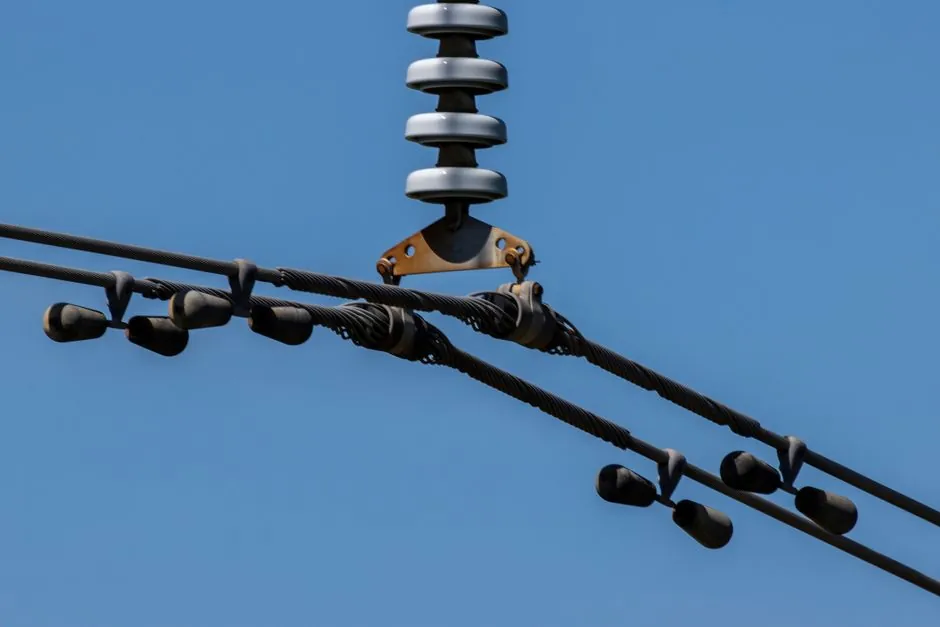
The US Producer Price Index for Copper Wire and Cable (WPU10260314) reached 602.48 in August 2026, up 27.24% from 473.48 a year earlier and 4.20% above the July reading of 578.187, confirming a structural reset in copper-linked cable pricing rather than a seasonal blip [S1][S5].
On the raw-material side, LME Copper cash settled at $6.5106/lb for August 2026, COMEX Copper at $6.5880/lb, and an Omega-Camden base price of $9.5500/lb took effect on September 16, 2026, all in a tight band that explains the upstream pressure on finished cable quotes [S2].
What the PPI is actually measuring
WPU10260314 is a BLS commodity-level Producer Price Index with base Dec 1986=100, not seasonally adjusted, covering copper wire and cable output prices reported by US manufacturers each month [S1].
The Copper Wire and Cable Producer Price Index (WPU10260314) stood at 602.480 in August 2026, with the series described as Index Dec 1986=100 and released on a monthly basis [S7]. YCharts records the same August 2026 print of 602.48, with a 5.25% average growth rate over the indicator's full history [S5].
Because the index is a producer-side number, it captures mill-gate quotes for power cable constructions including XHHW, THHN, and MV-105, which are the items most procurement teams see on a copper-content adder basis. A 27.24% year-over-year move in the PPI line is equivalent to roughly 13–14 cents of additional copper content in a 600 kcmil XHHW conductor at current rod premiums, before any conversion-cost or insulation pass-through.
Regional price index moves, quarter over quarter
For the quarter ending June 2026, the Copper Wire Price Index in the USA rose 10.05% quarter-over-quarter on logistics restocking, with an average traded price of approximately USD 27,423/MT and US mills running near 94% capacity utilization [S4].
In APAC, Malaysia's Copper Wire Price Index rose 12.63% quarter-over-quarter for the same quarter, with an average landed price of about USD 13,182.33/MT CFR Klang; tighter regional export allocations from Thailand and China, plus a weaker ringgit against the dollar, amplified dollar-denominated invoices [S4]. Port Klang inventory tightening lengthened booking lead times and lifted nearby premiums on power distribution feeder stock.
India's domestic Copper Wire Price Index for Q1 2026 rose approximately 7.00% versus Q4 2025 on ETP C12000 grade traded ex-Mumbai, supported by electrical-equipment, infrastructure, and industrial-manufacturing demand [S3]. These three prints, North America +10.05%, Malaysia +12.63%, and India +7.00%, frame the global 7–13% range that procurement teams should plan around when locking copper content in power cable orders.
Cost drivers that move the cable line
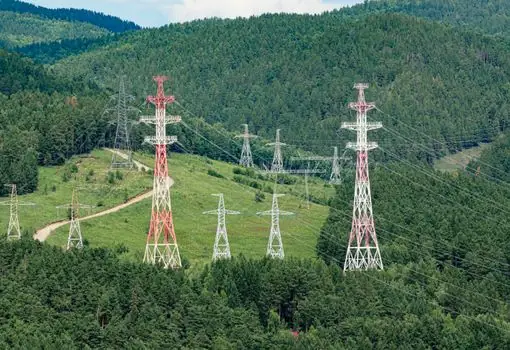
Copper cathode typically accounts for 55–70% of the manufactured cost of a stranded low-voltage power conductor; rod, insulation compounds (XLPE, EPR, PVC), shielding, and armor make up the balance, with energy and freight layered on top. With LME at $6.5106/lb and COMEX at $6.5880/lb in August 2026, a 1 cent move in the copper price shifts the raw-material cost of a 500 kcmil conductor by roughly $15–18 per 1,000 linear feet [S2].
Beyond cathode, the documented 2026 cost stack also includes bunker-fuel and electricity surcharges on conversion, sulfuric-acid disposal costs in rod plants, and freight-and-insurance premiums that have lengthened booking lead times at major ports [S4][S6]. One US-focused note explicitly flags fuel costs, freight shortages, and shipping delays as additive line items in the final cable-quote stack [S6]. For reference, an industry price-tracking source cited copper at approximately 5.44 USD/lb and about 12,046 USD/ton in late March 2026, an earlier point on the same uptrend [S8].
Tariff uncertainty and a stronger dollar have also pushed speculative repositioning in the US market, with import flows carrying a geopolitical premium that lifts landed cost independently of the LME print [S4].
Comparing the three main cable-cost variables
A practical comparison of the three cost inputs that drive a copper power cable line item in 2026 looks like this: [S2]
Copper cathode (LME/COMEX): highest weight, ~55–70% of conductor cost, fully exposed to spot, $6.51–6.59/lb in August 2026 [S2]; Insulation and jacket (XLPE/EPR/PVC): mid weight, ~10–20%, oil-linked, lags copper by 30–60 days, not directly indexed in the PPI copper-wire-and-cable line; Freight, fuel, and surcharges: lowest single weight, ~5–10%, but fastest-moving, currently inflated by bunker-fuel surcharges and shipping delays [S4][S6].
The PPI WPU10260314 blends all three, which is why the 27.24% year-over-year move exceeds the underlying copper move in that period. Buyers who hedge only cathode and ignore freight typically underestimate the 2026 finished-cable inflation by 3–5 percentage points.
Total cost of ownership, not just unit price
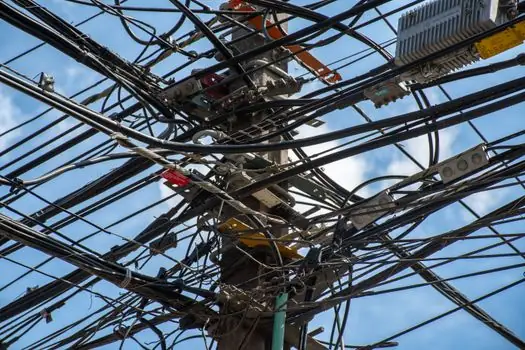
Purchase price is the smallest line in a cable's life-cycle cost for fixed-site installations. [S5]
Specifying a larger conductor to reduce I²R losses is therefore a direct hedge against the 2026 price environment: at a 27.24% year-over-year increase in the index, upsizing one standard size now typically pays back inside 5–7 years on continuous loads, assuming a 0.06–0.10 USD/kWh tariff. Maintenance on copper cable is minimal (annual thermography, occasional re-torque), so the only meaningful TCO lever at the spec stage is conductor cross-section, which is also the lever most exposed to copper material price moves.
Who this price move hits, and who it does not
Procurement teams buying MV-105, XHHW-2, or THHN for data-center, utility, and large commercial builds are the first line of impact, with bill-of-materials costs moving in line with the PPI within one to two quote cycles [S1][S4]. OEMs with long-term cathode hedges, captive rod plants, or forward-priced supply contracts through Q4 2026 will see lagging or muted exposure, but their contract renegotiation windows in 2027 will reset to this higher base.
Buyers specifying aluminum conductor, copper-clad aluminum, or busway instead of copper cable are partially insulated from the index, though they accept different ampacity, termination, and lifecycle characteristics that are outside the scope of WPU10260314. The PPI is not a useful reference for fiber-optic, aluminum, or steel-armored-only product lines; it is strictly the copper content in metallic conductor cable.
How to read the next release
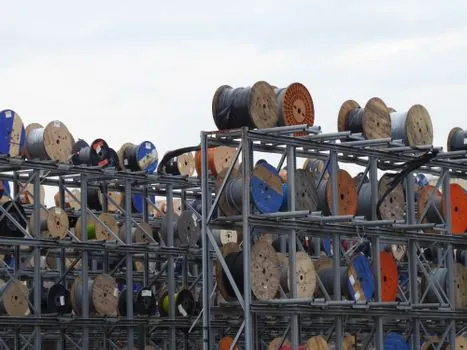
The BLS next release date for WPU10260314 is October 15, 2026, covering September 2026 data [S1]. Macrotrends tracks the same series on a Dec 1986=100 base and shows the August 2026 print of 602.48 as the latest observation [S7].
For sourcing teams, the practical hedge is to lock copper content with mill orders placed against the September 16, 2026 Omega-Camden base of $9.5500/lb, before any further pass-through of the August LME settle [S2]. See also the bismuth and indium supply risk briefing for adjacent non-copper conductor inputs that share the same logistics-driven 2026 surcharge profile.