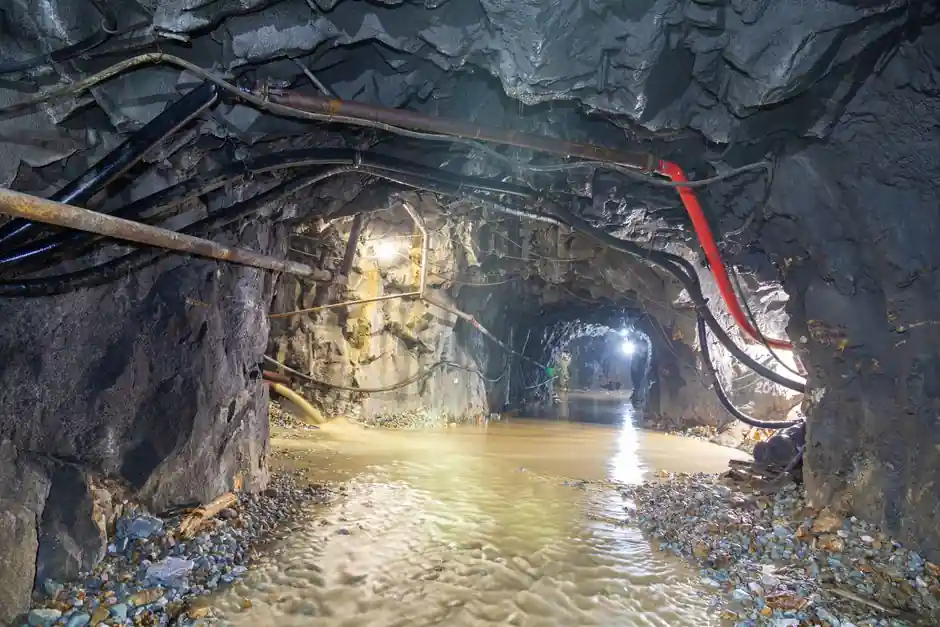
A new copper mine typically requires 12–18 years from deposit discovery to production, reflecting the time needed for exploration, studies, permitting, financing, construction, and commissioning [S9].
S&P Global Market Intelligence calculated a 15.7-year average for 127 mines, while a broader 2024 analysis found 17.9 years globally and nearly 29 years in the United States [S1][S2].
Development stages that determine the lead time
Prospecting and exploration can take 2–8 years and cost from $500,000 to $15 million before a deposit is adequately defined for economic evaluation [S4].
Prospecting and exploration often occur simultaneously and can take two to eight years to complete, with overall costs ranging from $500,000 to $15 million [S4]. These stages overlap rather than forming a clean sequence, so adding them directly can overstate or understate an individual schedule.
A deposit must advance from inferred resources through increasingly reliable geological confidence levels before mining is economically justified. Drilling, geophysics, geochemistry, sampling, metallurgical testing, and engineering studies are used to define the size, grade, geometry, and recoverability of the deposit [S4].
Global and US benchmarks are not interchangeable
S&P Global Market Intelligence reported a 15.7-year discovery-to-production average for a 127-mine sample in 2023 [S2]. Its broader analysis found that the global copper average had reached 17.9 years by 2024, making the two datasets different measurements rather than contradictory endpoint values [S1].
The US benchmark was almost 29 years from first discovery to first production, second only to Zambia at 34 years in the country comparison [S3][S5]. The 29-year US calculation assumed that properties not then operating would begin production by 2030, an assumption that makes it a development scenario rather than a completed-project statistic [S3].
Mines that began production in the mid-2000s took an average of 12.7 years from discovery to operation [S6]. This cohort measure is shorter than the full 17.9-year global average because it represents a defined period of successful mine starts, whereas the broader figure includes the long tail of projects that remain in study or remain undeveloped [S1][S6].
Permitting and capital decisions drive the schedule
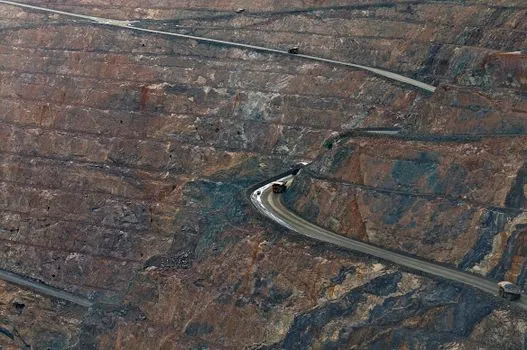
US permitting averages 7–10 years for the projects covered in the S&P Global analysis and can take longer, making it a major component of the nearly 29-year national average [S5].
Permitting, regulatory review, and investment uncertainty were identified as principal contributors to delay [S1].
The capital requirement also changes as the project matures. Discovery costs, drilling, metallurgical work, engineering, and consultation precede a bankable design, while construction converts that design into a plant, mine, tailings system, power supply, and transport infrastructure. A schedule that treats feasibility and permitting as parallel activities is more credible than one that assumes every study finishes before the next phase starts [S4][S9].
Greenfield, brownfield, and development-stage mines
Brownfield expansion is usually the faster route because the deposit may be evaluated against existing mining, processing, power, roads, tailings, and operating infrastructure. Greenfield discovery requires the full chain of exploration through construction, so its 12–18-year benchmark should not be applied to a project already sitting beside an operating mine [S4][S9].
Projects that have cleared feasibility and permitting but still need construction are not comparable with discoveries. A mine in development can have much of the geological and regulatory uncertainty removed, although financing and execution risk remain. The 15.7-year sample of 127 mines and the 17.9-year global estimate describe discovery-to-startup populations, not a guarantee for an individual project [S1][S2].
Resolution Copper illustrates the scale of a long-lived development proposal, with an expected operating life of up to 40 years and potential production of as much as 40 billion pounds of copper [S7]. A 40-year operating period begins after construction, commissioning, ramp-up, and stabilization, so it does not shorten the upstream development timeline.
Decision criteria for project planners
A project planner should classify the starting point before applying any benchmark: discovered deposit, resource definition, feasibility study, permitting, financing, construction, or commissioning. The appropriate question is not whether every copper mine takes 17.9 years, but how much of that sequence remains and whether each remaining approval has a credible duration. [S1]
For schedule comparison, greenfield projects carry the full exploration and infrastructure burden, brownfield projects can reuse existing facilities, and construction-stage projects have already absorbed much of the permitting and study uncertainty. The resulting 12–18 year commercial planning range is more useful for a new global copper project than the nearly 29-year US average, which includes a complex permitting environment and assumptions about projects not yet operating [S3][S9].
The decisive criteria are permitting duration, capital intensity, infrastructure availability, water and tailings constraints, metallurgical complexity, and the duration of financing. A project with a 6-year permitting path and straightforward existing infrastructure can fit the lower part of the range; one requiring 10 years of permitting and new regional infrastructure can take materially longer [S5][S9].
What development data can and cannot establish
Mine-development averages describe completed outcomes and should be treated as planning benchmarks, not guaranteed schedules. The 15.7-year figure covers 127 mines, the 17.9-year figure comes from a broader discovery analysis, and the 29-year US result includes forward-looking assumptions for undeveloped properties [S1][S2][S3].
Copper projects also differ from other mined commodities. The referenced 268-project global analysis included metals beyond copper, including lithium, nickel and cobalt, so a mine-specific schedule should not be copied across commodities without adjustment [S5]. For copper, investors should also distinguish first production from commercial output, because commissioning, ore-body variability, mill recovery and ramp-up can extend the path to stable production after startup [S4].
Material selection is a downstream design decision rather than a schedule shortcut. Engineers specifying contact surfaces, liners, conductors and corrosion-resistant components should account for the mine's exact ore mineralogy, water chemistry and processing duty. The copper material reference is relevant to those equipment decisions, while alloy steel covers wear-resistant component selection, but neither materially shortens permitting or construction time.
The most defensible planning baseline is 12–18 years for a new copper project, with 15.7 to 17.9 years as the documented global average range and nearly 29 years as a US-specific warning case [S1][S2][S9]. The first trackable signal is the permit-by-permit schedule with named dependencies; the second is conversion of feasibility work into an approved, funded construction program.