
A large, complex offshore wind turbine installation vessel generally requires 3–4 years from shipyard commitment to completion [S1].
The observed time-at-turbine durations in U.S. installation programs ranged from 1.1 days to nearly 50 days [S4].
What sets the three-to-four-year vessel build time
The 3–4-year estimate applies to the larger and more complicated offshore wind construction vessels, rather than smaller or simpler service craft [S1].
Larger, more complicated offshore wind vessels can take three to four years to complete [S1].
Compare vessel construction with offshore project delivery
The vessel build and the wind-farm build are separate schedules. Construction of an offshore wind farm begins on land several years before the planned commissioning date, and the overall process lasts several years [S2].
These activities can proceed before the installation vessel enters service, but their interface determines whether vessel availability matches turbine delivery and offshore weather windows.
The single-turbine field task is much shorter than any of those upstream intervals.
What installation speed looks like after delivery
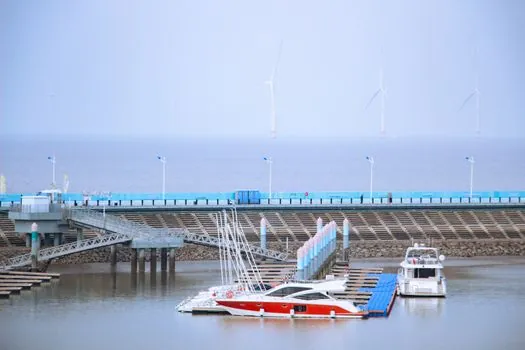
Offshore installation performance varies sharply. A year-long analysis of U.S. installation programs recorded time-at-turbine durations from 1.1 days to nearly 50 days [S4]. This is installation performance data, not vessel fabrication time.
Foundation work drives much of the variation. Installing piles for jacket foundations in offshore wind farms takes more than three times longer than installing piles for monopiles [S4].
Vessel type alone does not determine piling duration.
Foundation type changes the offshore workload
Monopiles and jackets are suitable for different project conditions, so vessel capability must follow the foundation design.
Weather and logistics cause missed installation windows
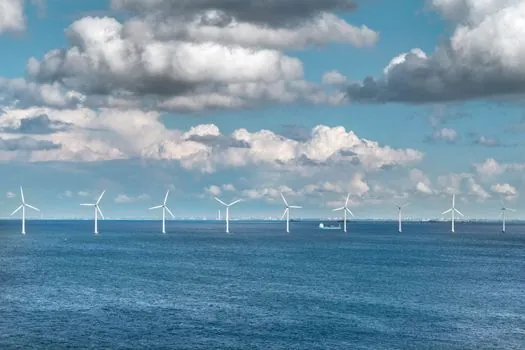
The installation symptom is an extended vessel queue or a turbine position occupied longer than one day. Open-sea weather is a separate engineering constraint for offshore wind construction, installation, commissioning, and maintenance [S2].
Corrective action is not simply to select a different vessel platform. First verify the foundation count, pile-driving sequence, seabed data, crane and hammer capacity, and available weather window; then compare jack-up, barge, and dynamically positioned vessel options against those requirements [S4]. A vessel substitution cannot remove template work from a jacket foundation or compress three or four pile installations into one pile operation.
Do not repair a delayed offshore campaign by extending the vessel fabrication estimate. Once the WTIV is commissioned, the remaining task is offshore execution. If a turbine has exceeded the project-specific weather or installation plan, resequence marine operations and consult the foundation and installation contractor; do not attribute the delay to vessel construction without documentary evidence [S4].
Jones Act compliance can change the build strategy
The governing vessel can determine the build route. A U.S.-built WTIV is required when it transports wind-turbine components from a U.S. port to an offshore construction site [S1]. A foreign-built WTIV may qualify where it performs strictly construction and remains stationary during turbine construction without carrying merchandise or passengers between U.S. points [S1].
Developers have used three practical logistics options: a U.S.-built WTIV carrying components directly, a foreign-built WTIV receiving components from a distant foreign port such as Canada, or U.S.-built barges transferring components to a stationary WTIV [S1]. The barge-transfer arrangement can conflict with U.S. maritime-policy objectives even though it may solve a specific shipbuilding or operating constraint [S1].
For procurement, fix the intended service before ordering the vessel. A WTIV designed only for stationary offshore construction does not automatically satisfy a coastwise cargo-transport role. Legal review must examine carriage, vessel status, operating area, and component-transfer arrangements; the shipbuilding decision should not treat Jones Act eligibility as a late procurement assumption [S1].
Shipyard schedule questions to lock before contract
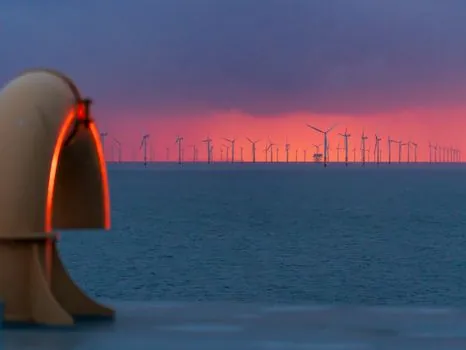
The strongest build-time commitment begins with a vessel particulars table rather than a generic “WTIV” label. Require the yard to identify the 472-ft-scale design or the proposed length, accommodation for more than 100 workers where applicable, crane capacity, leg length and jacking arrangement, hull dimensions, power plant, and intended cargo or construction-service model [S1].
Ask for the steel-cutting milestone, major-equipment delivery dates, crane installation, jack-up system integration, accommodation outfitting, sea-trial date, and delivery date. The example WTIV described at 472 ft was expected to begin sea trials in 2024 [S1]. Such a milestone must be checked against the actual yard schedule because it is a project datum, not a reusable benchmark for every vessel.
Escalate if the contract assumes a generic 3–4-year duration without matching the vessel class, or if turbine installation starts before foundation installation and commissioning plans are aligned. Track shipyard milestone completion and offshore vessel availability as separate schedule signals. A project slips when the 36–48-month yard program, 7–11-year wind-farm program, and approximately one-day median installation operation are treated as one schedule rather than three dependent ones [S1][S2][S4].