
A large centrifugal pump generally requires 8–16 weeks for delivery, with complex engineered units taking longer because the impeller, casing, shaft, bearings, seals and motor must be manufactured as a coordinated package [S1] [S6].
Standard, in-stock equipment may arrive within a few weeks, while custom units with special materials, high-pressure stages, certified drives or project-specific testing can extend the delivery window to several months [S1] [S6].
Working delivery window for large pumps
For 2026 planning, expect delivery of a large centrifugal pump to range from a few days to a few weeks at the relatively fast end, several weeks typically, and possibly several months for some packages. One published lead-time guide places the fast end at a few days to a few weeks and the more typical range at several weeks, potentially extending to several months [S6].
The size of the pump alone does not determine the schedule. The order must also be frozen around hydraulic duty, flow rate, head, motor power, materials, sealing arrangement, foundation details and any applicable project certification [S1]. One late change to those inputs can restart drawings, approvals, material procurement and factory scheduling.
Large pumps are custom centrifugal machines rather than catalogue commodity products. Their essential elements include the impeller, shaft, casing, suction pipe and delivery pipe, with bearings and seals supporting reliable continuous operation [S1]. Each of those items has a different manufacturing and inspection cycle, so the controlling item is often a machined casing, a special impeller or an engineered motor rather than assembly labor alone [S1].
Delivery time by pump configuration
Configuration has a measurable effect on lead time: a standard single-stage unit for clean water can be scheduled faster than a multistage process pump requiring higher pressure, greater accuracy and more complex piping interfaces [S1] [S4]. The market data supplied for 2026 identifies multistage self-priming pumps as 58.0% of the product segment, which is consistent with procurement demand concentrating on higher-pressure and higher-flow machines [S3].
Self-priming construction adds another procurement layer. These pumps must combine the centrifugal pumping principle with a priming arrangement capable of establishing flow without the system being continuously flooded [S1]. The 2026 market forecast places the self-priming segment at USD 38.5 billion by year-end and projects a 5.2% compound annual growth rate through 2036, supporting supplier investment but not eliminating project-specific lead times [S3].
Why large pump orders take longer
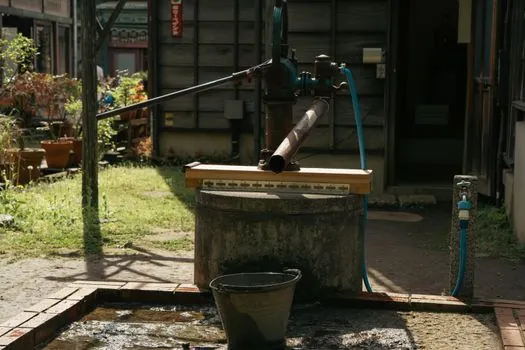
Customization is the principal reason a large centrifugal pump moves beyond the normal several-week range. Impeller diameter, vane geometry and rotational speed affect flow, head and efficiency, while the casing converts impeller velocity into pressure energy [S1]. If any of those parameters differ from a stocked model, the unit leaves the standard-product route.
Material selection can extend manufacturing and inspection. A pump handling corrosive or abrasive liquid may require upgraded casing, impeller, shaft, seal faces or wetted components, and high-temperature service introduces additional material and design constraints [S1] [S4]. Buyers should specify the complete duty envelope rather than naming one material grade, because the correct selection depends on fluid chemistry, temperature, solids content and pressure.
Testing also consumes factory capacity. Large pump acceptance may include dimensional inspection, hydraulic performance testing, alignment checks and documentation, with additional requirements for electric motors and packaged accessories [S1]. A buyer requesting witnessed testing should reserve that requirement at quotation stage because arranging customer attendance can add a scheduling dependency that is not visible in the fabrication drawings.
Alignment is not a paperwork detail. Proper shaft alignment reduces vibration and helps extend mechanical-seal life in continuous-duty service, making the alignment tolerance and acceptance criteria part of the delivery scope rather than an afterthought [S1].
When a delivery promise is credible
A credible quotation separates the promised equipment date from the delivered date and identifies the approval that controls each milestone. For a large centrifugal pump, that schedule should cover drawing release, material approval, casting or machining, assembly, motor readiness, testing, preservation, packing and transport [S1] [S6].
One useful checkpoint is the long-lead-equipment treatment used in EPC procurement. The related workflow described in Early Equipment Procurement for Fast-Track Industrial Projects: Long-Lead Strategy applies the same commercial discipline: identify critical equipment early, release approved technical documents, and do not let unresolved approval dates sit inside the supplier's promise.
For 2026 planning, allow for several weeks as a typical delivery period for a large centrifugal pump, while recognizing that the range may extend from a few days or weeks at the relatively fast end to several months. The supplier should confirm the date against the actual serial configuration, not simply against the words “large centrifugal pump.”
Buyers should also distinguish delivery from commissioning. Centrifugal pumps can be selected for high flow rates, consistent pressure, continuous operation and comparatively low maintenance, but mechanical operation requires correct suction conditions, priming, alignment and controlled startup [S1] [S2]. A dry-running, cavitating or misaligned installation can damage a pump before the process reaches stable operation [S4].
Application fit and unsuitable projects
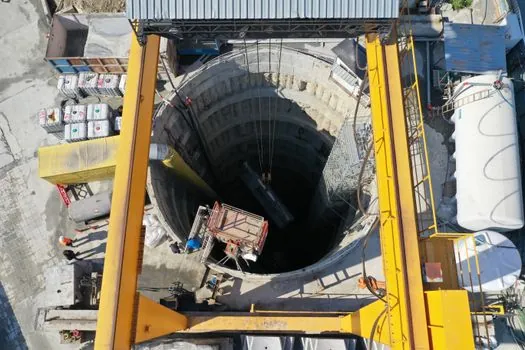
Large centrifugal pumps fit clean or low-viscosity liquid transfer, water handling, industrial process duties, irrigation and dewatering where continuous flow and manageable pressure are the objectives [S1] [S2]. They are a strong match for pumps intended to run for hours or continuously, provided the hydraulic selection matches the system curve and the suction arrangement prevents cavitation [S2] [S4].
They are less suitable for high-viscosity or solids-laden liquids that the selected hydraulic design cannot handle, and they require careful review where the fluid is highly corrosive, abrasive or hot [S1]. A self-priming or multistage design may solve one of these problems, but it adds scope rather than making every duty appropriate for a standard centrifugal pump [S3] [S4].
For short-cycle applications, the pump process itself may last only seconds to minutes, while continuous industrial systems may operate for hours or around the clock [S4]. Maintenance history, start-stop frequency, operating environment and system matching then influence service life, with well-maintained pump motors capable of operating efficiently for 10–20 years [S4].
Procurement steps that protect the schedule
The schedule improves when the buyer submits flow rate, total head, fluid properties, temperature, suction conditions and power supply before requesting a delivery commitment [S1]. Those six inputs define the basic hydraulic and mechanical envelope, while an operating profile of hours per day and start-stop frequency establishes whether continuous-duty construction is justified [S2] [S4].
The procurement order should distinguish three dates: the manufacturing slot, the factory-ready date and the estimated arrival date. Transport can add time after the unit is packed, and a custom pump may sit awaiting customer drawing approval, motor supply or inspection clearance [S6]. A supplier that provides only one date leaves these dependencies hidden.
Contractual controls should include a requirement to notify any change to the promised date, a defined process for customer-caused approval delays, preservation requirements before shipment and the required scope of pre-shipment testing [S1] [S6]. For project-critical equipment, these details are more useful than a generic claim that the pump is “available in 6–8 weeks.”
The trackable signals are the approved pump datasheet, the confirmed manufacturing slot, the motor-ready date, the testing date and the dispatch date. If a pump delivery period extends beyond the supplier's stated schedule, require a documented reason and revise the construction schedule accordingly.