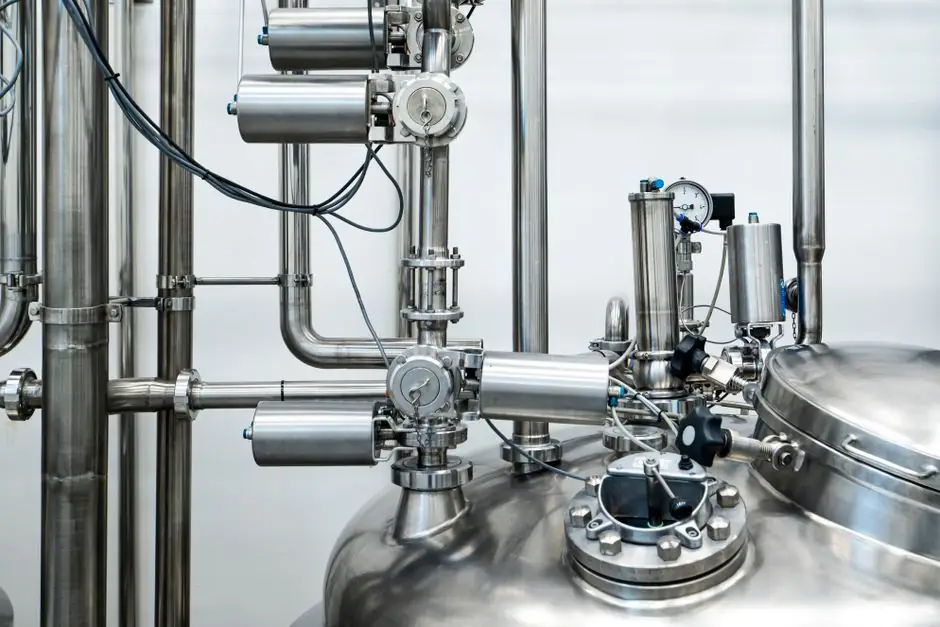
A butterfly valve is a quarter-turn rotary valve, and the three commercial offset architectures concentrate, double, and triple cover roughly three pressure and temperature envelopes [S1][S3]. The choice is mechanical geometry, not brand: the offsets move the shaft out of the disc plane so the disc lifts off the seat before rotation, eliminating seat rubbing and pushing the ratings upward step by step [S1][S3].
The same valve body architecture also feeds the butterfly valve family alongside ball valve and control valve options, and it overlaps with check valve duty in many pump-discharge lines, so the offset decision is rarely isolated from the rest of the line specification.
Concentric (Resilient-Seated) Butterfly Valves
The concentric butterfly valve, also called resilient-seated or zero-offset, places the shaft on the disc centerline and on the pipe bore centerline, so the disc edge sweeps through the seat across nearly the full 90° travel [S3][S5]. The disc is metal, the seat is a softer polymer such as NBR, EPDM, PTFE, or FKM, and the interference fit yields a bubble-tight shutoff in low-pressure service [S3]. Practical pressure rating is capped at ASME Class 150 / PN16 because the polymer seat limits both temperature and differential pressure [S3].
Concentric designs are also referred to as "resilient seated," and the soft seat is what allows the bubble-tight shutoff without precision metal machining, which keeps the unit cost low [S5]. Service ceiling sits around 250°F (121°C) for PTFE and similar polymers, and seat wear is the dominant failure mode because the disc contacts the seat throughout most of the rotation [S1][S3][S5]. The geometric trade-off is intentional: lowest cost, widest size range, throttling-acceptable, but never specified where the duty is high pressure, high temperature, or hydrocarbon/steam service [S1][S3].
Double Offset (High-Performance) Butterfly Valves
The double offset butterfly valve, also called double eccentric or high-performance butterfly valve (HPBV), has the shaft behind the disc centerline (first offset) and offset from the pipe bore centerline (second offset) [S1][S3][S5]. This geometry produces a cam-like motion: the disc lifts off the seat immediately on opening, friction occurs only in the first and last ~10° of travel, and the seat contact arc shrinks to a small wipe at closure [S3].
Pressure rating climbs to ANSI Class 300 (commonly 150# and 300# offered, with temperature limits to roughly 500°F in many catalog lines) and shutoff reaches API 598 Class VI for soft-seated HPBV variants [S2][S3]. The cam action, called "position seated with body stop," also cuts actuator torque relative to a concentric of equal size, which is why HPBV is the dominant automated throttling valve in water, HVAC, and lower-pressure process service [S2][S5]. Common applications: water treatment and distribution, oil and gas pipelines, HVAC, marine, and non-critical power generation zones [S2]. Seat materials are typically PTFE or metal-backed polymer for the higher-pressure classes [S3].
Triple Offset (Metal-Seated, Torque-Seated) Butterfly Valves
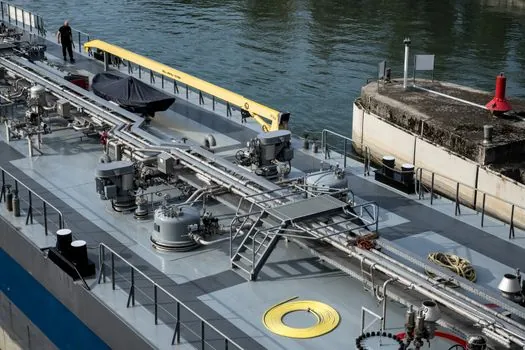
The triple offset butterfly valve adds a third offset: an angular (conical, right-angle cone) seat geometry, so the disc seats against the seat only at the final point of closure, with metal-to-metal or graphite/metal contact, and no rubbing across the open-to-close travel [S2][S3][S4]. Because the disc leaves the seat immediately on opening and only touches it at the dead-closed position, the design is described as "torque-seated," with sealing force controlled by actuator torque rather than a body stop [S2][S3].
Pressure rating reaches ANSI 900# and temperature up to 2000°F in high-end executions, with zero-leakage shutoff in both directions (bi-directional bubble-tight) as a routine catalog claim rather than a special order [S2]. Triple offset is also termed "triple eccentric" in some catalogs, and is frequently referenced alongside the "Tricentric" trade name for the geometry family [S4]. Standard target applications: refineries, petrochemical plants, steam and condensate, power-generation safety-critical zones, chemical processing, and offshore/FPSO systems [S2]. Fire-safe variants are routine because the metal seat survives a soft-seat fire event, and that property is built into API 607 / ISO 10497 fire-test qualified executions sold as standard product [S2].
Selection Criteria and Decision Matrix
Selection reduces to four criteria: pressure class, temperature, leakage class, and whether the duty is on/off isolation or modulating throttling. Concentric fits the corner of low pressure, low temperature, throttling, lowest cost, with Class VI soft-seat shutoff and a service ceiling near 250°F [S3][S5]. Double offset HPBV steps up to Class 300 and roughly 500°F with Class VI shutoff, lower torque, and is the default pick for automated water, HVAC, and process lines below ~300# [S2][S3]. Triple offset is the only one of the three that holds Class 900 and 2000°F ratings and the only one routinely sold as zero-leakage, fire-safe, bidirectional metal seated [S2][S3][S6].
Quoted guidance from the field makes the trade-off explicit: "Concentric valves emphasize cost-effectiveness, double-offset valves highlight durability, and triple-offset valves ensure reliability under extreme conditions" [S8]. Leakage class splits along the same line: triple offset valves are classified as zero-leakage valves, while double offset and concentric HPBV are typically Class VI shutoff in soft-seat builds [S6]. Cost, in order from lowest to highest: concentric, double offset, triple offset, and the premium on triple offset is paid in specialised oblique-cone machining, grinding, and lapping of the seat [S3]. When the line ties into a diaphragm valve for chemical isolation, or a balancing valve on a chilled-water branch, the butterfly is typically the main-line block valve and the offsets drive the spec the same way as on a stand-alone line.
Limitations, Failure Modes, and Sourcing Signals
Failure modes track the geometry. Concentric valves fail by soft-seat wear and disc-edge erosion because the disc is in near-constant contact with the seat through the 90° travel; replacement is cheap but recurring [S1][S3]. Double offset HPBV wear concentrates in the first and last ~10° of travel, so the seat lasts longer but the wipe arc is still a polymer, and exceeding Class 300 or the temperature ceiling typically destroys the seat [S2][S3]. Triple offset eliminates the wipe entirely during travel, so the wear path shifts to seat-lap precision and actuator-torque control; under-torqued seats leak, over-torqued seats gall [S2][S3].
For 2026 sourcing, the verifiable signals to track are: published pressure-temperature curves by class (150/300/600/900), seat material codes (RPTFE, PTFE, metal, graphite/metal), actuator torque at the stated MAST (maximum allowable stem torque) for triple offset units, fire-safe certification per API 607 / ISO 10497 where hydrocarbon service is in scope, and bidirectional or single-direction shutoff marking [S2][S3]. A practical rule: if the line spec already calls for ANSI 600 or higher, or for service above 500°F, or for zero-leakage fire-safe duty, the search should start at triple offset and only drop to double offset if the budget blocks the upgrade, because retrofitting a double offset into a triple offset duty is the most common over-spec failure path in field returns.
Related analysis: Automated Pressure Controller vs Handheld Calibrator: 2026 Price and Spec Map.