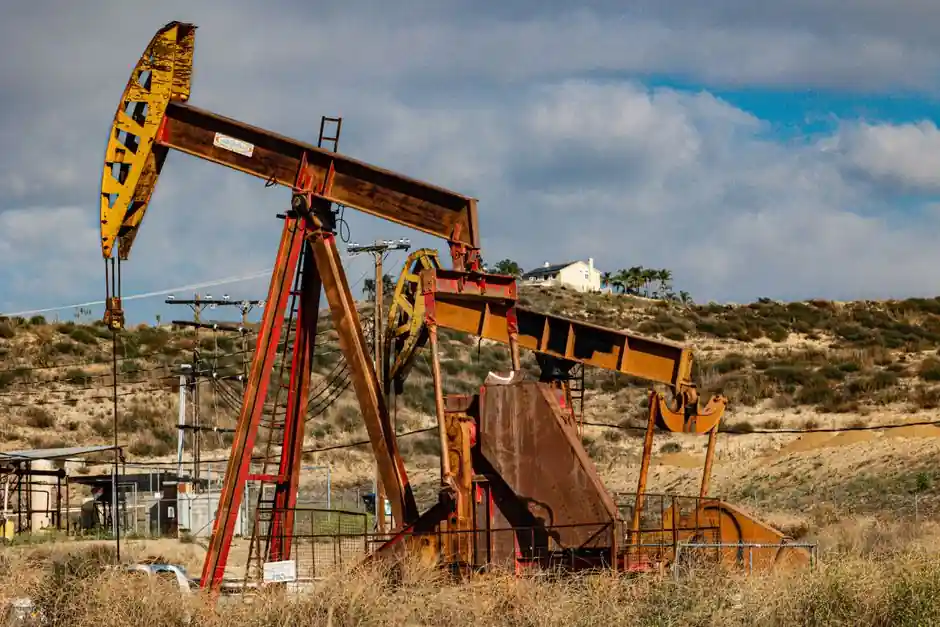
A plunger pump's continuous duty rating is the manufacturer's published guarantee that the unit can sustain its maximum rated flow and pressure indefinitely without mandatory cooldown cycles, and that capability is set by mechanical architecture, not by the headline PSI number [S1].
In practical terms, a continuous duty plunger pump is built with a heavier crankshaft, larger bearing journals, upgraded lubrication, and seals rated for sustained thermal load, distinguishing it from intermittent or duty-cycle-rated units that require rest periods between runs [S4].
Definition and Scope of a Continuous Duty Rating
Continuous duty, also written as S1 in motor terminology, is the operating mode in which a pump runs at its rated load long enough to reach thermal equilibrium and then holds that point indefinitely, 24 hours a day and 365 days a year in the strictest reading [S7]. For pump selection, Cat Pumps defines continuous duty operation as a pump running the majority of the day, with the daily hours of operation being the variable that sets the duty classification [S3]. The "continuous duty" label on a plunger pump therefore carries a different meaning from a generic S1 motor stamp: it implies the entire drive end, seal pack, and valve assembly have been validated for steady-state thermal and mechanical load at the published flow and pressure point [S1][S3].
The distinction matters at the specification stage. A pump rated for 5,000 PSI at intermittent duty may share the same pressure class as a continuous-duty unit, but the latter has been engineered for steady-state endurance, not peak burst performance, so material choices in the high-pressure cylinder, plunger, and seal stack diverge [S2][S4]. Engineers specifying equipment for 24/7 service should treat the continuous duty designation as a system-level promise, covering fluid end life, bearing L10 life, and seal service interval simultaneously, not as a marketing label on the nameplate [S1].
Mechanical Design Features That Earn the Rating
Continuous duty plunger pumps share a recognizable set of design choices, and four of them show up consistently across manufacturers: heavier forged crankshafts, larger bearing surface area, forced or upgraded lubrication, and high-temperature composite seal stacks [S1][S4]. The KB Series industrial platform illustrates the pattern with a CNC precision-machined integral forged crankshaft, high-density ceramic plungers, high-temperature composite seals, and metal dynamic clearance sealing, all chosen specifically to support stable high-volume hydraulic operation across long run times [S1].
Operating envelopes for the same platform demonstrate how the rating interacts with other specs. The KB-138 delivers 138 L/min at 100 bar and 1000 rpm from a 27.6 kW input, the KB-128 raises pressure to 150 bar at 128 L/min and 38.4 kW, and the KB-60300 reaches 300 bar at 60 L/min and 1450 rpm from 36 kW, with a common 2600 ml crankcase oil capacity across all three variants [S1]. Plunger diameters scale the duty envelope, 45 mm on the KB-138 versus 28 mm on the KB-60300, and a smaller plunger at higher rpm is the typical pattern for pushing continuous-duty units into the 300 bar class without thermal overload [S1].
Comparison: Continuous Duty vs Intermittent vs Direct-Acting Steam
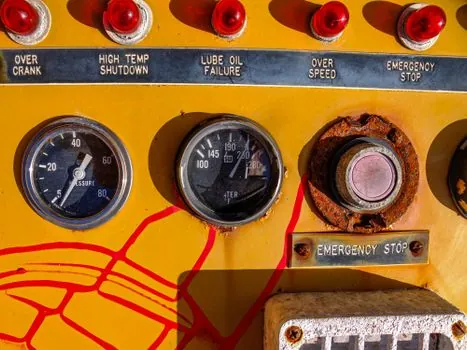
The choice between a continuous-duty power pump and a direct-acting steam plunger is largely economic and operational. Direct-acting steam plunger pumps are justified for low-pressure applications but lose their case when continuous duty service is needed, because the high steam consumption makes them inefficient compared with electric-driven power pumps, which use a reduction-geared crankshaft and connecting rods to convert rotary motion into reciprocating plunger motion [S5]. The same source notes that triplex configurations, three plungers phased to cancel pulsation, are the standard architecture for higher-pressure power pumps and that pulsation suppression improves as plunger count rises from simplex to duplex to triplex [S5].
A practical comparison frame for specifiers:
1. Drive architecture: continuous-duty electric or motor-driven power pumps with geared crankshafts versus direct-acting steam plungers, which are efficient only at low duty [S5].<br/>2. Pressure and load class: continuous-duty triplex units dominate above 100 bar, with the KB-60300 example running 300 bar continuously at 60 L/min and 36 kW, and separate ceramic-plunger triplex product lines reaching 300 MPa for ultra-high-pressure waterjet and process service [S1][S6].<br/>3. Service interval: heavy-duty continuous running product lines scale plunger load from 350 kg to 7,000 kg across roughly 10 models, with service interval tracking the plunger load class [S6].<br/>4. Selection gating: the High-Pressure Plunger Pumps Specifications Guide for 2026 asks buyers to identify the required continuous duty point and the headroom to the pump's rated limit before any flow or pressure decision, putting duty class ahead of headline PSI [S8].
Selection Criteria and Sizing Rules
Specifying a continuous-duty plunger pump starts with four locked-down parameters: flow rate, operating pressure, fluid compatibility, and duty cycle, with power source availability checked against the chosen drive [S4]. Flow rate drives frame size and motor kW, and the standard sizing buffer is 10 to 20 percent above the calculated minimum to absorb wear, system losses, and peak demand without pushing the pump to its published maximum [S4].
Pressure class drives plunger diameter and stroke. Plunger pumps span from a few hundred PSI in dosing service up to 100,000 PSI (6,895 bar) in ultra-high-pressure waterjet cutting, and the 300 MPa ceramic-plunger triplex product line sits at the upper end of that range with plunger loads up to 7,000 kg [S4][S6]. The 2026 High-Pressure Plunger Pumps Specifications Guide adds a separate selection gate: locate the continuous duty point on the pump curve first, then measure the margin to the rated limit, because continuous duty is set by where the pump will actually sit on the curve, not by its peak capability [S8].
Who Continuous Duty Is For, and Where It Is Not
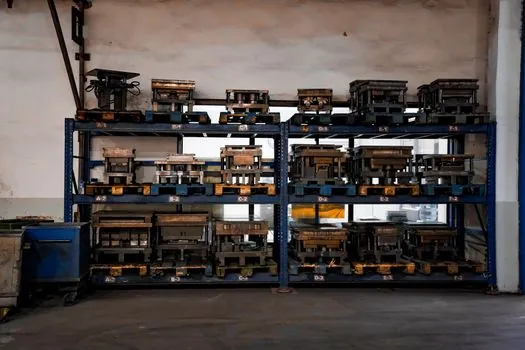
Continuous-duty plunger pumps fit plant-floor roles where flow and pressure must hold steady across full production shifts: industrial flushing, sustained fluid transfer, medium-pressure hydraulic power units, oil and gas well stimulation, hydrostatic testing, and reverse osmosis feed boosting [S1][S4]. They are also the right call for direct-acting steam replacement projects, where the goal is to drop steam consumption while keeping the same flow and pressure profile [S5]. The same architecture underpins the 300 MPa ceramic-plunger triplex line used in waterjet cutting and high-pressure process service, where any unplanned stoppage is a production event [S6].
Where continuous duty is the wrong call: low-duty applications where the pump would idle for most of the day, intermittent service such as mobile trailer washout or seasonal agricultural spraying, and any installation where the cheapest intermittent-rated unit would meet the published duty without thermal stress [S3][S4]. A buyer can also over-specify by selecting a continuous-duty power pump for a steam-driven process that already has cheap waste heat available, since the steam direct-acting pump can win on total energy cost in that narrow case [S5]. For sealing, fluid-end, and bearing service decisions, the hydraulic pump reference covers the broader family of architectures, while gear pump and diaphragm pump entries cover the displacement alternatives a specifier should rule out before settling on plunger. Related reading on drive-train sizing shows up in disc coupling torque charts and on rod surface treatment in chrome plating thickness for hydraulic cylinder rods.
Failure Modes, Limits, and Common Misreads
Three failure modes dominate continuous-duty plunger pump service: seal stack thermal degradation, bearing L10 life exhaustion, and valve assembly fatigue, all of which are accelerated when a continuous-duty rated unit is operated past its rated continuous duty point [S1][S4]. The KB Series design features a reinforced stainless steel pump head, a CNC precision-machined integral forged crankshaft, and advanced sealing architectures intended to support reliable hydraulic performance under prolonged operating conditions within its published envelope [S1]. Operating at the peak pressure or peak rpm of an intermittent-rated unit, even briefly, voids the continuous-duty warranty coverage on most nameplates.
The most common spec error is reading the maximum PSI as the continuous duty point. It is not. The continuous duty point is the flow and pressure combination where thermal equilibrium holds, which is normally below the peak rating, and the 2026 specifications guide makes that distinction the first question it asks [S8]. Second, a higher plunger load rating on a triplex line, 350 kg versus 7,000 kg across the same 10-model family, does not automatically extend continuous-duty service life; it sets a different steady-state load class and the service interval has to be looked up against the specific model, not extrapolated [S6].
Standards, Sourcing, and Trackable Signals
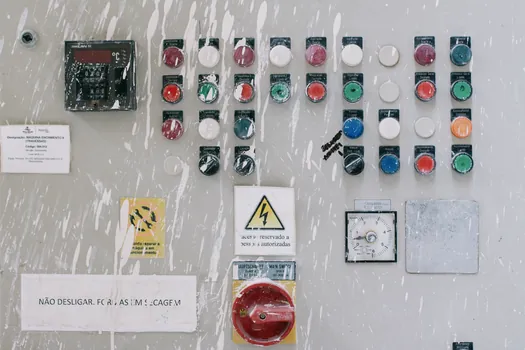
Continuous duty on pumps is not governed by a single standard number; it is a manufacturer-published rating backed by internal endurance testing, and the closest cross-industry anchor is the S1 motor duty designation, which defines a machine that can run at constant load long enough to reach thermal equilibrium [S7]. For plunger pumps specifically, the published continuous duty rating should be cross-checked against the drive motor's S1 rating, the seal pack's continuous thermal limit, and the bearing L10 life at the operating rpm, all of which are normally listed in the OEM's specification sheet [S1][S4]. The 2026 High-Pressure Plunger Pumps Specifications Guide adds a practical sourcing rule: confirm the continuous duty point on the published curve before accepting any nameplate PSI as the operating point [S8].
Two signals worth tracking through the rest of 2026: triplex product line extensions above 300 MPa, with manufacturers like Beibangpu already shipping 10-model heavy-duty continuous running product families spanning 350 kg to 7,000 kg plunger load [S6]; and the slow migration of ATEX and IECEx-certified continuous-duty plunger pumps into European chemical plant builds, where the duty rating has to coexist with hazardous-area certification on the same nameplate. Specifiers should also watch for the next round of 2026 high-pressure pump specification guides, which are expected to push the continuous duty point question further up the selection checklist, ahead of peak PSI [S8].