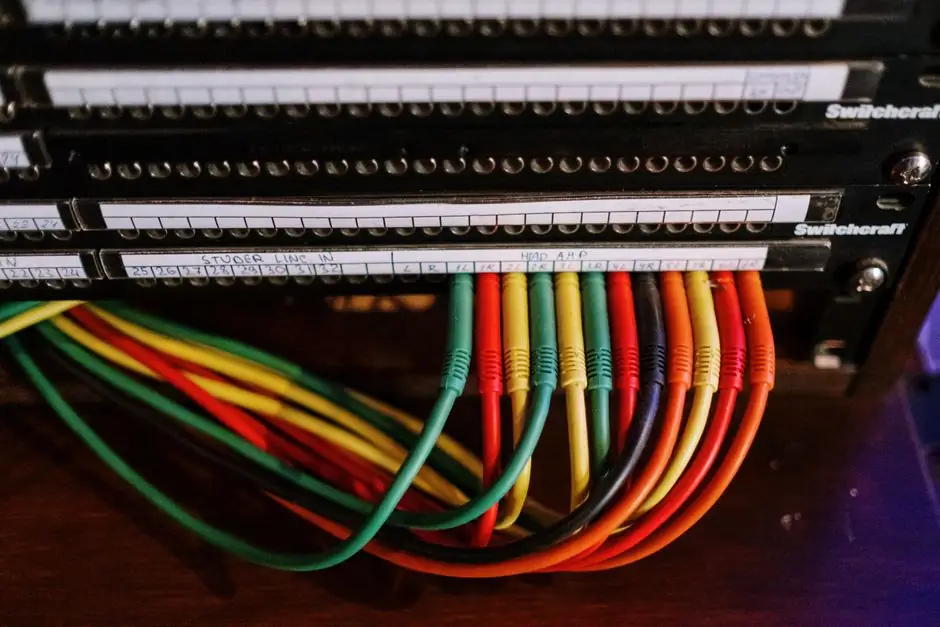
Copper wire suits routed branch circuits, while a rigid copper bus bar distributes power among breakers, terminals, and devices within switchgear, panelboards, and control assemblies [S1][S4].
Wire or Bus Bar: Function and Assembly Role
Copper wire is the flexible conductor for an individual branch, equipment lead, control signal, or long routing path between panels. A bus bar is a rigid shared conductor that can be tapped at multiple points, so an outgoing circuit does not require a separate upstream cable to every load [S1][S2].
Use wire where disconnection, rerouting, conductor flexibility, or independent circuit isolation is required. Use a bus bar where several loads need one centralized distribution point, including switchboards, motor control centers, distribution cabinets, battery systems, and power-conversion equipment [S2][S4].
The comparison is not simply about current capacity. Wire cost rises with routed length and termination count, while a bus bar adds fabrication, support, joint, and fault-withstand decisions. Terminal blocks remain appropriate for terminating and organizing individual control wires rather than replacing the main power path [S4].
Decision Criteria: Current, Heat, Space, and Installation
Bus bars normally require less conductor cross-section than wire for the same duty because copper has higher conductivity and the flat section provides substantial heat-dissipation area [S1][S2].
Wire offers lower installation effort for a short, simple branch and permits easy conductor withdrawal. A bus bar offers a compact shared path and multiple bolted, low-resistance connection points, but the complete assembly must be rated for the enclosure, terminal hardware, mounting, and available fault current [S1][S4].
A practical comparison is: copper wire wins for flexible routing and isolated modifications; copper bus bar wins for shared distribution, compact panel footprint, and repeated rigid connections; terminal blocks win for organized control-wire terminations. Copper conductor material is specified for both conductors, but the finished component must still meet the assembly’s applicable certification and fault-duty requirements [S4].
Sizing and Thermal Limitations

No single bus-bar current rating applies to all designs. Width, thickness, copper grade, temperature rise, ambient temperature, spacing, mounting orientation, and enclosure construction all affect ampacity [S1]. A design based only on copper cross-sectional area can therefore understate heat dissipation or fault withstand.
Wire selection requires conductor size, insulation temperature rating, ambient conditions, allowable temperature rise, installation method, and circuit-protection requirements to be checked together. The comparison material does not supply a universal copper-wire ampacity table, so the panel design should use the governing electrical code and the approved wire series rather than copying a bus-bar current value [S1][S4].
For panelbus applications, distinguish three functional bars: main or phase bars carry continuous phase current from the incomer to outgoing devices, neutral bars collect return current, and earth bars provide the protective bonding path during a fault [S2]. In a typical electrical-panel assembly, return current collects on the neutral bar, while fault current takes the earth bar back to the bonding point [S2].
Joint Reliability, Maintenance, and Failure Modes
Copper bus bars are often connected by bolts, while panel conductors may enter terminal blocks through screw, spring, or other approved clamps [S1][S4]. A bolted joint needs adequate conductor preparation, specified torque, compatible hardware, and suitable plating. Tin-copper or silver-copper plating can protect connection surfaces from oxidation and corrosion in appropriate environments [S1].
Do not assume that a plated bar and a plated copper wire lug create an acceptable mixed-metal joint merely because both contain copper. Surface condition, contact area, fastener material, torque control, vibration, and the manufacturer’s approved connection system determine joint reliability [S1][S4].
Plan access for retorque checks where required, thermal inspection under load, and individual circuit disconnection without destabilizing the main bus. Threaded or formed bus-bar joints can also introduce resistance that is not present in a continuous bar, so connection design belongs inside the voltage-drop and thermal calculation [S1].
Use Cases and Product-Level Choices

For a 24 V control panel, use insulated copper wire for PLC inputs, outputs, sensors, and actuators, then terminate it in appropriately rated terminal blocks [S4]. If several 24 V branches share one protected source, a copper comb bus bar or distribution bus may reduce repeated upstream wiring, provided its voltage, current, conductor-size, and fault-protection ratings match the intended conductors.
For a three-phase panelboard, copper phase bus bars distribute continuous current among outgoing devices, while a neutral bar collects returns and an earth bar handles the fault bonding path [S2].
For high-current fixed equipment, compare the copper bus bar against flexible copper wire by installed length, allowable voltage drop, thermal rise, fault withstand, termination count, maintenance access, and enclosure volume. Rigid copper bar is generally the stronger choice when several high-current devices share a compact panel; stranded copper wire is generally better when movement, routing, or frequent disconnection governs [S1][S4].
Materials, Standards, and Procurement Checks
Copper has higher conductivity and mechanical strength than aluminum, permitting a smaller section for equivalent electrical duty and producing a compact assembly [S1][S2]. Aluminum weighs less and generally costs less, but mixed copper-to-aluminum terminations require an explicitly rated transition solution; an unqualified copper wire on an aluminum bar is not a drop-in detail [S2][S5].
Specify the bus-bar material, section, temper, surface treatment, hole pattern, insulation or bare-bus arrangement, standoff material, hardware, and torque control. Rigid flat bar is the standard rectangular form, while round, square, hexagonal, tubular, laminated, and braided forms serve different connection and flexibility requirements [S1].
Component approval is not panel approval. A recognized component can still need to meet the requirements of the finished panel assembly, while listed equipment has its own permitted-component rules; one discussion explicitly identifies UL 508A control-panel requirements and distinguishes UL Listed from UL Recognized components [S5]. Confirm the exact product listing, assembly standard, local code, and project specification rather than treating a material name as certification.
The final procurement record should identify the conductor size, insulated-wire type, bus-bar dimensions, calculated current, temperature-rise basis, fault rating, connection hardware, and applicable panel listing. This closes the gap between choosing copper and proving that the complete panel has adequate thermal, mechanical, and fault performance.