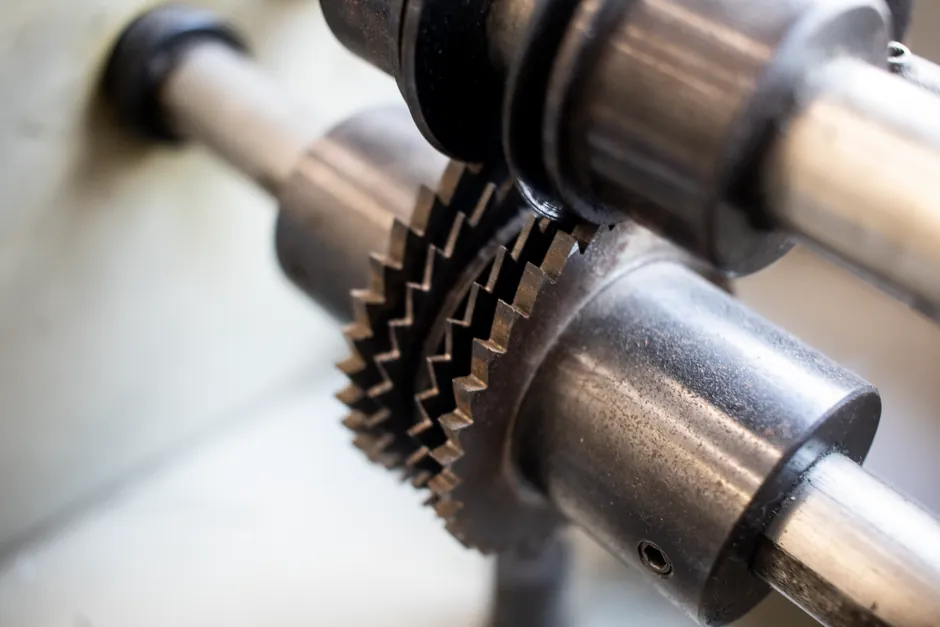
Sand casting remains the dominant forming route for complex hollow automotive components such as engine blocks, water jacket housings, and integrated chassis nodes, with core-making machine choice now driven by binder chemistry, cure cycle, and line takt rather than by machine brand [S4].
Process selection sits inside a wider manufacturing decision where CNC machining, injection molding, forging, die casting, investment casting and MIM each cover a different geometry, tolerance and volume window, and core making is the binder-side gate that determines whether the casting is even producible [S3].
Where Core Making Fits in an Automotive Casting Program
Core making is the sand-side preform process for the internal cavities of a casting, and a core machine is selected once the casting engineer has fixed the alloy, the cavity geometry, the required wall-thickness window and the acceptable core-package scrap rate. Hollow structural castings in aluminum and iron typically require 4 to 12 separate cores per block, with cycle windows between 25 s and 90 s on a high-volume line [S4].
For sand cast hollow components, the four process families that show up in most automotive foundries are shell core making, hot-box core making, cold-box core making and shell core shooting variants, with binder system (phenolic/urethane/no-bake/Cold-Box amine/CO2 silicate) deciding cure temperature, tooling material and exhaust layout. Resin-bonded sand cores with controlled permeability and clean collapse behaviour are the technical baseline for engine block and water jacket cores where internal passage complexity has risen sharply under lightweighting pressure [S4].
Selection Criteria That Actually Move the Decision
Five specifications dominate the RFQ for a 2026 automotive core making line: maximum core box size, shot capacity per cycle (typically 5–80 kg of sand), cure temperature window, cure time per core, and amine or catalyst consumption per ton of sand [S4]. Draft on the core box, parting line orientation, and core print tolerance are mechanical inputs that the machine must respect; for resin sand processes, the binder ratio window of 1.0%–1.8% resin plus 0.3%–0.5% hardener (by sand weight) is the operating band found in published Chinese foundry technical guidance for hollow aluminum castings [S4].
Cycle-time match to the molding line is the second hard filter. A green-sand molding line running 60 molds/h cannot be fed by a cold-box core machine stuck at 30 cores/h without a buffering strategy, and a high-pressure shell core shooter that delivers a 25 s core is wasted on a 120 s molding takt. SinoCMI's process-fit grid treats process selection as a multi-axis decision on geometry, tolerance, volume and cost, with core making treated as a sub-process of the casting route rather than as a stand-alone purchase [S3].
Process Options Lined Up Against Decision Criteria
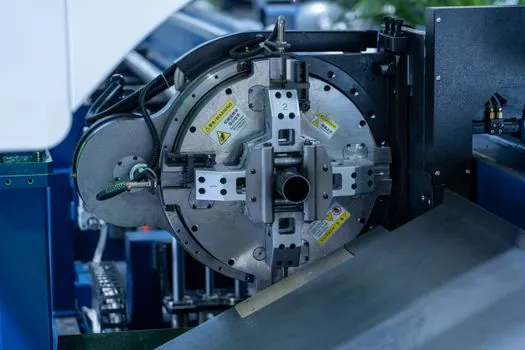
Comparing the four dominant binder routes against 2–4 buyer criteria, a spec-first read looks like this for 2026 automotive programs: [S1]
Shell process: best surface finish and tightest core dimensional tolerance (often ±0.2 mm on small cores), high tooling cost, cure temperature 200–280°C, suited to intake manifold, turbo housing and thin-wall iron cores where collapsibility after pour is less critical. Hot-box process: faster cycle (10–30 s/core), tooling in cast iron or aluminum, cure 180–250°C, well suited to medium-complexity oil pan and transmission housing cores. Cold-box (urethane/amine) process: room-temperature cure, lowest amine gassing concern with modern binders, suited to large engine block side cores and water jacket cores, but requires amine scrubber and sand reclamation discipline [S4]. CO2 silicate process: low emissions, slower cure, niche for steel casting cores where thermal collapse is critical.
Each route also has a known failure mode: shell cores can crack on ejection if cure is uneven, hot-box cores suffer from pinhole defects if gas venting is poor, and cold-box cores show lower tensile strength in humid conditions unless binder ratio and bench life are tightly controlled [S4].
Application Fit Across Automotive Subsystems
For engine blocks and integrated cylinder heads, cold-box and shell dominate because of the multi-core package and the demand for clean burnout; for transmission housings and differential cases, hot-box and shell are the mainstream routes; for exhaust manifolds and turbocharger housings, shell is preferred for surface finish and thermal-shock resistance. CNC machining of the post-cast features (deck faces, bearing bores) typically runs to ±0.01 mm tolerance on key datum features for engine and transmission components, and the as-cast core position error must therefore stay below ±0.5 mm or the machining stock becomes uneconomic [S1].
For Tier 1 suppliers running rapid EV platform updates and ADAS sensor housing prototypes in batches of 1–500 pieces, a 5-axis CNC machining partner with PPAP Level 3, IMDS and FAIR documentation is the typical fit, and the same documentation discipline (FAI, material cert, process capability Cpk ≥ 1.67) is what the casting side must mirror for the core package [S2]. Documentation parity, not machine brand, is what gets core samples accepted by European and US automotive OEM PPAP portals.
Limits, Failure Modes and Engineering Trade-offs
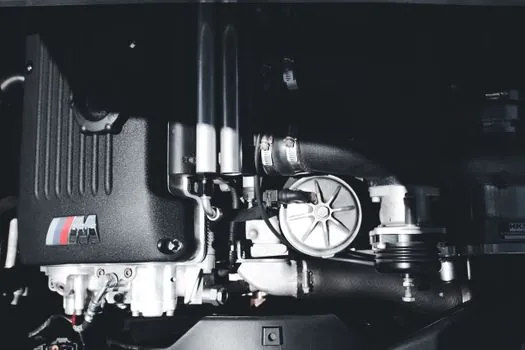
Core making is the most scrap-prone station in a sand casting line: cold shuts, porosity, veining and dimensional drift on the casting usually trace back to a core-side root cause, and the cure window of a hot-box core machine is sensitive to ambient humidity, sand temperature (ideally 20–30°C) and amine/purge gas ratios.
Where the program volume does not justify a dedicated core line, the right move is to outsource core packages to a specialized jobbing foundry rather than to size a core machine for peak demand. Conversely, where the program calls for a 4-cavity shell core with 18 s cycle, a manually-fed bench unit is the wrong tool; the gating, sand feed and blow pressure must be matched to a shell core shooter sized for that cavity count, not for the average core weight.
Standards, Sourcing and Documentation Baseline
Most automotive foundries run an ISO 9001 quality system as a baseline, with the casting supplier evidence (material cert, FAI, PPAP/IMDS for OEM programs) sitting on top; this is the same documentation stack that the CNC machining tier-1 suppliers cite for fast-turn prototype components, where cycle time of 1–3 weeks is delivered against an industry-standard 6–10 weeks [S2]. For a 2026 core-machine RFQ, the minimum sourcing checklist is: binder system and supplier (with technical data sheet), cure cycle window, sand type (silica / chromite / zircon), maximum core box envelope, shot pressure, amine or catalyst consumption per ton, exhaust flow requirement, and a list of reference automotive programs in the same binder route [S4].
The reliable next step is to shortlist two binder routes that fit the casting alloy and the cavity geometry, then size a cold-box or shell core machine to the line takt, with the molding line selection treated as a coupled decision rather than a separate one. Two trackable signals to watch in late 2026 are the wider roll-out of low-amine cold-box binders to replace traditional phenolic/amine systems on European engine programs, and the shift toward servo-electric core shooters to cut compressed-air cost on high-volume aluminum lines.
This topic is covered further in Molding Line Selection for Rail Components: 2026 Spec Map.