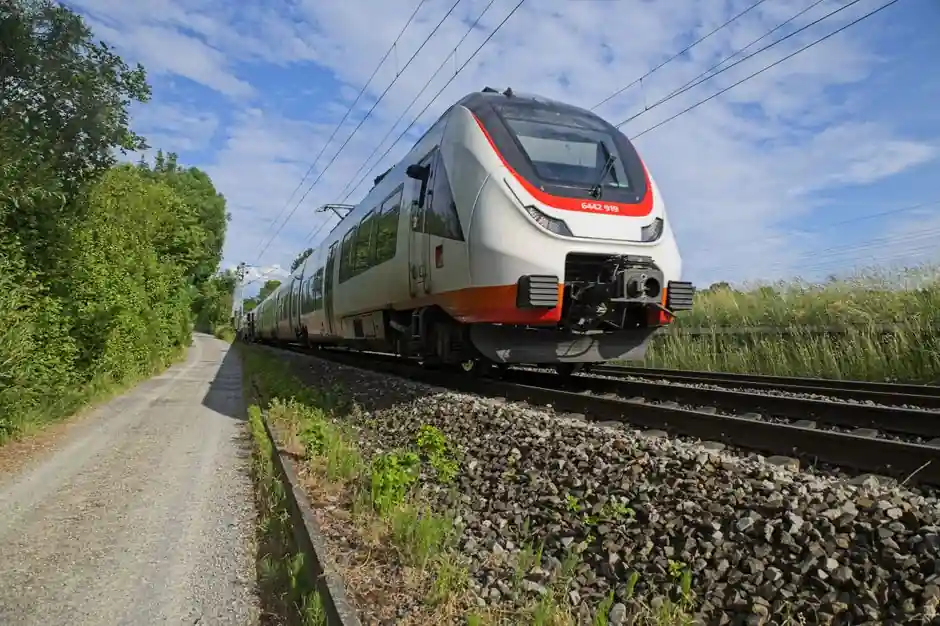
Three rail-component families dominate the 2026 spec list, and each is bound to a different molding line class: ornamental steel cap rail in ASTM A36, interior PC+ABS seat-trim slide rails with a sub-0.03 mm parting line, and powder-coated seating frames plus interior trim [S3]. Process selection must be driven by feedstock, length window, and annual volume, not by tonnage headlines.
Specifying the wrong line family is the most common 2026 rail RFQ failure mode. A steel service center that quotes a horizontal flaskless shell molding machine for cap-rail work, or an injection shop that quotes a static-pressure box for a PC+ABS slide rail, will lose the bid on either cycle time or surface tolerance before the RFG review ends.
Three rail families, three line archetypes
Ornamental steel cap rail (1-3/4 in overall width, 9/16 in height, 1.27 lbs/ft for single-groove; 2-7/32 in width, 13/16 in height, 2.14 lbs/ft for heavy wide-rail) is rolled and cut to 19-20 ft stock lengths in ASTM A36 [S1]. That profile geometry maps to a continuous rolling or extrusion-assisted cut-to-length line, not a discrete flask automatic molding line. PC+ABS automotive slide-rail injection tools are quoted with a slider-on-lifter flat-placed layout and a parting-line flash budget below 0.03 mm [S6]; that spec is incompatible with phenolic-shell tooling, which is reserved for short-run ferrous components. Powder-coated passenger seating frames and interior trim ride a third conveyor sorting line plus pretreatment tunnel, where the rail body is welded or formed upstream and only the finish loop is paint [S3].
The decision order that consistently survives an audit: confirm feedstock first (steel A36 vs thermoplastic vs coated steel), pin the length window second (19-20 ft bar stock vs 0.3-1.2 m injection shot vs sub-2 m weldment), and only then pick between a molding line and a finishing-and-assembly line. Skipping the feedstock gate is the single most expensive error in 2026 rail RFQs.
Selection criteria the RFQ must pin
Five criteria separate the wrong from the right line. First, parting-line tolerance: PC+ABS slide-rail tooling is engineered for less than 0.03 mm flash, and any line with a horizontal flask or a manual cope-and-drag station will not hold that band consistently [S6]. Second, length envelope: 19-20 ft A36 cap-rail stock requires infeed and exit conveyors matched to the 20 ft bar, and a 16 ft cutoff saw center is a hidden cost driver if the spec is ignored [S1]. Third, surface finish: powder-coated seating frames and interior trim need a clean, oil-free substrate and a cure oven sized to the 1.27-2.14 lbs/ft mass per running foot [S3]. Fourth, lot size: phenolic shell runs on steel cap rail are uneconomic below roughly 200 pieces, while PC+ABS injection is economic down to a 4-cavity family part at 50,000 annual pieces. Fifth, takt: an automatic molding line at 30-45 second takt beats a manual station by a factor of roughly three on labor, but only if the upstream blanking and downstream deflashing keep pace.
The injection-mold sub-0.03 mm parting-line figure is anchored to a slider-on-lifter flat-placed layout for PC+ABS [S6], and that same geometry is what disqualifies a phenolic or sand-shell press from competing in this segment. Cut a line candidate the moment any single criterion fails the published spec, because retrofit cost is rarely recoverable inside a rail-tier margin.
Comparison: A36 cap rail vs PC+ABS slide rail vs coated seating trim
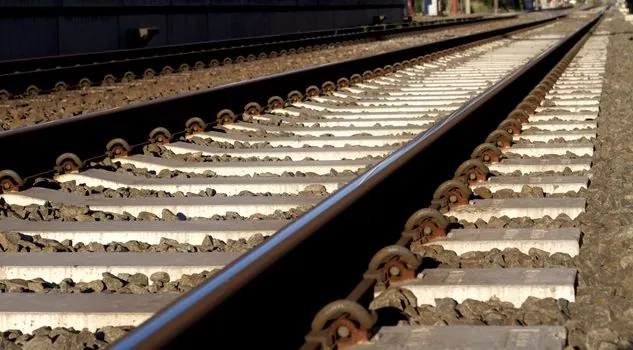
Side by side on the five decision criteria, the three families are:
Feedstock: A36 carbon steel (1.27-2.14 lbs/ft) for cap rail [S1]; PC+ABS thermoplastic for slide rail [S6]; coated mild steel for seating frames and interior trim [S3]. Line type: rolling/cut-to-length with saw center (A36); horizontal injection press with slider-on-lifter tool (PC+ABS); conveyor-fed pretreatment plus powder booth plus cure oven (coated trim). Length: 19-20 ft bar stock [S1]; 0.3-1.2 m molded part; sub-2 m welded or formed subassembly. Tolerance: ±0.005 in on cut length for A36; less than 0.03 mm parting-line flash for PC+ABS; coating thickness and color delta E for the trim loop. Volume break-even: 200+ pieces for shell on steel; 50,000+ pieces for 4-cavity PC+ABS injection; any volume for a powder line, since the substrate is built upstream.
That grid is what an auditor, a buyer, and a process engineer should agree on before a PO is signed. If two of the three columns still look interchangeable at RFG review, the feedstock and length data have not been captured correctly.
Use cases that map cleanly to each line
Steel cap-rail lines serve commercial, residential, industrial, municipal, and architectural ornamental railing systems, with A36 the standard grade and saw cutting plus miter-cut capability offered as value-added support for installation sequencing [S1]. PC+ABS slide-rail lines serve automotive seating adjuster tracks, with the slider-on-lifter flat-placed tool designed to keep zero color deviation across batches and the sub-0.03 mm parting line set as a marketing-grade surface target [S6]. Powder-coated lines serve rail passenger seating frames, interior trim, and miscellaneous coach hardware where the coating is the value-add, not the forming [S3].
Cross-reading the three datasets, the molding line is the wrong frame of reference for both the steel cap-rail cut-to-length loop and the powder-coated trim loop. Only the PC+ABS slide-rail family actually consumes an injection molding line end-to-end. Treat that distinction as the first filter on any 2026 rail bid.
Limits, failure modes, and what to reject up front
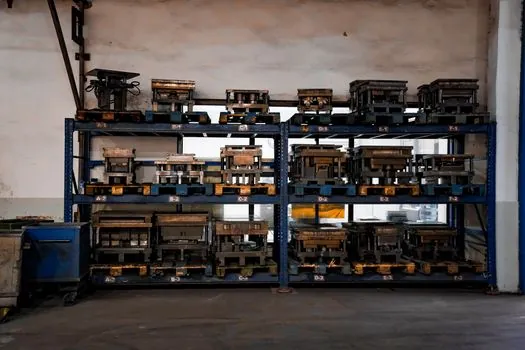
Each archetype has a hard ceiling. Cap-rail lines cannot hold a sub-0.03 mm parting line because there is no parting line; the spec is meaningless in this segment. PC+ABS injection lines cannot run 19-20 ft bar stock and will reject any RFQ that mixes the two. Powder lines cannot substitute for either, because they only finish a part; the forming process upstream must already be qualified. A cap-rail line quoted with phenolic shell tooling, an injection line quoted at 30-second takt with a 6-cavity family tool, or a powder line quoted without a documented pretreatment stage should all be rejected before the technical review. [S5]
The single most common 2026 failure is a buyer treating "rail" as a single commodity and bundling cap rail, slide rail, and seating trim into one RFQ. Three different suppliers, three different lines, three different standards bodies. Split the RFQ on day one, or lose the bid on day five.
Signals to track for the next bidding cycle
Trackable signals for the 2026 H2 rail-component line selection cycle: ASTM A36 plate and bar mill lead times, which currently drive cap-rail cut-to-length scheduling; PC+ABS resin spot pricing, which sets the breakeven between 4-cavity and 8-cavity injection tools; and powder-coat line oven length, which is the hidden constraint when seating frame length grows past 2 m. Buyers should also flag any vendor that cannot document the sub-0.03 mm parting line on a recent sample report, since the spec is the only objective gate in the PC+ABS segment [S6]. For background on energy-equipment presses that often appear in cross-industry RFQs, the molding line selection for energy equipment guide maps SEC and auxiliary heat-load assumptions that are useful when a rail-side plant ties its forming line to a shared utility header.