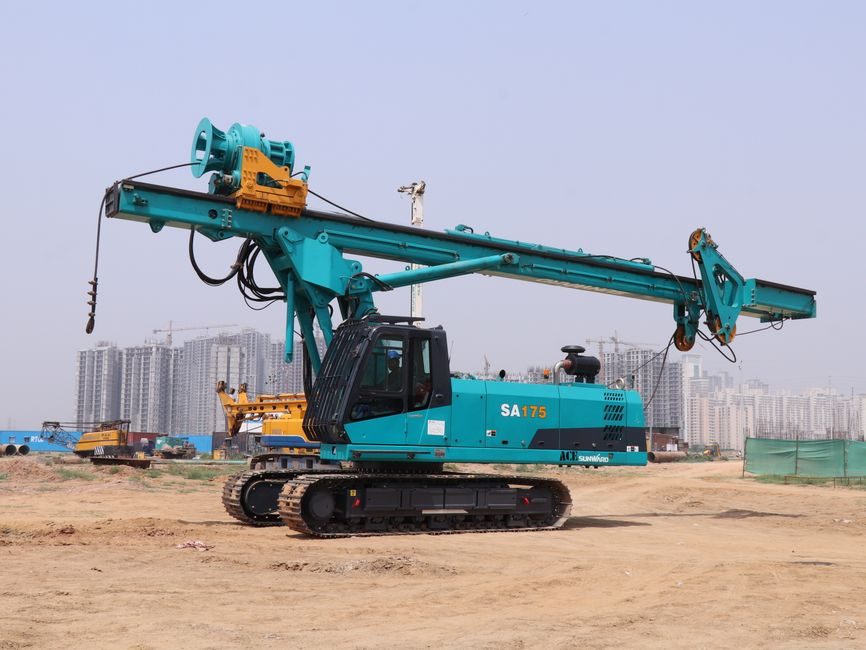
Crawler excavators — track-mounted hydraulic digging machines with a 360° rotating upperstructure — span an operating-weight range of roughly 1.5 t for the smallest mini units up to 100+ t for the largest mining-class machines, with engine power scaling from 10 kW to about 400 kW across the same span [S1][S5].
The term "crawler" distinguishes them from wheeled excavators by the use of crawler tracks (履带) instead of pneumatic tires, distributing ground pressure to 30-55 kPa on large mining units versus 80-120 kPa on small wheeled excavators — the structural reason tracked machines are mandatory on soft soil, mud, and uneven quarry floors [S1].
Operating-Weight Classes and Power Bands
Industry taxonomy sorts crawler excavators into four weight classes with distinct duty cycles: mini (1.5-6 t, 10-35 kW), compact/mid (6-15 t, 35-75 kW), medium (15-35 t, 75-200 kW), and large/mining (35-100+ t, 200-400 kW) [S1]. XCMG's XE60DA mini at 6.5 t and XE335DK medium excavator at 30 t bracket the lower and middle of this spectrum, both factory-fitted with hydraulic lines for breaker and tilt-rotator attachments [S5]. For a detailed breakdown of the sub-6 t segment, see the mini excavator spec and selection map.
Bucket capacity tracks the same curve: 0.04-0.15 m³ for mini, 0.2-0.6 m³ for compact, 0.8-2.0 m³ for medium, and 2.5-6.0 m³ for mining-class face-shovel and backhoe configurations. Used Caterpillar Cat320B units — a long-running 20-tonne-class benchmark — pair a Mitsubishi 4M40 TL engine rated at 41.5 kW / 55.6 HP with bucket volumes near 0.8-1.2 m³, illustrating the medium-class power-to-weight ratio of roughly 0.20-0.25 kW per 100 kg of operating mass [S2].
Undercarriage and Ground-Pressure Trade-Offs
Undercarriage choice is the single largest determinant of where a crawler excavator can work: standard track shoes spread load to 35-55 kPa ground pressure on a 20-tonne class machine, while wide-pad or LGP (low ground pressure) configurations drop this to 20-30 kPa for swamp and reclamation work. Triple-grouser shoes are the quarry default; flat shoes suit finished-grade work but wear faster on rock [S5].
Track-frame length also governs lift capacity. Long undercarriage (LC) variants — common in 20-35 t demolition and pipelayer roles — extend the rear-swing radius footprint, allowing heavier loads at full reach. For comparison with the wheeled alternative on paved surfaces, see Mini Excavator vs Excavator: spec, use-case, and cost split.
Upperstructure: Boom, Stick, and Attachment Geometry
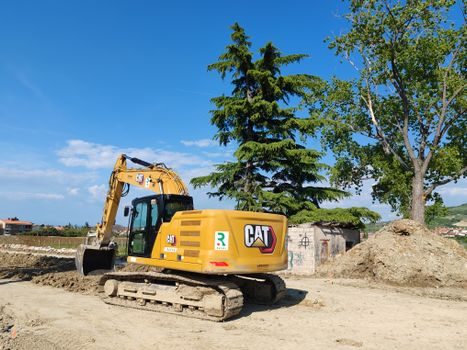
Three boom configurations cover 90% of crawler applications: monoboom (heaviest lift, simplest maintenance), two-piece articulated boom (best in tight urban trenching — added articulation cuts tail swing by 30-40%), and telescopic boom (specialty demolition and slope-finishing). Stick lengths run 1.5-7 m, with longer sticks trading lift force for dig depth [S5].
Attachment hydraulics separate a true carrier from a purpose-built machine. Aux lines rated at 100-200 L/min at 20-35 MPa drive hydraulic breakers, shears, and tilt rotators; high-flow circuits up to 400 L/min are required for large drum cutters on 30+ t carriers. XCMG's XE335DK is shipped with hammer-ready piping plumbed to the stick tip, eliminating the field retrofit that typically adds 80-120 installation hours [S5].
Application Map by Class
Mini (1.5-6 t) crawler excavators dominate urban utility, landscaping, and indoor demolition where trailer-portable mass under 6 t is required. Compact (6-15 t) machines are the workhorse of residential foundations, small road jobs, and farm drainage. Medium (15-35 t) units handle commercial site prep, quarry loading, and pipeline trenching at depths to 6-7 m. Large (35-100+ t) mining-class face shovels and backhoes load 30-100 t haul trucks in iron-ore and copper operations, with bucket payloads of 5-30 t per pass [S1][S5].
Selection against wheeled excavator is straightforward: any soft, muddy, or rocky terrain where ground pressure above ~80 kPa would sink a tire pushes the spec to tracks. Conversely, paved urban sites with high machine-mobility demand favor wheels for transport speed up to 35 km/h versus track units limited to 5-6 km/h. Factory-side supply is concentrated in China — Xiamen LTMG (165 employees, ISO 9001:2015-certified, Diamond Member supplier since 2016) builds crawler and wheel excavators alongside loaders and forklifts; for the broader 2026 factory map see Mini Excavator Suppliers and Manufacturers: 2026 Factory Map [S3].
Selection Criteria Comparison: Mini vs Compact vs Medium vs Large
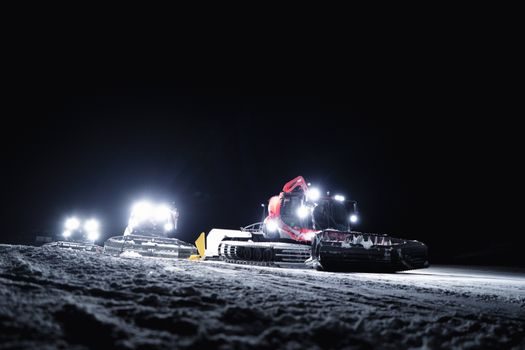
Four criteria frame the choice: operating weight (1.5-6 / 6-15 / 15-35 / 35-100+ t), engine power (10-35 / 35-75 / 75-200 / 200-400 kW), typical dig depth (2-3.5 / 3.5-5.5 / 5.5-7.5 / 7-12 m), and transport method (trailer / trailer or lowboy / lowboy / modular trailer). The Cat320B at 20 t with a 41.5 kW engine fits the lower edge of medium-class, while the XE60DA at 6.5 t sits at the top of the compact band [S2][S5].
The excavator reference page anchors the broader category specs.
Hydraulic System, Emissions, and Cab Standards
Modern crawler excavators run load-sensing hydraulic systems with main-relief pressures of 30-35 MPa on mini/compact and 31-34 MPa on medium/large classes; pilot pressure is typically 3-4 MPa. Engine tier drives regional compliance: EPA Tier 4 Final and EU Stage V are required for off-road diesels in North America and Europe as of the equipment's manufacturing date, while China Non-Road Stage IV aligns with EPA Tier 4 Final emission limits for PM and NOx [S3][S5].
Operator-environment standards: ROPS/FOPS cabs are standard on 6+ t machines per ISO 12117, and noise exposure at the operator seat is governed by ISO 6393/6394/6395. Quick-coupler and attachment-pin standards (S-type, CW-series) cross most OEM boundaries but require matching pin diameter and hydraulic-pin geometry — verify against the carrier's aux-flow rating before specifying [S5].
Operating Limits, Failure Modes, and Maintenance Windows
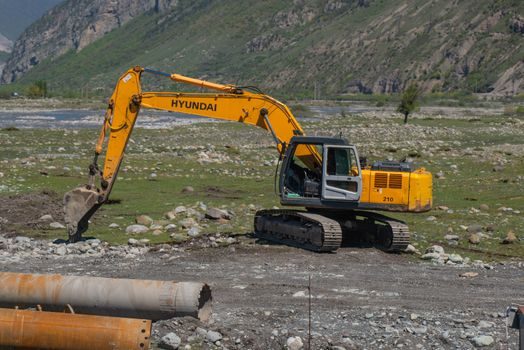
The structural failure modes that show up in service are predictable: undercarriage wear (track pins, bushings, idlers, sprockets) accounts for 40-60% of lifetime undercarriage cost on tracked excavators, with track life typically 2,000-5,000 hours depending on abrasion. Slewing-ring wear limits upperstructure life to 8,000-15,000 hours before rebuild; boom and stick fatigue cracking concentrates at the boom-foot and stick-cylinder mount, the two highest-stress weldments [S5].
Hydraulic contamination is the leading preventable failure: keeping fluid below ISO 4406 18/16/13 cleanliness code extends pump life by 2-3× in field data. Service intervals tighten as weight class rises — 500-hour engine oil on mini units versus 250-500 hours on large mining machines, with hydraulic oil at 2,000 hours and swing-gear oil at 1,000 hours regardless of class. Used 20-tonne-class units from the early 2010s typically show 8,000-12,000 hours before major component swap [S2].
Sourcing Checklist and What to Verify Before Purchase
Two trackable signals to watch through late 2026: tighter EU Stage V enforcement on used imports over 75 kW from January 2026 onward, and the continued rollout of factory-fitted 2D/3D machine-control guidance on 20-35 t carriers — both have shifted order mix at China-based OEMs like XCMG and LTMG through 2025-2026 [S3][S5].
Spec-level background on the components involved: crawler crane, and pressure transmitter.