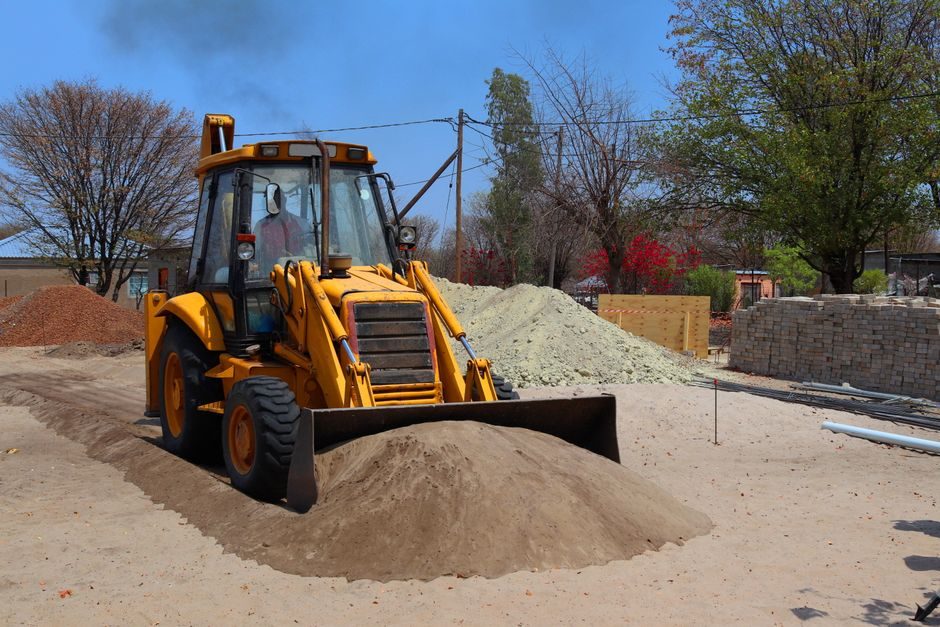
Mini excavators are defined as crawler or wheel-mounted hydraulic diggers with an operating weight typically below 6 metric tons, sized to pass through narrow gates and work alongside finished surfaces [S1].
Across the 1-6 ton band, five body configurations dominate 2026 spec sheets — zero-tail-swing, reduced-tail-swing, conventional-tail, wheeled, and electric — and each maps cleanly to a different jobsite envelope, tail-swing clearance, and duty cycle [S2].
Operating-Weight Bands and Where Each Class Earns Its Place
Sub-1-ton micro excavators (≈0.8-1.0 t) are designed for indoor demolition, basement digs, and garden work where a 1 m-wide machine must pass through a standard doorway or gate; Chinese OEM Vote lists a 1.2-ton class machine (VTW-12PLUS) as its lightest tracked unit [S2].
The 1.5-2.5 t band is the workhorse of residential utility trenching, fence-post installation, and small landscape grading — narrow enough to fit a single parking stall yet stable enough for a 200-300 mm bucket at full reach [S1]. The 3-4 t class adds counterweight and lift capacity for municipal footpath work, pool excavation, and light road sub-base prep, while 5-6 t units are effectively scaled-down conventional excavators used on confined commercial sites where a full-size machine cannot enter [S1].
Tail-Swing Architecture and the Three Body Layouts
Zero-tail-swing (ZTS) machines keep the upperstructure within the track width at full rotation, a layout that matters when digging parallel to a building wall, fence, or lane of traffic; reduced-tail-swing (RTS) units keep a small rear overhang — typically 50-150 mm beyond the track — and trade a slightly larger counterweight envelope for better digging force [S1].
Conventional-tail mini excavators carry the full counterweight past the tracks and are the cheapest per kilogram of reach, but demand a working corridor at least one machine length clear behind them [S1]. The trade is mechanical simplicity and better front-end lift at the expense of side-wall clearance.
Undercarriage Choices: Rubber Track, Steel Track, and Wheeled
Rubber-track undercarriages are the default for finished-surface work — pavement, turf, and concrete — because they leave no grouser mark and dampen vibration transmitted into adjacent structures; steel-track variants are specified for rocky subgrade, demolition spoil, and uneven terrain where rubber would be cut [S1].
Wheeled mini excavators replace tracks with two axles and outriggers, allowing road travel between sites at low chassis speeds without a trailer, a layout favored by municipal crews and rental fleets that move between short-duration urban jobs [S1]. For trailer-towable fleets and short-radius road work, the wheeled configuration removes the loader-and-trailer logistics layer that tracked units require.
Powerpack Options: Diesel, Diesel-Hybrid, and Battery-Electric
Tier 4 Final / Stage V diesel remains the baseline powerpack in the 1-6 t band, sized roughly to 7-50 kW depending on operating weight, with a typical hydraulic flow of 30-120 L/min feeding boom, arm, bucket, and swing circuits [S1].
Battery-electric mini excavators — exemplified by 2026 OEM line-ups such as the VTW-20 class — are increasingly specified for indoor demolition, greenhouse work, and emission-restricted urban sites where diesel particulate and noise rule out a combustion engine [S2]. For an extended discussion of how operating weight, engine, and hydraulic specs map to jobs, see the selection spec map.
Applications Mapped to Machine Class
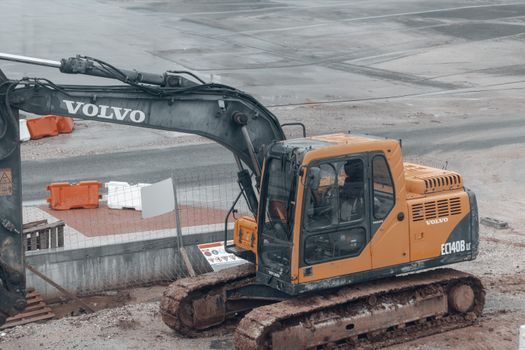
Across the available research, the dominant 2026 application set is trenching, landscaping, utility installation, site preparation, grading, and light demolition on residential, commercial, and municipal projects [S1]. A 1-2 t ZTS is the standard trenching and irrigation-laying tool; a 3-5 t conventional-tail handles pool excavation and small road sub-base; a wheeled 5-6 t unit covers urban utility and municipal patch work [S1].
Agricultural and rural applications — ditch clearing, livestock pen work, and orchard planting — are served by compact 1.5-3.5 t machines with optional narrow buckets and grading blades, a segment where Chinese manufacturers explicitly position dedicated agricultural excavator variants alongside the construction line-up [S2].
Selection Criteria and How the Main Types Compare
Side-by-side, the four key decision criteria are tail-swing clearance, transport weight, ground pressure, and auxiliary-hydraulic flow for powered attachments. Zero-tail-swing wins on clearance but costs more per kilogram of lift; wheeled wins on self-deploy speed but loses off-road ground pressure; electric wins on indoor emissions compliance but constrains duty cycle to battery shift length [S1][S2].
For buyers comparing ZTS, RTS, conventional, and electric at a given operating weight, the rule of thumb is: pick ZTS when the work sits inside 300 mm of a vertical obstruction, pick RTS for mixed urban lots, pick conventional for open ground and lowest acquisition cost, and pick electric only when the site mandate excludes diesel exhaust and noise [S1][S2]. Chinese OEM output for 2026 in the 1.2-3.5 t band — across the VTW-12PLUS through VTW-30S range — covers essentially every slot in that decision matrix at aggressive price points [S2]. For an adjacent look at how compact equipment fits into the broader factory automation spec chain, the EV production line spec map is a useful cross-reference.
Limitations, Failure Modes, and Sourcing Realities
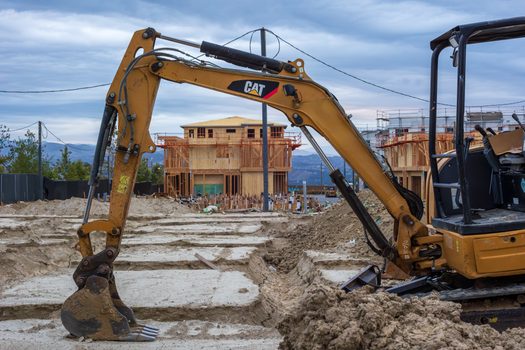
Mini excavators below 2 t are constrained on lift height and bucket breakout force — they will not load a 10-ton truck in a single pass and are not substitutes for a 7-ton class machine on heavy grading [S1]. Rubber tracks wear faster than steel on abrasive rock and must be replaced roughly every 1,200-2,000 operating hours depending on surface.
Sourcing through Chinese OEM channels in 2026 offers wide model choice across 1-6 t at lower list price than Japanese or European equivalents, but buyers should verify the specific emission tier (Tier 4 Final / EU Stage V for North American and European deployment) and the after-sales parts network before purchase [S2]. Used Hitachi mini excavators remain a parallel channel where buyers prioritize dealer-supported service histories over new-unit pricing [S1].
Trackable signals worth watching over the next two quarters: the rollout of higher-capacity battery-electric 3-5 t units capable of a full 8-hour shift on a single charge, and any tightening of EU Stage VI-equivalent thresholds for the sub-19 kW diesel class that would force another wave of electric substitution in the 1-2 t band.
Spec-level background on the components involved: excavator, pressure transmitter, and flow meter.