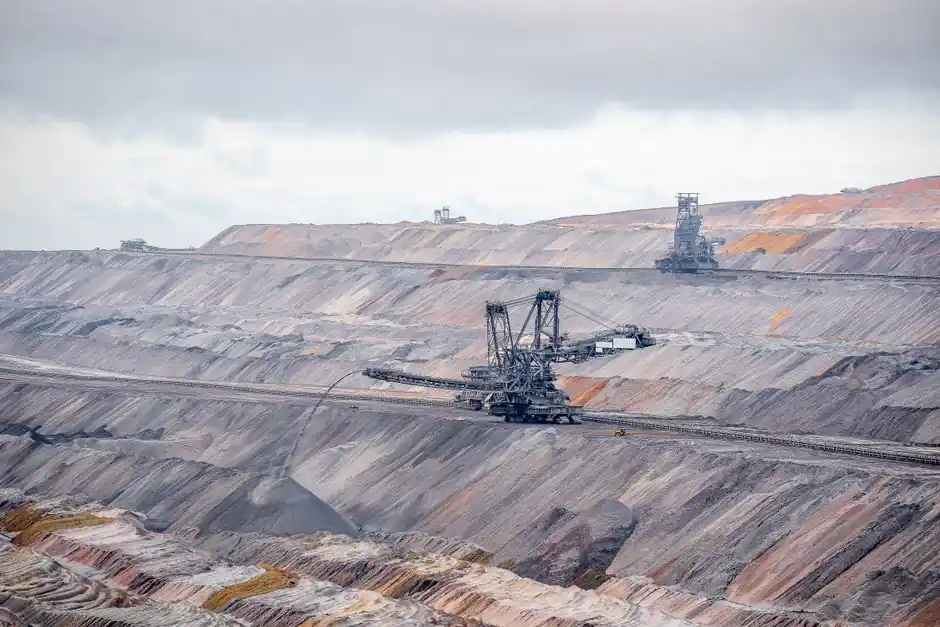
A critical mineral offtake agreement lets an offtaker commit to purchase a producer’s future output over a defined period, potentially covering all or a substantial share of production [S2][S8].
Modern arrangements combine procurement commitments with equity, project finance, processing cooperation, and government involvement, linking physical mineral supply to investment and policy objectives [S1][S3].
What a Critical Mineral Offtake Agreement Does
An offtake is a forward purchase arrangement: the offtaker agrees to buy a producer’s product before that product is mined, refined, or otherwise delivered [S2]. The structure is especially relevant where a new project needs confirmed demand before lenders and investors commit capital.
The commercial scope can be broad. The buyer may take all output or a substantial portion of future production, while the agreement may cover extraction, concentrate, refined material, or a downstream product [S8]. Critical minerals agreements may also support value-chain integration, joint project financing, processing cooperation, and long-term supply arrangements [S3][S4].
The distinction between soft and binding instruments matters. A rapidly expanding network of critical-minerals agreements has added complexity to global trade and investment frameworks, reflecting greater reliance on state action and bilateral arrangements [S4].
Why Buyers Use Offtake Before Production Starts
An offtake can convert an uncertain future sale into a defined demand signal for mines, refineries, and processing facilities [S7]. This matters because processing capacity can be more concentrated than extraction: China was estimated to control 40% to 90% of global lithium, cobalt, and copper processing capacity while producing about 10% of those materials [S3].
Offtake can therefore address two linked risks: financing risk for the producer and market risk for the buyer. The POSCO and Black Rock case illustrates how an equity investment combined with offtake can support critical-mineral supply by sharing capital exposure and creating a purchase pathway [S1].
Public support can add another layer. The US Department of Defense announced a multibillion-dollar public-private partnership with MP Materials to build a secure, end-to-end domestic rare-earths supply chain [S5].
Term Sheet or Full Contract: What Must Be Decided

A term sheet can establish commercial headlines before the parties negotiate a full contract, but it is not a substitute for the operative provisions that determine delivery, risk, remedies, and termination [S2]. Key decisions include the covered product, delivery point, contract term, committed volume, and treatment of unscheduled production.
Pricing mechanics must distinguish the commodity reference from the actual sale price. Contract models can include fixed prices, floors, ceilings, index-linked pricing, or negotiated adjustments, but each mechanism allocates a different risk. A floor protects producer cash flow, while a ceiling limits buyer exposure when market prices rise.
Quality terms need objective definitions for chemical composition, impurities, moisture, particle size, contaminants, and acceptable test methods. The agreement should also identify inspection arrangements, rejection procedures, independent laboratories, and the consequences of a failed specification. Without those rules, nominal offtake volume does not guarantee usable material.
Comparison: Spot Purchase, Term Sheet, and Full Offtake
A spot purchase offers little protection before production because the buyer has no advance commitment and the seller has no contracted buyer. A term sheet improves certainty while preserving flexibility, but unresolved drafting points can allow either party to reopen price, volume, or liability terms. A full offtake creates stronger enforceability and a clearer financing signal, at the cost of more negotiated exposure. [S2]
This comparison turns on legal commitment, operational maturity, and the parties’ tolerance for open terms. It also explains why MOUs and framework agreements can be politically useful while providing less commercial certainty than executed offtake contracts [S4].
Financing Structure Changes the Allocation of Risk
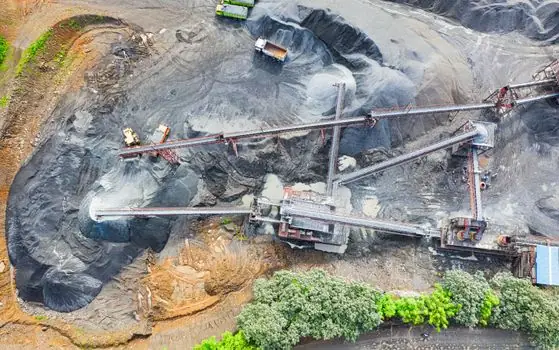
An offtake may sit inside a broader investment package rather than operate as a stand-alone sales contract. Equity can align the buyer and producer, while debt lenders gain comfort from contracted revenue. Demand-side financing can also support offtake between domestic processors and manufacturers and reduce exposure to concentrated supply chains [S6].
The MP Materials structure illustrates that interaction at scale. The US Department of Defense announced a multibillion-dollar public-private partnership with MP Materials to build a secure, end-to-end domestic rare-earths supply chain [S5].
Such a package protects different parties at different points. A price floor supports producer revenue when market prices fall, equity gives the government exposure to company performance, debt reduces the amount of sponsor capital required, and the offtake connects future capacity to a defined buyer [S5]. The trade-off is a concentration of obligations across public and private stakeholders.
Failure Modes in Critical Mineral Supply
Permitting, construction delay, commissioning problems, resource variability, and processing underperformance can prevent delivery even when demand is contracted. The agreement should address force majeure, change in law, permitting failures, industrial action, transport interruption, and extended construction delay rather than treating every delay as a producer default. [S3]
Environmental and community obligations can also affect completion and operating continuity. Responsible sourcing provisions should identify required permits, labor practices, environmental controls, due-diligence evidence, and consequences for non-compliance. These elements matter because public critical-minerals frameworks focus not only on tonnage but also on sustainable supply chains and value-chain integration [S4].
Geopolitical conflict creates a separate risk. MOUs and strategic partnerships may not be legally binding, while binding trade and investment obligations can remain in force alongside newer minerals arrangements [S4]. A buyer should not treat political language as equivalent to an enforceable delivery promise.
Drafting and Diligence Checklist

Before signing, parties should reconcile the term sheet with mine plans, refinery schedules, logistics routes, financing documents, permits, and technical studies. The contract should state whether volumes refer to contained metal, payable metal, concentrate, oxide, metal, magnet output, or another defined product. [S2]
Delivery documentation should specify accepted Incoterms, payment currency, payment milestones, insurance allocation, title and risk transfer, shipping responsibilities, and the treatment of late shipment. A credible liability package must distinguish payment obligations from performance guarantees and supply-chain warranties.
Dispute resolution should cover technical, accounting, and legal disputes, including escalation, expert determination, governing law, arbitration seat, and interim remedies. Change-in-law provisions should address taxes, royalties, export controls, sanctions, tariffs, and other government measures that alter project economics [S3][S4].
For buyers, diligence should test whether the producer can meet the promised specification at commercial scale, whether every processing step is covered, and whether downstream conversion capacity exists. For producers, diligence should test the buyer’s credit quality, payment security, termination rights, and willingness to accept technical or regulatory variability.
The next verification point is execution, not publicity: confirm whether the agreement has a defined term, binding purchase volume, price formula, quality specification, delivery schedule, financing support, and enforceable remedies, then track whether those commitments are carried into the mine, refinery, and downstream-project plans.