
Natural-rubber supply risk is driven by severe geographic concentration, with over 90% of current supply originating in Southeast Asia [S1][S5].
Concentration Makes Natural Rubber a Critical Input
Southeast Asia accounts for approximately 90% of global natural-rubber production [S5].
Natural rubber is derived predominantly from the sap of the Hevea brasiliensis tree, a crop described as highly susceptible to disease [S5]. The resulting exposure is not limited to rubber prices: disease, weather, aging trees, and competing land uses can constrain supply while manufacturers need a reliable raw material source for safe, durable tires [S1][S3][S5].
For industrial users, natural rubber is therefore both a performance material and a concentrated sourcing dependency. Complete substitution at comparable scale is not established by the research, so processors serving conveyor, handling, agricultural, and industrial solid-tire applications should treat natural-rubber procurement as a critical-interface risk rather than a routine commodity purchase.
Traceability Is the Immediate Compliance Exposure
The European Union’s deforestation regulation is making supply-chain traceability a competitive differentiator and increasing pressure on tire manufacturers to demonstrate that their natural rubber is free from deforestation and biodiversity-related harm [S1].
Approximately 90% of current natural-rubber supply originates in Southeast Asia [S5].
Supplier policies already formalize expectations covering human rights, labor rights, biodiversity, environmental protection, and no deforestation. Nokian Tyres updated its Guideline for Sustainable Natural Rubber, Biodiversity and Deforestation in June 2025, and it aligns with GPSNR’s policy framework [S2]. The standard commercial requirement is practical evidence: a supplier commitment alone does not resolve plot-level origin data or intermediary gaps.
Natural Rubber Versus Alternative Rubber Systems
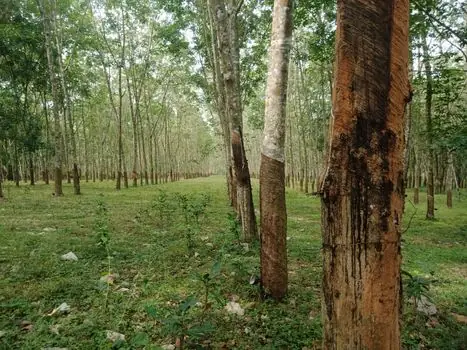
Natural rubber differs from substitute systems in feedstock control, established scale, and traceability burden. Synthetic alternatives can reduce dependence on plantation rubber, but the research does not establish that they reproduce natural rubber’s full performance envelope or enable a complete industrial-scale replacement.
For belt and tire buyers, the practical comparison is between natural rubber, synthetic rubber, and blended compounds. Natural rubber offers proven use in tires but carries concentrated plantation exposure and demanding origin-traceability requirements. Synthetic rubber reduces direct exposure to natural-rubber availability but introduces separate feedstock, price, performance, and qualification dependencies.
Material selection should therefore compare four criteria: dependence on Southeast Asian plantations, regulatory traceability maturity, validated mechanical performance, and qualification effort. Nitrile rubber, EPDM rubber, and silicone rubber should be screened against the actual belt or tire duty rather than treated as automatic substitutes. The industrial rubber decision remains application-specific, with natural rubber most defensible where its established dynamic and fatigue characteristics are required.
Industrial Solid Tires Expose Both Social and Physical Risks
Sri Lanka is the largest exporter in the global solid-tire market [S4]. Its industrial solid-tire chain links smallholder-operated rubber production with ribbed smoked sheets, brokers, processors, and tire manufacturers, so disruption or weak traceability at any upstream stage can affect downstream production [S4].
A 2026 study assessed the social performance of Sri Lanka’s natural-rubber supply chain in solid-tire manufacturing using a cradle-to-gate social life-cycle assessment and the “More Good and Less Bad” method [S4]. These figures describe the Sri Lankan case rather than every industrial solid-tire supply chain, but they demonstrate why labor evidence cannot be separated from procurement assurance.
The upstream chain also consumes natural and synthetic raw materials, fuel, water, electricity, and labor, while reported production-stage concerns include nitrogen oxides, benzene, and polycyclic aromatic hydrocarbons [S4]. Industrial converters purchasing ribbed smoked sheets or other plantation-derived inputs need supplier data covering product origin, processing steps, labor practices, and chain-of-custody evidence, not merely a declaration that material is certified.
Risk Controls Must Reach Beyond Tier-One Suppliers
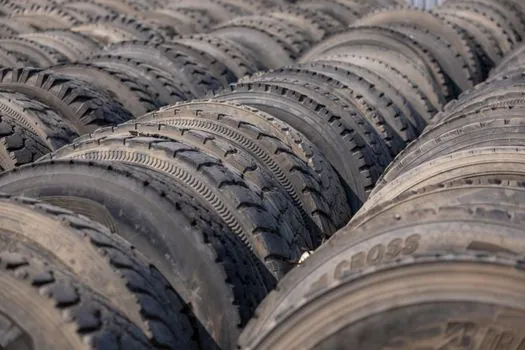
More than 85% of global natural-rubber production comes from smallholders, while the material often crosses multiple intermediaries before reaching a processor [S1]. A robust control plan therefore needs four layers: supplier screening, intermediary mapping, plot or farm origin evidence, and chain-of-custody reconciliation to the delivered compound or rubber grade.
Natural rubber producers can support supply resilience through diversified cultivation, disease-resilient planting systems, cooperative aggregation, and additional processing capacity. Publicly disclosed traceability and deforestation-monitoring data are also necessary because tire companies need evidence that can be checked rather than accepted through an opaque sustainability claim [S8][S9]. The Global Platform for Sustainable Natural Rubber policy framework provides a shared reference structure for environmental and social expectations across the chain [S2].
For industrial buyers, inventory policy should distinguish ordinary stock from verified, deforestation-free material. Single-origin commitments without evidence of agronomic, disease, and processing capacity can narrow the supplier base precisely when demand is rising. Dual sourcing and reserve stocks can reduce disruption exposure, but industrial adhesive, reinforcement, and process-chemical suppliers should be assessed with the same chain-of-custody discipline because an apparently complete belt or tire can still inherit upstream traceability gaps.
What Buyers Should Track Through 2027
Three indicators provide a practical monitoring framework: the share of received natural rubber with documented plot-level origin, the number of intermediary links reconciled between processor and tire plant, and the percentage of strategic volume covered by more than one approved source. These measures translate broad supply-chain commitments into procurement controls that can be audited internally. [S1]
Regulatory status, deforestation screening, supplier disclosure, and geographic diversification should be reviewed on a fixed schedule. EUDR compliance exposure of up to 4% of EU revenue, 4.1 million hectares of recorded rubber-plantation forest clearance, and 90% Southeast Asian production concentration make origin assurance a commercial issue, not a sustainability annex [S1].