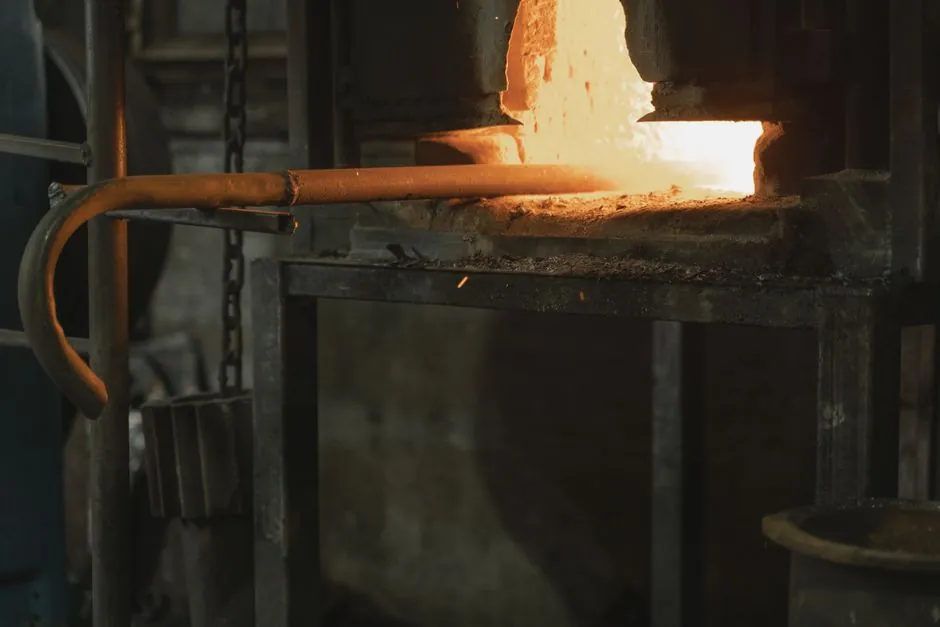
Active melting in an induction crucible furnace typically draws 500-560 kWh per ton of iron or aluminum, while standby holding on a resistance-heated aluminum crucible furnace consumes a much smaller, continuously applied load sized to offset wall losses [S1][S2].
Power draw is not one number, it is two distinct operating points. The active melt figure is set by specific energy demand and furnace electrical efficiency; the standby figure is set by refractory losses, bath surface area, and how tightly the controller is set [S1][S2]. For a detailed breakdown of the underlying equipment, see the crucible furnace reference page.
Active-Melt Power Demand: Where the kWh Go
Melting iron or aluminum in a modern induction crucible furnace requires about 500-560 kWh/ton of charge, a figure that already assumes an electrical efficiency above 80% for ferrous and above 70% for highly conductive non-ferrous metals such as copper and aluminum [S1]. The electrical-to-heat conversion inside the coil is the dominant term, not the furnace shell, because copper coils and laminated transformer-steel yokes return the magnetic field with low loss [S1].
Crucible induction units scale aggressively: production units for iron and steel are running at over 20 MW with melt rates above 40 t/h, and medium-frequency designs can carry roughly 3x the specific power of a mains-frequency furnace at the same bath movement, provided the coil is sized so the feedstock diameter D to penetration depth d ratio stays above 6 [S3]. In the smaller shop range, a 5.5 kg LG2 bronze melt at 1010 °C takes about 900 Wh of useful heat at 100% efficiency, which means a real electric furnace drawing 3 kW will sit on full input for several hours [S4].
Standby Holding: Why the Furnace Never Truly Sleeps
A stationary electric resistance aluminum crucible furnace such as the EM-A Series holds molten metal between pours by feeding low, continuous power to top up wall and lid losses, with closed-chamber geometry and thick refractory insulation minimising that load [S2]. There is no burner, no combustion air, and no off-gas stream, so standby losses reduce to the conduction-radiation envelope plus the latent heat lost through the spout and any open charging port [S2].
Unlike a channel (coreless) induction furnace, which must never be fully drained because the secondary loop of liquid metal is the actual short-circuited winding, a true induction furnace of the crucible type can be emptied between melts, which lets the operator switch standby to zero when the schedule allows [S1]. When the bath must stay molten, however, the holding power is set by the desired superheat above the alloy's liquidus, typically a few tens of degrees for aluminum, and the controller simply cycles the elements or coil to maintain that window [S2].
Comparison: Active vs Standby Across the Three Main Crucible Types
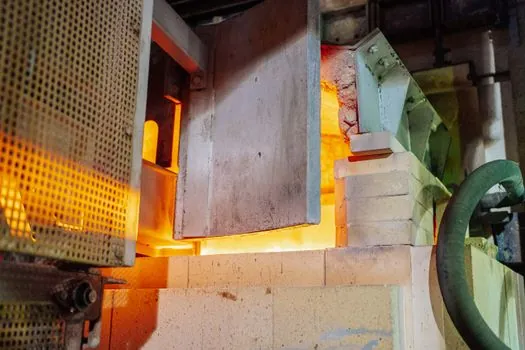
Fuel-fired, electric resistance, and induction crucible furnaces behave differently at the two operating points, and the table below lines them up against the criteria that actually drive the utility bill [S1][S2][S5].
Standby-holding power: electric resistance crucible furnaces hold the most stable temperature because the elements can be pulsed at any fraction of nameplate, and the closed-chamber geometry keeps the loss surface small [S2]. Induction crucible furnaces hold well too, but the coil cannot be de-energised indefinitely if connected to a channel inductor, and the bath movement continues as long as current flows [S1][S3]. Fuel-fired crucible furnaces hold least efficiently because the burner must stay lit at low fire, with pilot and stack losses continuing even when the bath is at setpoint.
Start-up from cold: induction medium-frequency units need a solid starter block whose diameter respects the D/d > 6 rule, so a completely cold furnace may need a preheated slug before it will draw sensible power [S3]. Electric resistance and fuel-fired crucible furnaces start from any charge material, including fine returns and chips, which is why they remain common in job-shop foundries running short alloy campaigns [S2][S5].
Operating-Practice Levers That Move the Standby Number
Three levers actually shift standby power in a working foundry. First, lid discipline: keeping the charging port closed between buckets cuts radiation loss dramatically, and a well-designed stationary resistance crucible furnace already minimises the open surface area by design [S2]. Second, setpoint tightness: holding 720 °C on aluminum instead of 760 °C saves a measurable fraction of wall loss because radiation scales with the fourth power of absolute temperature. Third, scheduling: batching pours so the bath is held for two hours instead of six cuts the daily standby kWh in proportion, which is why holding furnace capacity is often a better investment than a larger melter.
For induction crucible furnaces specifically, peak-load management matters as much as raw efficiency: IGBT-based pulse-width-modulated converters keep power factor near unity at partial load, so running at 40% of nameplate during standby costs close to 40% of full-load kVA, not the 70-80% penalty seen with older series-resonant drives [S1].
Who This Matters For, and Where It Does Not

The standby vs active distinction matters most in three settings: high-mix job-shop foundries that melt and hold many short campaigns per shift, captive aluminum foundries feeding die-cast cells that demand a constant metal temperature within a few degrees, and any operation on a time-of-use tariff where peak kW charges exceed energy kWh charges [S1][S2]. It matters least in bulk steel melting where the furnace is emptied at the end of every heat, and in continuous casting lines where a separate holding furnace already buffers the melter [S1].
Foundries weighing fuel-fired against electric should also remember that gas versus electricity price ratios shift the answer over time, so a furnace that looked right in 2016 may not look right now, even with identical melt mass and alloy [S4]. A relevant deep dive on the energy trade-off sits in Induction vs Gas-Fired Casting Furnaces: Energy Decision Map.
Numbers to Log on the Floor Before You Specify
Before sizing standby power into a utility contract, a process engineer should log four operating numbers per shift: average kW during the melt (not the nameplate), average kW during hold, hours at each state, and the bath temperature setpoint actually used rather than the setpoint the controller was configured for [S1]. Those four numbers, multiplied out and divided by the tons poured, give a true kWh/ton that includes standby, which is the number the CFO sees on the bill, not the marketing figure on the furnace data plate.
Two trackable signals to watch over the next planning cycle: tariff changes that move the peak-kW charge above the energy-kWh charge, and the rollout of IGBT-converter retrofits on older mains-frequency crucible furnaces, both of which can flip the standby-versus-active cost ranking on an existing line without any change to the furnace shell.