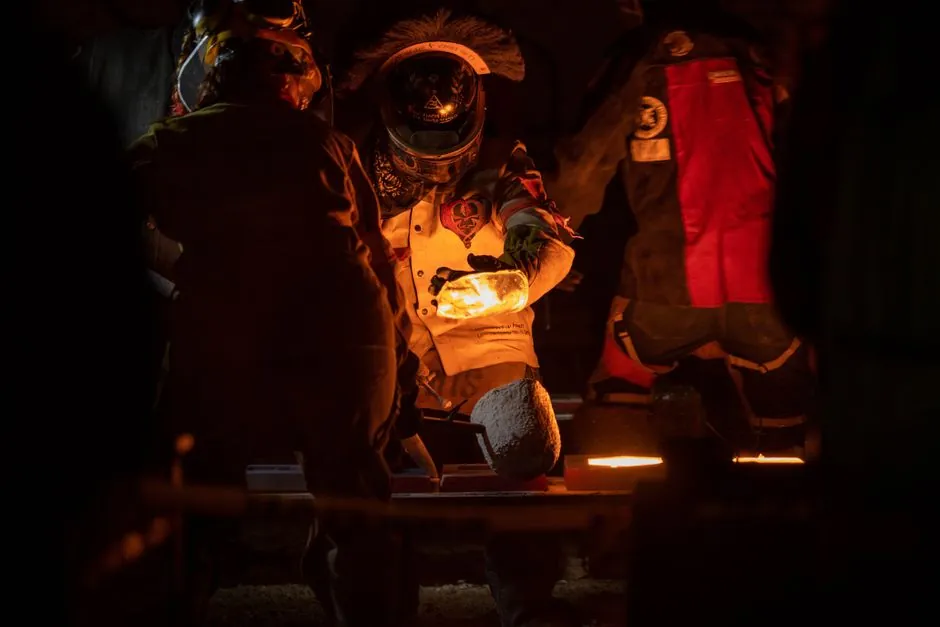
A well-installed and sintered crucible furnace lining in a foundry typically survives 80 to 400 heats before a planned reline, with the wide range governed by melt temperature, alloy chemistry, bath stirring intensity, and installation discipline [S2][S3].
The lining is a consumable: every heat loads it with thermal shock, chemical attack from slag, and, on induction units, erosive wear from electromagnetic bath movement, so the campaign ends when monitoring shows wall thickness has dropped into a danger band [S1][S2][S5].
What lining life actually means in a foundry
"Lining life" is the count of heats a refractory crucible survives between full relines, and it is the single biggest driver of furnace availability in a foundry because every reline is a planned stoppage plus the risk of an unscheduled one [S2][S3]. Cast iron melts at roughly 1,550 °C and the lining has to hold that temperature in continuous contact with molten metal and aggressive slag, so a small drop in lining thickness quickly becomes a coil-protection problem rather than just a maintenance cost [S3].
Operating data from iron foundries shows the practical range of lining life on coreless induction furnaces sits between about 80 melts (short campaign, aggressive alloys) and 400 melts (well-sintered silica on grey iron, consistent charge practice) [S2][S4]. The wall thickness installed in the coil area is typically 80 to 200 mm as a monolithic ramming mix, and uniformity of compaction across that thickness is the single biggest installation variable [S1].
Material choice by alloy: silica, alumina, magnesia, and where each one wins
Three refractory families dominate foundry crucible service: silica/quartzite dry-vibration mixes for iron, high-alumina spinel-forming dry-vibration mixes for steel, and high-alumina mixes with non-wetting additives for aluminium [S4][S5]. Each has a different failure mode and a different sweet spot, and the wrong pick is the fastest way to cut campaign life.
For grey iron, ductile iron, and especially SG iron in medium-frequency induction furnaces, graded quartzite mixes enriched with fused silica (for example the SILCOR family supplied by Foseco) are the industry default because they give a balance of lining life, metal cleanliness, and lining security in high-powered units [S4]. For steel alloys, KELLUNDITE high-purity alumina spinel-forming dry-vibration refractories are specified because the chemistry of liquid steel is more aggressive toward silica and the spinel bond handles the higher operating temperatures and longer hold times typical of steel melts [S4][S5]. For aluminium, KELLUNDITE mixes with an aluminium-resistant additive give non-wetting behaviour that limits dross build-up and sticking, which is the practical failure mode on aluminium crucibles rather than thermal attack [S4].
Material selection is also shaped by health-and-safety regulation: alumina-based mullite-forming dry linings (KELLUNDITE for iron) are used as a cost-effective alternative to silica where crystalline-silica exposure during installation and removal must be controlled [S4].
Installation and sintering: where campaigns are won or lost
On induction furnaces, the lining between the water-cooled copper coil and the bath has to be as thin as possible to keep electromagnetic coupling efficient, while still thick enough to protect the coil from a metal run-out, a constraint that magnifies every installation defect [S5]. The standard commissioning practice is to take 4 to 8 melts continuously without intermediate cooling, with adequate water flow on the coil, so the working face sinters to a uniform density [S8].
Field failure analysis breaks lining problems into nine recurring causes: wrong material for the alloy, poor installation, improper sintering, skipped preheat, no wear monitoring, mechanical or thermal shock, slag/dross build-up, and chemical attack [S2]. Of these, inadequate compaction during ramming is the silent killer: low-density zones become the path a run-out takes when the lining thins under service [S1][S5]. A preformed crucible (with a centred mandrel, undistorted in storage) sidesteps the compaction variable on some non-ferrous furnaces, but only if the protective glaze is intact [S5].
Failure modes and the signals that end a campaign
The four dominant end-of-campaign failure modes are thermal-shock spalling, slag/dross infiltration, metal penetration at low-density joints, and erosive wash from electromagnetic stirring; each shows up as a different wear pattern on the inspected lining [S1][S2][S5]. Pouring spouts and tapping launders fail first in most campaigns because they see both cyclic thermal loading and mechanical wear from flowing metal, which is why suppliers build them as replaceable prefabricated elements so a spout change does not force a full reline [S1].
On the furnace body, lining wear is tracked as a measured wall-thickness number against a minimum safe value, and exceeding that minimum is the trigger for a controlled shut-down rather than waiting for a run-out [S1][S2]. A run-out, where molten metal breaks through into the coil area, is the most severe accident class in a foundry: water lines, hydraulic lines, and electrical cabling in that zone can turn a leak into a water/molten-metal explosion, so monitoring discipline is not optional [S5].
Operating levers that actually move lining life
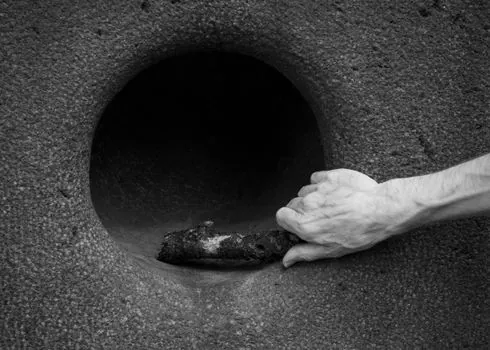
Charge cleanliness is the cheapest life extender: wet or contaminated scrap drives steam explosions on charging, which is the single most common cause of melt-deck injuries and a hard mechanical shock to the lining [S5]. Consistent melt temperature and consistent alloy chemistry matter because thermal-shock cycles and aggressive slag chemistries both shorten the campaign in a non-linear way once a threshold is crossed [S2][S9].
On iron, switching from a standard silica ramming mix to a graded quartzite mix enriched with fused silica is the documented upgrade path for higher-powered, medium-frequency induction furnaces melting low-silicon SG iron, where the documented benefits are higher lining life, higher productivity, better metal cleanliness, and higher lining security [S4]. Matching the cap and spout refractories to the body lining matters too: capping materials such as KELLUNDITE 97CAP give a seamless transition without a cold joint, and ready-to-use plastics such as BLU-RAM (45 to 85% alumina) are specified for spouts and patching because they bond to existing linings and resist slag infiltration [S4].
Comparison of lining families on the four foundry decision criteria
On alloy fit, silica/quartzite dry-vibration linings are the default for grey and ductile iron, high-alumina spinel-forming dry-vibration linings for steel, and high-alumina non-wetting mixes for aluminium [S4]. On temperature ceiling, the silica family is comfortable at the 1,500 to 1,550 °C range typical of iron, while alumina-spinel pushes the ceiling higher for steel and aluminium service [S1][S3][S4]. On health-and-safety exposure, silica installs carry crystalline-silica handling risk that drives foundries toward alumina-based mullite-forming alternatives where regulation tightens [S4]. On campaign life, the published operating range is roughly 80 to 400 heats per lining on coreless induction furnaces, with the upper end achieved on well-sintered silica in grey-iron service under consistent charge practice [S2][S4].
Standards, monitoring, and what to specify in writing
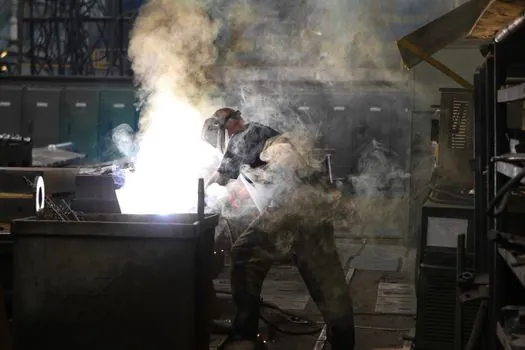
There is no single ISO or ASTM number that defines "lining life in number of melts"; instead, the requirement is written into the refractory supplier's data sheet and the foundry's own standard operating procedure for sintering, preheating, and end-of-campaign thickness [S1][S4]. The information that should be on every reline record is material grade, lot number, compaction method, sintering curve, number of heats to reline, and reason for reline, which together build the campaign database that drives the next material choice [S1][S2].
For procurement, the practical specification is lining family plus alloy plus minimum heats-to-reline, with separate lines for primary body, cap, spout, lid castable, and coil-coating grout, because mixing those roles inside a single material line is the most common source of premature wear [S1][S4]. Coil protection in particular is a separate product: an alumina-based cement-bonded grout over a woven glass phlogopite mica slip plane, not a substitute for a body lining [S4].
The next signal worth tracking is the spread between short-campaign (under 100 heats) and long-campaign (over 350 heats) iron foundries on the same silica family, because that gap is the practical measure of how much life is being left on the table by installation and operating discipline. Related reading on lining-zone decisions in adjacent equipment is covered in castable versus preformed insert linings for foundry ladles, and the energy-side trade-off on the same furnace is in crucible furnace insulation thickness for energy efficiency.