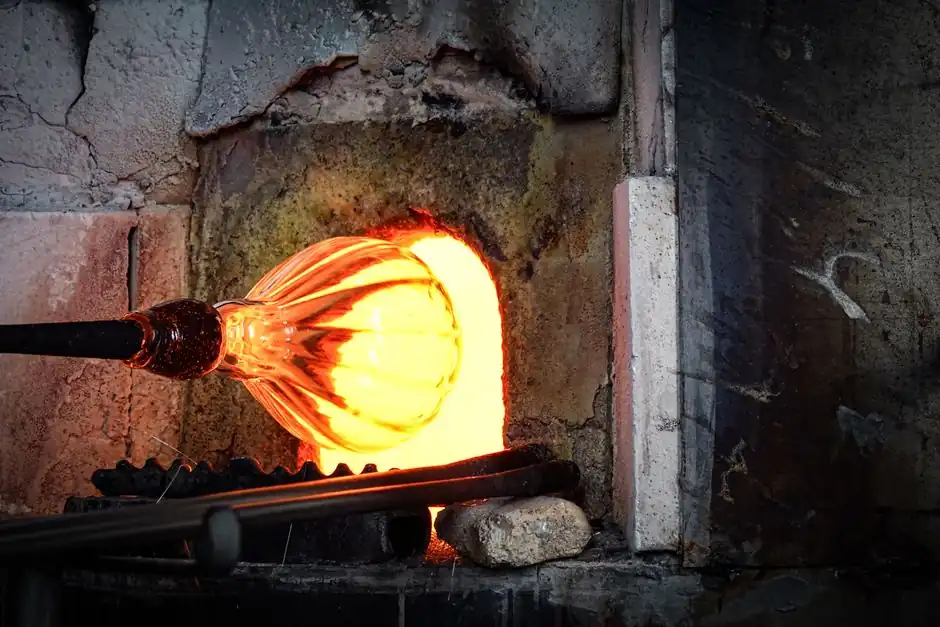
A gas or oil-fired crucible furnace and a medium-frequency induction furnace both routinely melt bronze in the 5-200 kg batch range, but they trade off on heat source, melt rate, atmosphere control, and capital cost [S2][S3].
Bronze pours in the 950-1050 °C window for tin-bearing alloys, well below the practical ceiling of either technology, so the decision is driven less by alloy chemistry and more by batch size, fuel or power availability, and how tightly the shop must hold pour temperature [S3][S4].
How the two heat-transfer paths differ in the bronze foundry
A crucible furnace heats metal from the outside in: combustion gases from a gas or oil burner wrap a refractory or cast-iron shell that contains a graphite, clay-bonded silicon carbide, or ceramic crucible holding the charge [S2][S3]. The burner is the only variable a foundry tunes to change melt rate, and models are commonly published from 0.1 t to 2 t capacity at 80-1000 kW burner input [S3].
An induction furnace generates eddy currents directly inside a conductive crucible or directly inside the charge itself, with no flame and no combustion gas in contact with the metal, which is why induction melting is described as cleaner and faster to respond than gas or resistance heating in small precious-metal and bronze shops [S1][S2]. Channel-type induction units have higher electrical efficiency and power factor than crucible (coreless) induction units, but the coreless design dominates small-batch bronze work because the crucible can be drained cold and swapped between alloys [S6][S7].
Batch size and capacity: where each technology fits
Crucible furnaces are described as ideal for small to medium batches from a few kilograms to a few hundred kilograms, and the same source notes induction furnaces scale well from small laboratory units upward, with precious-metal refineries gravitating to vacuum induction for controlled-atmosphere work [S4][S7]. In practice, a 30-100 kg silver pour or a 5-50 kg bronze pour is the overlap zone where both technologies are quoted competitively [S1].
For a 5-10 kg bronze batch, an integrated medium-frequency induction unit with a 1-2 kg or 4-10 kg gold-rated crucible, which is the same hardware class used for small bronze and copper-alloy work, can finish a melt in 3-5 minutes per the small-furnace duty cycle published for these units [S1]. A 0.1 t (100 kg) gas crucible furnace, by contrast, is the more common choice at the 50-200 kg batch size where the slower combustion-based heat-up is acceptable and the capital cost per kilogram of capacity is lower [S3].
Melt rate, temperature control, and atmosphere
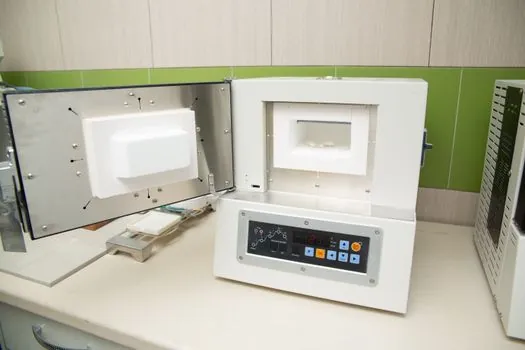
Induction heating gives faster melting, better temperature response, lower workshop heat, and more controlled pouring than gas melting, with the caveat that the induction coil, power supply, cooling system, and crucible must be matched to the charge to reach a uniform temperature before pouring into an ingot mold or casting mold [S1]. Stable liquid metal is the main value proposition in a precious-metal or bronze shop where pour temperature is held inside a narrow band to control grain structure and gas pickup [S1].
A gas or oil-fired crucible furnace trades that response speed for a simpler control loop and a soft, oxidising or neutral atmosphere, depending on burner tuning, which is acceptable for most bronze art casting and ingot work where some surface oxidation is skimmed anyway [S3]. For non-ferrous casting, stable temperature control inside the crucible helps protect metal quality; overheating increases gas absorption and dross formation, and the burner-side control on a crucible furnace is coarser than the closed-loop control on a modern medium-frequency induction supply [S3].
Crucible selection: the shared consumable
Both furnace types rely on a crucible, and the crucible material is the same decision in either case: graphite, clay-bonded silicon carbide, alumina, zirconia, or fused silica, chosen for the alloy and the temperature window [S2][S5]. Zirconia crucibles are fragile but rate higher in maximum temperature, while alumina has better thermal-shock resistance, which matters for shops that pour daily and cycle the crucible hot-to-cold often [S5].
Graphite crucibles are standard in small induction gold and silver work, give a reducing atmosphere inside the melt, and are widely used for bronze and copper alloys as well, although long holds above 1100 °C accelerate crucible wall loss [S1][S5]. For bronze at 1000-1050 °C with short hold times, clay-bonded graphite or silicon-carbide crucibles are the common compromise on cost and life, and the same crucible geometry can be moved between a gas-fired shell and a coreless induction coil, which is why most bronze foundries keep spare crucibles rather than spare furnaces [S2][S5].
Energy source, footprint, and operating cost
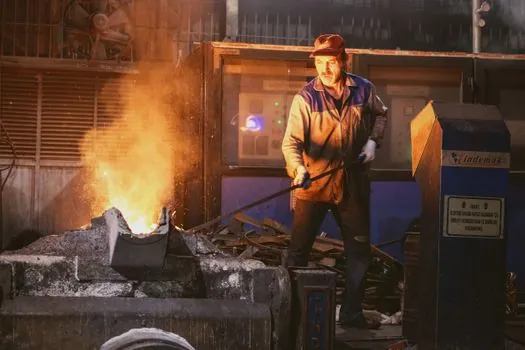
Gas or oil firing needs a fuel supply, a flue or stack, and usually a refractory-lined shell on a stand or tilting base, with models running 80-1000 kW burner input across 0.1-2 t capacities [S3]. A small foundry that already has natural gas, propane, or waste oil available, or that sits off-grid, will often find the crucible furnace cheaper to run per kilogram than an induction unit drawing three-phase medium-frequency power [S3].
Induction units need a water-cooled coil, a chiller or cooling tower, and three-phase mains, but eliminate combustion gas, reduce workshop heat, and let a single operator pour 1-2 kg gold or 30-100 kg silver batches from a chain- or hydraulic-tilt body integrated with the power supply [S1]. CDOCAST and similar small induction lines cluster at 1-2 kg, 4-10 kg, 30-100 kg, and 50-300 kg melt capacities, which is the same capacity ladder a bronze job shop or art foundry will map against its own batch plan [S1].
Decision matrix: crucible vs induction for a bronze job shop
For a 5-50 kg bronze batch, induction wins on melt speed (3-5 min per charge for the smallest units), temperature control, and indoor air quality, and loses on capital cost and the need for a matched cooling system and three-phase power [S1]. For a 50-200 kg bronze batch with intermittent daily use, the gas- or oil-fired crucible furnace wins on capital cost per kilogram, fuel flexibility, and the ability to hold pour temperature for long periods without a power bill, at the price of slower melt-down and burner tuning [S3].
Crucible selection and spare-crucible inventory is the same line item in either case, and the casting mold or die casting die downstream of the pour does not care which furnace delivered the metal, so the real decision reduces to four questions: what is the typical batch size, what is the available energy source, how tightly must pour temperature be held, and how much workshop heat and combustion gas can the building absorb [S2][S3][S4].
When each technology is the wrong choice
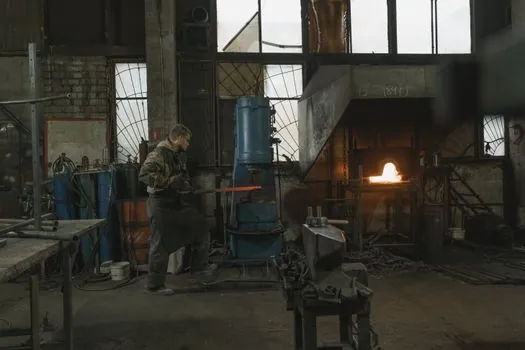
Do not specify a gas crucible furnace for sub-5 kg bronze batches where melt-down time of 30-60 minutes per charge kills throughput, and do not specify a coreless induction furnace for sites without stable three-phase power or cooling water, since undersized coil cooling is the most common induction failure mode in small shops [S1][S3]. A channel induction furnace, while more efficient electrically, must keep a molten heel at all times, which makes it the wrong tool for a small-batch bronze foundry that needs to drain cold and change alloys between pours [S6].
For art-foundry work with frequent alloy changes between tin bronze, leaded bronze, and aluminium bronze, the coreless induction furnace with a swappable graphite or clay-bonded crucible is the more flexible tool; for high-purity copper alloy pours where carbon pickup from a graphite crucible is a concern, a ceramic-lined induction furnace or a gas-fired crucible with a non-graphite liner is the safer pick [S3][S5]. The original buying guide for small bronze batch furnaces walks through the same capacity ladder in finer detail.
Track these signals over the next two procurement cycles: (1) medium-frequency induction supply prices per kilowatt for the 30-100 kg class, which set the crossover point where induction beats gas on total cost of ownership, and (2) the availability of natural gas or propane at the foundry site, which keeps the gas crucible furnace competitive even when induction is technically faster.