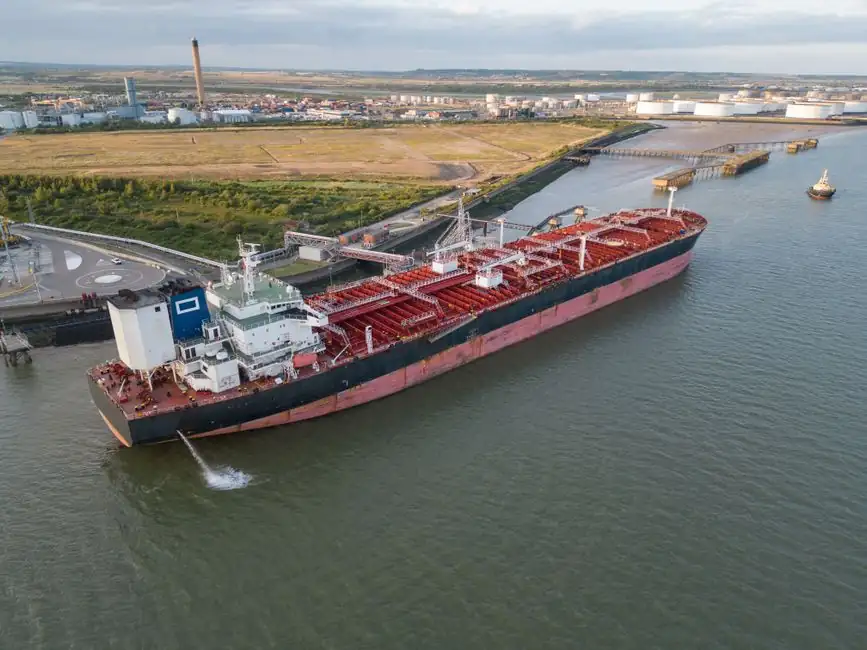
Crude oil washing machines for tanker cargo tanks use crude oil or water to clean tank surfaces, with commercial twin-nozzle units covering jet lengths from 9 m to 26 m at operating pressures of 6 to 12 kg/cm² [S2].
The equipment supports crude oil, product and chemical tankers in portable or fixed installations, and the washing medium can be cargo oil or water for either hot or cold cleaning [S2].
How crude oil washing differs from seawater cleaning
Crude oil washing uses crude oil to wash residue from oil tankers, while seawater washing is an alternative system for washing tanks. Crude oil adheres to tank walls and can reduce the quantity of residual cargo left after discharge, while the washing liquid and residue are removed through the normal cargo-pump system [S1][S5].
MARPOL 73/78 made crude oil washing equipment mandatory for oil tankers of 20,000 tons or greater deadweight. A tanker COW installation is therefore not simply a high-pressure hose arrangement: the machine design, pump-and-piping arrangement, machine locations and nozzle impingement pattern form part of the regulated system [S4].
Single-nozzle and twin-nozzle configurations
Single-nozzle crude oil washers can divide cleaning into two or three stages, allowing the upper tank to be washed soon after discharge begins, followed by a second stage and then a third as the tank becomes nearly empty [S1]. A twin-nozzle machine cleans the entire tank in one programmed cycle [S1].
Single-nozzle machines can wash in two or three stages as the tank level falls, whereas twin-nozzle machines clean the entire tank in a single programme. The available VP Minor twin-nozzle machine uses 2 × Ø7 to 2 × Ø11 mm nozzles and provides 9–17 m jets, while the VP Major uses 2 × Ø12 to 2 × Ø18 mm nozzles and provides 19–26 m jets [S2].
Pressure, flow and coverage determine the fit
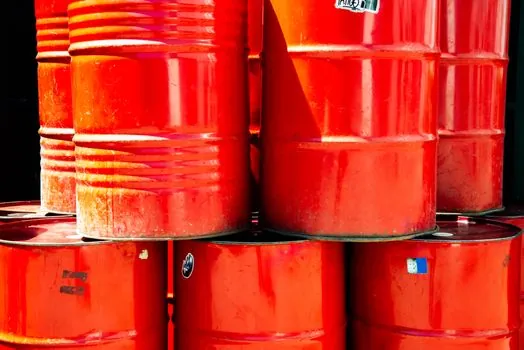
VP Minor operating pressure ranges from 6 to 12 kg/cm², with twin-nozzle flow increasing from 7.3 m³/h at 2 × Ø7 mm and 6 kg/cm² to 19.3 m³/h at 2 × Ø11 mm and 12 kg/cm² [S2]. Its jet length rises from 9.1 m under the lowest-pressure, smallest-nozzle condition to 17.0 m at 12 kg/cm² with 2 × Ø11 mm nozzles [S2].
VP Major operates from 8 to 12 kg/cm². The 2 × Ø12 mm configuration delivers 32 m³/h and a 19 m jet at 8 kg/cm², increasing to 40 m³/h and a 21.5 m jet at 12 kg/cm² [S2]. With 2 × Ø18 mm nozzles, the same machine delivers 57 m³/h and a 23 m jet at 8 kg/cm², rising to 70 m³/h and a 26 m jet at 12 kg/cm² [S2].
Portable and fixed installations compared
Portable washing machines and their flexible water supply hoses are placed into the tank through the Butterworth Port and progressively lowered in stages or drops. Fixed machines save repeated manual handling but require the tank opening, piping arrangement and machine installation to suit the vessel design; both formats are offered for the VP Minor and VP Major [S2].
VP Minor weighs 8.2 kg in portable form and 10.2 kg when fixed, with a 1.5-inch BSP portable connection or 150 mm fixed flange [S2]. VP Major weighs 19.5 kg portable and 21 kg fixed, using a 2.5-inch NH/NST male connection or 165 mm fixed flange; both families are designed around a standard Ø318 mm deck opening [S2].
Cycle time, materials and service constraints
Published VP Minor cycle times range from 16 minutes for 2 × Ø9 mm nozzles at 12 kg/cm² to 27 minutes for 2 × Ø7 mm or 2 × Ø9 mm nozzles at 6 kg/cm² [S2].
VP Major cycle times range from 34 minutes for 2 × Ø12 mm at 12 kg/cm² to 49 minutes for 2 × Ø18 mm at 8 kg/cm² [S2]. Both machine families use 316 stainless steel and are rated up to 95°C for hot or cold washing [S2]. The 2 × Ø18 mm VP Major nozzle configuration is restricted to the fixed installation [S2].
Installation, washing flow and residual handling
That geometry matters because inadequate low-level coverage leaves surfaces outside the direct jet-impingement pattern, which must be shown in plans for U.S. tank vessels and, where applicable, foreign tank vessels seeking Coast Guard acceptance [S4].
The COW plan must show the pumping and piping diagram, each machine design, machine arrangement and location, and projected nozzle impingement, including surfaces not reached by direct impingement [S4].
Equipment selection criteria and application limits
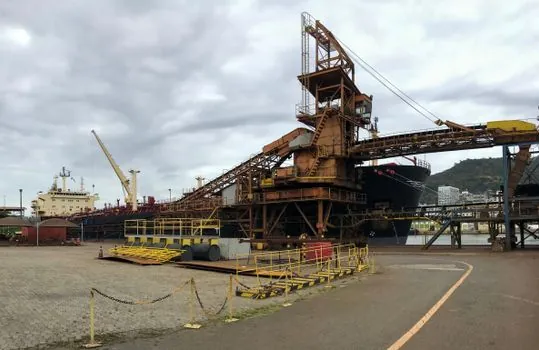
The selection sequence is practical: choose portable or fixed installation, match jet reach to tank height and deck opening, confirm available pump pressure, then check flow, cycle time, nozzle size, wash-medium temperature and residue-disposal routing [S1][S2]. Twin-nozzle equipment suits operators prioritizing one programmed tank cycle, while a staged single-nozzle machine can align washing with the falling cargo level [S1].
Single- and twin-nozzle systems should be compared on coverage method, nozzle configuration, jet length, operating pressure and installation mode rather than by name alone [S1][S2]. The two-nozzle VP Minor covers 9–17 m jets at 6–12 kg/cm², while the two-nozzle VP Major covers 19–26 m jets at 8–12 kg/cm²; their respective machine weights, connections and flow rates differ materially [S2].
Before procurement, operators should verify the tank geometry, Butterworth Port or fixed-pipe arrangement, wash medium and temperature, pump capacity, machine orientation, nozzle impingement and the approved destination for washings against the vessel’s COW plan [S1][S4]. Trackable commissioning checks include measured nozzle pressure in kg/cm², jet reach in metres, actual flow in m³/h, cycle time in minutes and confirmation that the planned impingement pattern matches the tank surfaces [S2][S4].