
Individual aggregate batchers use a ±2% weight tolerance, versus ±1% for cumulative batching, and each material can be batched simultaneously in a de-cumulative arrangement [S2][S1].
The choice is between sequential accumulation into one weighing vessel and parallel individual weighing, each with its own discharge gate, aggregate bin, or feed conveyor [S1][S8].
How the two weighing architectures differ
Cumulative weighing starts with an empty batcher. Each aggregate fraction is added in sequence, and the batch-control software accumulates the actual mass of the preceding fractions toward the new fraction’s target [S1][S9].
De-cumulative weighing starts with the batcher already full. The scale reading decreases as material is discharged, so the batcher cannot be charged while it is being weighed [S1]. De-cumulative plants can use either one multi-compartment batcher on a single scale system or independent batchers for each material [S1].
A conventional cumulative hopper batcher combines a weighing hopper with multiple aggregate bins, while an accumulated belt batcher omits the weighing hopper and uses a belt scale instead [S7][S8]. These are different implementations of the cumulative concept, not merely different hopper shapes.
Accuracy, cycle time and staging
On a direct tolerance comparison, the stated batcher requirement is ±2% for an individual material batcher and ±1% for a cumulative batcher [S2]. ASTM C94 is identified as allowing aggregate quantities within ±2% of the required mass [S3].
Individual batchers improve productivity because multiple materials can be batched at the same time [S2]. In a de-cumulative plant, receiving hoppers and conveyors stage each aggregate ahead of batching, allowing the loader operator to keep the receiving hoppers full rather than meter material directly into the weighing vessel [S1].
The trade-off is architectural rather than simply “more scale accuracy equals a better plant.” Cumulative batching gives the tighter stated tolerance and a simpler single-vessel sequence, while individual or de-cumulative batching reduces waiting by parallelizing material handling and truck staging [S1][S2].
Cumulative batchers: suitable where sequence and compactness dominate
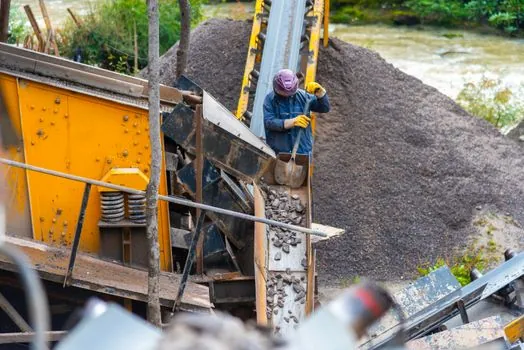
Cumulative batching is the better fit when one receiving vessel, one scale system, and one controlled discharge sequence simplify structural design or operation. Aggregate enters the empty weighing hopper, the control adds each fraction to the accumulated total, and the batch is discharged after the required mass is reached [S9][S1].
The two documented aggregate-batcher types are gates and belt conveyors; gates must be sized to provide 2.5 times the lump size that must pass, many use a two-stage cutoff or a fast-and-slow feed, and belt conveyors deliver material at a constant speed with a uniform flow rate that makes mid-air compensation predictable.
The main constraints are sequential charging, shared-vessel capacity, and the need to prevent discharge before filling is complete. In a de-cumulative receiving-hopper system, the receiving loader hoppers have no discharge gates, while the loader hopper's opening onto the belt is furnished with a slide gate to adjust material flow.
Individual hoppers: suitable where parallel production matters
Individual weighing is the better fit for a ready-mix plant that needs several aggregate fractions prepared concurrently, particularly where aggregate storage is separated by size to control segregation [S1][S3]. Each fraction can be weighed and staged without waiting for the previous one to enter a shared hopper.
Individual systems demand more gates, scales, interlocks, and storage interfaces, but they allow independent batcher operation and can use either a multi-compartment arrangement or one independent batcher per material [S1]. This arrangement is particularly relevant for mobile quarry or remote concrete operations where the plant must be transportable [S4].
CMQ Engineering offers a mobile aggregate weighing hopper for construction, mining, and other bulk-material weighing applications that is easily transported and equipped with an easy-to-use control panel. CMQ Engineering lists a transportable auxiliary weigh hopper as a versatile solution for the concrete and quarry industries.
Use cases and unsuitable applications

Choose cumulative batching for a centralized plant with limited floor area, controlled aggregate feed, and a priority on a stated ±1% batcher tolerance [S2]. Choose individual hoppers when simultaneous batching, independent staging, or multiple aggregate fractions justify the extra equipment [S1][S2].
Individual hoppers are a poor fit where capital, structure, and interlock complexity dominate and production does not require parallel weighing. Cumulative batching is a poor fit where truck loading, short cycle times, or mobile staging require more than one aggregate fraction to be handled concurrently [S1].
A belt-weighed cumulative system is another option where hopper capacity is undesirable. It uses belt weighing rather than a weighing hopper, while still relying on accumulation along the conveyor feed path [S7]. Mobile hopper systems suit temporary quarry, mining, and concrete sites, but their stated production figures are product-specific rather than universal design values [S4][S5].
Material handling and failure controls
Fine-aggregate moisture changes the flow rate, so gate batching requires compensation, whereas belt conveyors deliver a more uniform flow and make mid-air compensation more predictable [S2]. Inaccurate aggregate weighing can cause the final mix to fall short of design specifications or fail to meet required codes and standards, and even small weighing errors can lead to wasted materials, rework, and project delays.
For de-cumulative filling, the control starts the feed conveyor, stops it at a preset weight, and prohibits discharge-gate opening until filling is complete [S1]. Receiving conveyors must start a fully loaded belt, and the stated design includes suitable conveyor power and reducer backstops [S1].
Scale maintenance, moisture correction, gate calibration, and limit-switch verification should be treated as production controls rather than optional service items. ASTM C94’s stated ±2% aggregate tolerance remains the applicable benchmark cited for ready-mixed concrete batching [S3].
Decision criteria by operating model
The comparison is straightforward: cumulative batching offers a ±1% stated tolerance, sequential filling, and a shared weighing vessel, while individual weighing offers a ±2% stated tolerance, simultaneous batching, and independent material stages [S1][S2].
For cycle time, individual or de-cumulative configurations win because each material can be batched at the same time [S1]. For equipment simplicity, cumulative configurations generally require fewer independent weighing channels, while individual systems add gates, interlocks, scales, and feed interfaces. For integration effort, cumulative designs fit a single sequence and scale, whereas individual systems require coordinated material staging [S1][S8].
Specify cumulative batching when accuracy and centralized simplicity dominate. Specify individual hoppers when parallel production and staging dominate. Specify a mobile weigh hopper only where the site is temporary or transportable, using the supplier’s verified hopper capacity, conveyor rate, load-cell arrangement, and control interlocks rather than transferring those figures to a fixed plant [S4][S5].
Before purchasing, record the required aggregate fractions, target batch mass, production rate, maximum lump size, moisture range, truck staging cycle, and installation envelope. Then verify the selected hopper capacity, stated tolerance, feeder type, discharge interlock, and calibration method against those six inputs [S2][S3][S4].