The decision depends on load path, access, installation sequence, joint movement, and whether the connection must transfer tension, compression, shear, or only alignment.
Segment Fastener Selection by Load Path
Radial bolts join precast segments within one tunnel ring and compress the longitudinal joint gasket, while circumferential bolts connect each ring to the preceding ring and maintain position through TBM shoving and grouting [S2].
These are clamping fasteners rather than preloaded friction-grip connections. Their principal duties are holding components together, transferring limited erection loads, and maintaining gasket compression [S2].
Dowels, guiding rods, and shear pins can also be used to locate segments without providing a threaded structural connection [S2]. For permanent structural continuity, select a bolt system by its socket engagement, installed length, thread form, and load capacity rather than by appearance alone.
Straight Bolts: Default for Aligned Connections
Their geometry suits radial, circumferential, and longitudinal joint layouts where the fastener axis is straight and the installation tool can reach the nut or socket.
Tunnel segment bolts connect precast concrete segments within a ring and between rings to close the ring, hold each new ring in position, and keep joint gaskets compressed until the annulus grout has set [S2].
A straight bolt is therefore the lower-risk choice for aligned joints, but an unsuitable thread can prevent assembly even when the nominal diameter is correct.
Curved Bolts: Use Only for a Defined Geometry
Curved bolts are appropriate when the segment geometry requires a bolt to enter and leave the joint at different positions or angles, so a straight fastener cannot follow the intended load path or reach the accessible socket. [S2]
The research identifies curved bolts as a distinct tunnel-segment type but does not provide a universal pitch, curve radius, grade, capacity, or engagement dimension [S2]. Those values must therefore come from a project-specific design and the segment manufacturer’s verified tooling detail, not from a generic fastener catalogue.
Where a straight bolt can satisfy alignment, access, and engagement, avoiding a custom curved component reduces dimensional and installation risk.
Dowels: Alignment and Temporary Position Control
Dowels are most appropriate where the joint needs repeatable positioning, temporary restraint, or load transfer through bearing without threaded engagement. In tunnel rings, dowels and guiding rods can locate segments while bolts retain the gasket and hold the ring during erection [S2].
In timber under Eurocode 5, the functional distinction remains instructive: a dowel is driven into a close-fit hole and bears from the first increment of load, whereas a bolt normally occupies a clearance hole and must move before it bears against the hole wall [S1]. This does not establish a concrete-segment capacity value, but it identifies the mechanical reason dowels can provide better initial location control than clearance-hole bolts.
Dowels are not interchangeable with bolts when the design requires tension, controlled clamping, or a removable connection. Shear pins and dowels may also restrain selected movement while leaving the primary load path to bolts, grout, or the surrounding ground [S2].
Comparison Across Decision Criteria
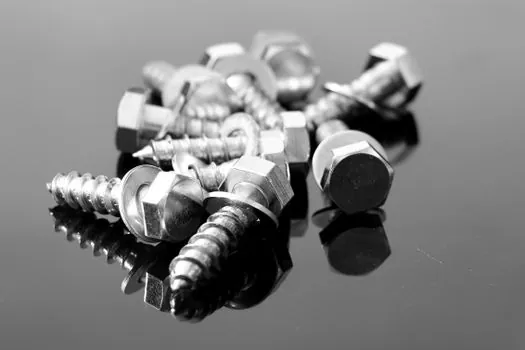
Tunnel segment bolts provide threaded connections that pull segments together and maintain gasket compression, whereas dowels, guiding rods, and shear pins are non-threaded components used to locate segments [S2].
Who Each Option Fits, and Where It Fails
A tunnel ring may use dowels, guiding rods, and shear pins alongside its bolts to locate segments without threading [S2].
A dowel is a poor substitute when designers assume bolt tension, gasket compression, or a removable joint. A straight bolt is a poor choice when its axis fouls reinforcement, embedded hardware, or an adjacent segment face. A curved bolt is a poor choice when the curve is not supported by a controlled manufacturing and inspection process, because small variations can change thread engagement or concrete edge clearance.
Environmental durability also matters in tunnels and buried works. The segment connection must specify the bolt material and protective system, socket material, thread exposure, and grout or groundwater exposure. The segment-bolt reference identifies dirt, grit, grout, handling damage, and reuse as normal service conditions rather than exceptional cases [S2].
Procurement and Installation Controls
Specify the nominal diameter, thread pitch, thread profile, length, engagement, curved centerline where applicable, grade, coating, socket details, and installation torque or method. For segment bolts, the pitch and profile must match the cast-in socket, and the 5 mm-pitch trapezoidal form is a project-specific segment-bolt configuration rather than a universal replacement for ISO metric threads [S2].
Installation drawings should separate temporary erection functions from permanent structural duties. Radial bolts may be removed and reused on some projects after a ring is complete, whereas circumferential bolts generally remain in place [S2]. Any removal or reuse provision requires written approval against the project erection and permanent-load sequence.
Inspection points should include socket cleanliness, thread match, bolt identification, bearing and clearance, exposed thread length, torque or turn count, damaged-thread rejection, coating damage, and final grout placement. The purchasing instruction should record the required bolt-to-socket matching pair because compatible nominal diameters do not guarantee compatible threads [S2].
Recommended Decision Sequence
Start with the joint function: select bolts where clamping or transferable tension is required, and select dowels, guiding rods, or shear pins only for defined location or shear-locating duties [S2].
Next select the geometry: use a straight bolt when the joint and tool access are aligned; introduce a curved bolt only when an offset or curved path is required by the segment layout. Finally, verify the interface by matching thread pitch and profile to the socket, then confirm grade, length, engagement, coating, and installation method before release [S2][S3].
The trackable procurement checks are the signed socket-to-bolt thread match and the segment drawing’s confirmation of bolt function, geometry, and retention sequence. Any conflict between those two documents should be resolved before a production order is placed.