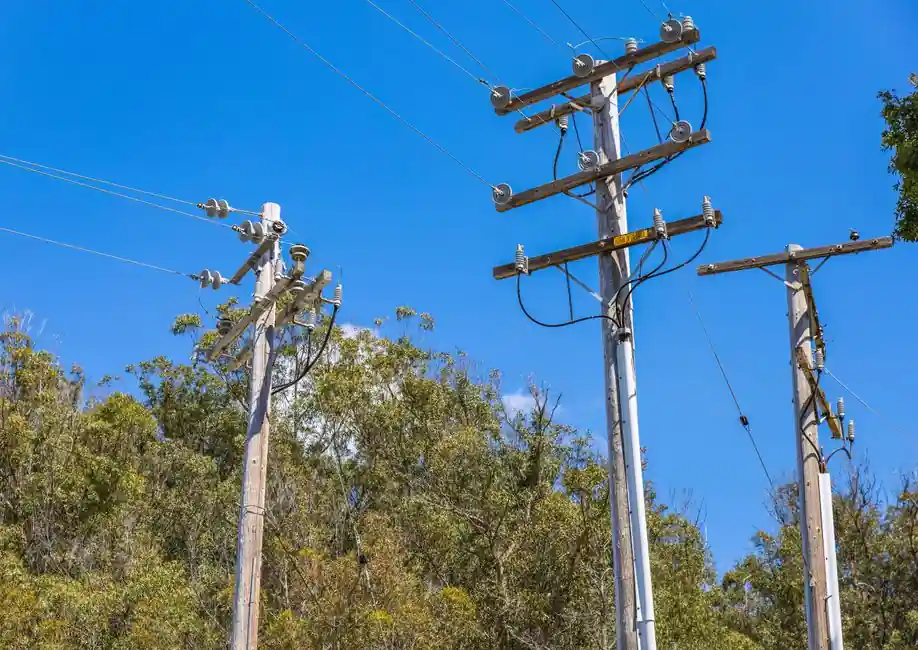
Transformer lead times vary widely by unit type, specifications, inventory availability, manufacturing, testing, and transportation requirements.
The instrument transformer market includes current transformers and voltage or potential transformers used for isolated protection, revenue metering, and energy monitoring, with 2026 market estimates spanning USD 8.09 billion to USD 8.84 billion [S1][S3].
What CT and VT lead times mean for 2026 projects
The instrument-transformer market includes current transformers, voltage or potential transformers, and combined or capacitive transformers, and its 2025 market size was reported as USD 7.71 billion.
That figure should not be applied to every instrument transformer without qualification. A factory-built unit must pass through material procurement, engineering, production, testing, and shipping, so total delivery can range from several months to more than one year depending on size and complexity [S4].
Specification complexity is a direct schedule variable. Common voltage configurations are easier to source than unusual ratings, while cooling class, impedance, tap configuration, and utility-specific requirements can reduce the available supplier pool and extend manufacturing time [S4].
CTs, VTs, and combined instrument transformers compared
The instrument-transformer market was forecast to grow from USD 8.09 billion in 2026 to USD 12.78 billion by 2035 at a 5.21% CAGR.
The comparison is straightforward on function, but not on procurement risk. CTs dominate installed volume, combined units offer functional integration, and electronic sensors can reduce material demand; all three still require the buyer to define accuracy, voltage class, communications, testing, and interface requirements before a delivery date becomes meaningful [S1][S3].
Choose the right technology for the application
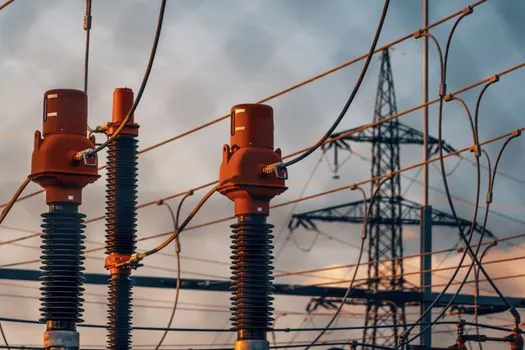
The instrument-transformer market is segmented by end user into power utilities, industrial, and infrastructure and commercial sectors.
Conventional magnetic CTs and VTs remain relevant where installed protection, metering, and control systems require electromagnetic isolation and established interfaces. Electronic sensors and merging units are more appropriate where a project is designed around sampled-value communications and IEC 61850-9-2 digital-substation architecture [S1].
The electronic option does not remove schedule responsibility. A project still needs to settle sensor accuracy, analog or digital outputs, merging-unit compatibility, cybersecurity requirements, testing, commissioning, and interface ownership. The sourcing advantage comes from avoiding a constrained magnetic production queue, not from eliminating engineering and qualification work [S1][S3].
Utilities and industrial plants face different exposure
The instrument-transformer market was valued at USD 8.30 billion in 2025 and was projected to reach USD 8.84 billion in 2026.
Industrial buyers face a different risk: a failed CT or VT can remove a protection zone, delay energization, or force an unplanned outage. They should therefore separate planned replacement demand from new instrumentation projects and request factory stock separately from newly engineered equipment [S2][S4].
Combined or capacitive transformers are best reserved for applications where combining measurement functions or supporting digital-ready substations delivers a defined system benefit. They are not a universal substitute for separate CTs and VTs, especially where protection design, impedance, burden, or existing bay equipment imposes incompatible requirements [S1][S3].
Do not confuse CT and VT queues with power transformer queues
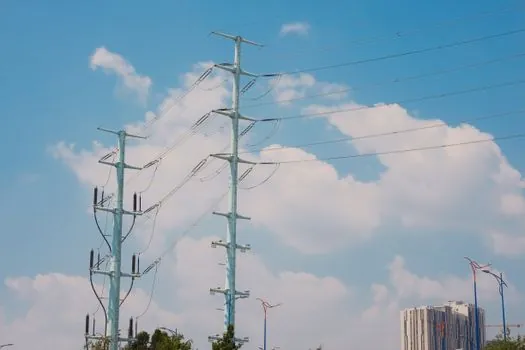
Large power transformers above 100 MVA were listed at 100 to 128 weeks, while generator step-up units averaged 143–144 weeks and standard power transformers averaged 128 weeks in the cited 2026 planning data [S5][S6][S8].
The instrument-transformer market is influenced by grid-modernization capital flows, renewable-interconnection backlogs, and data-center load growth.
For comparison, medium-voltage switchgear was listed at 90 to 100 weeks, underscoring why a project schedule must assign separate dates to switchgear, power transformers, CTs, and VTs rather than applying one generic transformer lead time [S8]. Further procurement context is available in Instrument and analyzer lead times: a 2026 procurement guide.
Approval sequence and sourcing controls
Lead time starts with an approved functional specification, not a purchase order. The minimum technical package should identify voltage class, ratio, accuracy class, burden, insulation level, creepage distance, temperature rise, enclosure type, test requirements, and terminal arrangement [S3][S4].
Buyers should request a written production-slot confirmation, manufacturing schedule, test-bay allocation, and ship date before treating a supplier estimate as a delivery commitment. Material checks also matter because transformer production depends on copper, grain-oriented electrical steel, resin or oil, and other inputs whose availability can shift factory scheduling [S2][S5].
Digital-ready units require an additional interface review. IEC 61850-9-2 sampled-value output must align with the selected merging unit, while conventional CT and VT outputs must match the protection relay, meter, and control-system input interfaces already specified for the bay [S1][S3].
What project teams should track after ordering

Two signals should remain on the procurement dashboard through delivery: approval of the customer drawing and confirmation of the production and test dates. Specification changes can consume months at constrained factories, particularly when they alter ratios, winding design, insulation, tap settings, or enclosure details [S4][S5].
Procurement teams should also track whether the supplier confirms 2026 availability for the exact CT and VT configuration, rather than accepting a class-level estimate above 60 weeks. For projects with fixed energization dates, the practical action is to freeze the functional specification early, place CT and VT orders in parallel with switchgear and power transformers, and secure written factory dates for every bay [S1][S4].