
SOR Controls Group builds many products on a two-week standard lead time, while top-component lead times have been reported at about 40 weeks [S1][S8].
The practical scope covers pressure, temperature, flow, level, gas-analysis, and laboratory-analyzer procurement, where supplier timing, internal approvals, transit, and receiving inspection determine the actual delivery window [S2].
Lead-time range requires configuration-level planning
The supplier’s quoted manufacturing interval is only one part of the delivery commitment. Lead time is the latency between the moment a need is identified and its fulfillment, and its definition varies by organizational perspective: procurement measures it from requisition to dock receipt, production from order entry to finished-good shipment, and maintenance from a predictive alert to component arrival [S2].
Industry conditions explain why supplier timing varies sharply. The Institute for Supply Management’s Manufacturing PMI Supplier Deliveries Index registered 59.3 percent in August, the ninth straight month showing slower supplier deliveries [S1]. According to IBS Electronics Market Intelligence, component distributors reported average lead times climbing past 20 weeks, up from under 17 weeks earlier in the year, while sensor components averaged about 31 weeks in 2025, based on Industrial Automation Co. data [S1].
Semiconductor and memory shortages push some automation parts more than one year out [S1]. Top-component lead times tightened again in 2026, with reports of about 40 weeks versus 20 to 25 weeks through the earlier comparison period [S8].
Compare instruments by delivery structure and use
SOR Controls Group builds many of its products on a two-week standard lead time [S1].
Gas analyzers require a different procurement treatment. These performance figures describe measurement results, not factory delivery time [S3].
Laboratory and materials analyzers add configuration complexity because the equipment catalog includes DSC, TGA, HP-TGA, SDT, DMA, TMA, sorption, rheometer, dilatometer, microcalorimeter, and mechanical-test platforms [S5]. A production analyzer with a fixed gas range is therefore not comparable to a multi-module laboratory system with specialized fixtures and software [S5].
For mechanical equipment used alongside analyzers, crossed-roller guides and ball splines should be checked by configuration and quantity because a production-stage interval does not cover the complete supplied assembly.
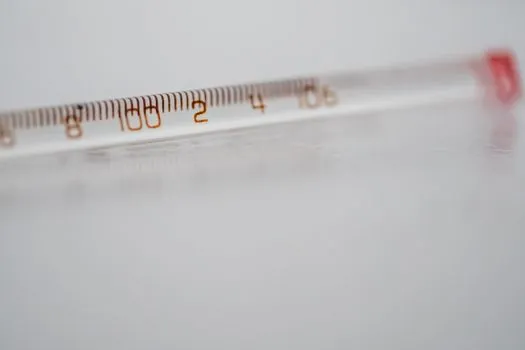
Pressure and temperature products can beat market averages
Internal processing can erase a short supplier quote
Internal processing should therefore be measured separately from factory lead time. The industrial equipment lead-time dashboard can support broader category comparisons, but the analyzer order still requires its own bill-of-material and configuration review.
The same distinction applies to analyzer procurement: calibration, gas handling, sample conditioning, data acquisition, and communications accessories can add scope beyond the analyzer head [S5].
Analyzer selection starts with measurement and service constraints
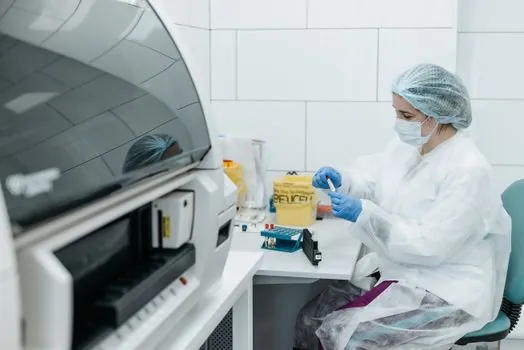
Portable, benchtop, and continuous analyzers serve different procurement conditions. Quantek Instruments offers oxygen and carbon dioxide analyzers for food package testing, process and research, parts-per-million applications, and pharma and small-volume applications [S3].
These specifications support comparison only after the required measurement envelope is defined. The Model 906 spans 2,000 ppm to 100% CO₂ by volume, and the Q22 offers a 12-hour battery, while Quantek’s portable and continuous oxygen and carbon dioxide instruments target modified-atmosphere packaging, pharmaceutical quality control, research, and process monitoring [S3].
For process machinery exposed to long delivery intervals, lead screws or ball screws must be specified with the same care as the measuring cell. Correct sizing and lead accuracy do not shorten a component’s quoted delivery date, so mechanical support parts belong in the same escalation path as the analyzer itself.
Fast measurement should not be confused with fast delivery. The 15 to 20-second result time for the Model 906 and 15 to 25-second result range stated for Quantek analyzers describe analytical response, not replenishment time [S3]. Factory scheduling, configuration validation, and component availability remain separate procurement variables.
Failure modes come from planning assumptions and constrained hardware
The primary failure mode is treating a historical baseline as a firm 2026 commitment. The August Supplier Deliveries Index value of 59.3 percent indicates persistent slower deliveries, while reports of top-component lead times reaching about 40 weeks show the impact of component constraints on equipment lead times [S1][S8].
The second failure mode is accepting a lead time without defining scope. Standard pressure products may be quoted at two weeks, while larger quantities, specialized analyzer ranges, laboratory accessories, and configuration-specific hardware can carry different schedules [S1][S5]. A supplier must confirm the exact product code, range, quantity, accessories, and ship-to location before committing the date [S1].
The third failure mode is allowing the quote to bypass internal controls. Administrative approval of 3 to 5 days and inbound inspection still remain after dispatch, and total lead time must include both phases [S2]. For critical analyzers, identify the maximum acceptable outage window, then secure a compatible spare rather than assuming every replacement shares the production-unit delivery date.
Use three checkpoints to control delivery risk
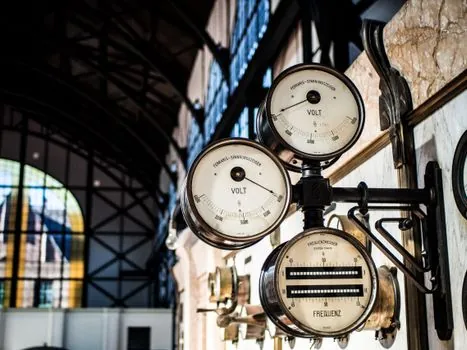
A defensible 2026 procurement plan uses three checkpoints: exact configuration, component availability, and operational receipt date. The supplier’s production date, the carrier’s transit commitment, and the plant’s receiving availability must all be visible before approval because each phase changes the date [S2].
Long-lead electrical equipment provides a useful severity comparison. Medium-voltage 15 kV switchgear was running at 52 to 80 weeks, 38 kV equipment at 78 to 104 weeks, and generator step-up units above 50 MVA at 100 to 150 weeks or more in 2026 [S4]. Those figures are not analyzer lead times, but they demonstrate how infrastructure constraints can delay commissioning even when the measuring instrument is available.
Track two signals for every critical analyzer package: the supplier’s date for the exact configured item and the plant’s receipt-ready date after approvals, receiving, inspection, and installation materials are ready. Escalation should occur when either date falls outside the maintenance window, not when the generic product-family estimate no longer resembles the market.