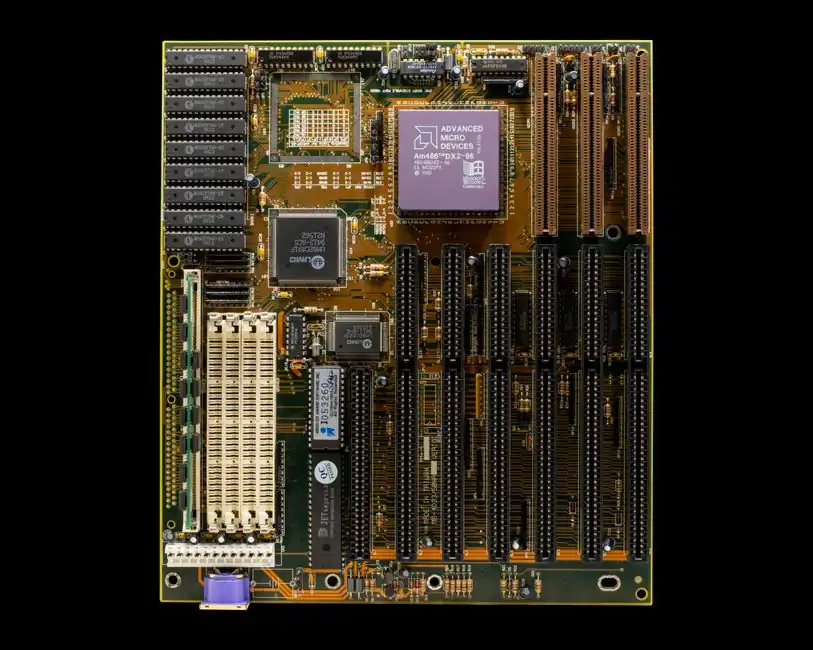
Industrial PC lead times in 2026 are not governed by one universal delivery window: one embedded panel listing shows a minimum order quantity of 1 and a negotiable delivery time, while custom adapter plates have taken 3–5 weeks in supplier checks [S1][S5].
The practical lead time depends on product architecture, configuration, mechanical integration and stock availability, spanning off-the-shelf board-level products, configurable panel PCs and ready-to-build IPC systems [S2][S6].
Lead-time ranges depend on integration depth
One 13.3-inch embedded industrial panel PC is offered with a minimum order quantity of 1 and a negotiable delivery time, with price stated as 182 and OEM or ODM options covering the logo, board, rear-cover size, waterproofing, color and resolution [S1].
The configurability of that panel matters because each mechanical or electronic variation can create a separate procurement and assembly path. Its stated build envelope includes J1800, J1900, J4125, J6412, i3, i5, i7 and RK3288 through RK3588 processor options, plus memory configurations from 2 GB to 16 GB and 16 GB ROM [S1].
Custom mounting hardware is a distinct schedule risk. Modern panel-PC bezels may not fit an enclosure, requiring an adapter plate, and those custom plates ran 3–5 weeks in 2026 supplier checks [S5]. For project planning, treat that interval as a separate mechanical workstream rather than assuming it is included in the computer supplier’s delivery promise.
Board-level products shorten customization scope
The EC3-RK3399 industrial PC board combines a six-core 64-bit Rockchip RK3399 processor with dual Cortex-A72 cores and quad Cortex-A53 cores [S2].
Its multiple communication interfaces and flexible expansion options provide a foundation for customized embedded systems [S2].
A standardized board can reduce schedule exposure when the enclosure and application software already fit its interface set. It is less suitable when the project requires a display, touch assembly, enclosure, cooling arrangement and field connectors to arrive as one tested assembly, because those elements still require separate sourcing and integration.
Panel PCs trade flexibility for fewer integration tasks
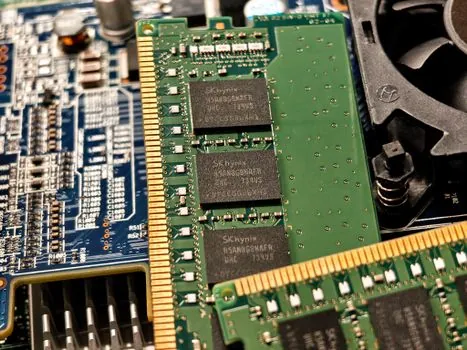
The unit uses a 13.3-inch industrial-grade LCD screen [S1].
Stock-ready IPCs address a different bottleneck
The VELA IPC family is built around Advantech industrial motherboards and is offered as an in-stock, ready-to-build route intended to reduce industrial PC lead times [S6]. Configurations include 13th-generation Intel Core i5 and i7 processors, DDR4 memory up to 64 GB and M.2 PCIe solid-state storage [S6].
This approach suits equipment builders that can accept a defined motherboard, processor and memory configuration without waiting for a fully custom board. It is also suitable for systems where the enclosure, display and application integration can proceed separately while the core IPC hardware is reserved from available stock [S6].
Ready-to-build does not mean turnkey. Procurement must still confirm exact processor tier, memory capacity, storage configuration, interface population and enclosure fit before placing the order. A useful planning method is to divide the schedule into component availability, configuration, mechanical fabrication, firmware integration and system test, then assign the confirmed interval to each stage.
Comparison across procurement options
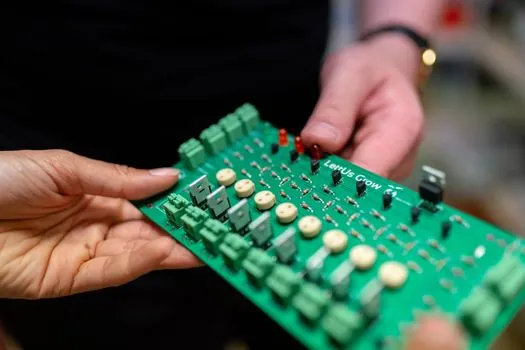
For a standard embedded control terminal, a board-level product offers compact dimensions and defined interfaces but transfers enclosure, display and integration responsibility to the buyer [S2].
For a human-machine interface requiring a complete display and touch assembly, a configurable panel PC reduces mechanical integration work but introduces a negotiable delivery commitment and broader configuration dependencies [S1].
For a rapid equipment build using a recognized industrial motherboard ecosystem, a stock-ready IPC can remove board-assembly delay, yet the final configuration still has to be checked against the required I/O and enclosure [S6]. For a retrofit where the panel bezel does not match the machine, the custom adapter plate adds a measurable 3–5-week interval that should appear as a separate line in the delivery plan [S5].
Who should choose each route
Board-level products are for OEM teams that already control the enclosure, display selection, cooling and field-installation details. The EC3-RK3399, for example, provides a defined 146 mm by 105 mm platform with display, serial and network interfaces, but its value depends on integration capability [S2].
Panel PCs are for integrators seeking a smaller commissioning scope than a bare board. The listed 13.3-inch model supports multiple processor families, storage capacities and operating systems, including Windows, Android, Linux, Kylin and HarmonyOS, but the buyer must select a valid configuration and clarify delivery terms [S1].
Ready-to-build IPC systems are for OEMs that want a controlled industrial-computing platform without commissioning a new motherboard. They are less suitable for projects requiring a nonstandard processor, unusual form factor or extensive custom electronics, because such requirements move the project back toward a bespoke engineering and procurement cycle [S4][S6].
Limits, dependencies and sourcing checks

Delivery language requires equal attention to the hardware configuration. A negotiable delivery time is not a measurable schedule commitment, so it should be converted into a dated promise tied to the bill of materials, mechanical drawing, touch type, screen resolution and environmental requirements [S1].
Environmental capability must be checked against the installation site rather than inferred from the category name. Rugged panel-PC literature covers options such as IP66, IP69K, corrosion-resistant stainless steel, sunlight-readable displays and designs tested to MIL-STD-810G, but those properties are product-specific and should not be assumed for every industrial panel PC [S3].
Compatibility also requires an interface-level check. The EC3-RK3399 board includes four RS232 channels, one RS485 channel, Gigabit Ethernet, Mini PCIe and USB, but that list does not establish suitability for every fieldbus, sensor network or legacy controller without a separate protocol review [S2].
Buyers should obtain a written configuration, quantity, price, manufacturing allocation, delivery date, packaging condition and test scope. They should also request inspection and compliance documents for the destination market, while treating certifications such as CE, RoHS, UKCA and FCC as market-entry evidence rather than proof of a particular environmental or application performance claim [S1].
Track three procurement signals for each approved platform: whether the supplier confirms a dated delivery for the exact configuration, whether stock covers the selected motherboard or board set, and whether every custom mechanical part has its own promised interval. A broader budgeting method for component exposure is covered in Model Hardware Lead-Time Risk in 2026 Budgets.