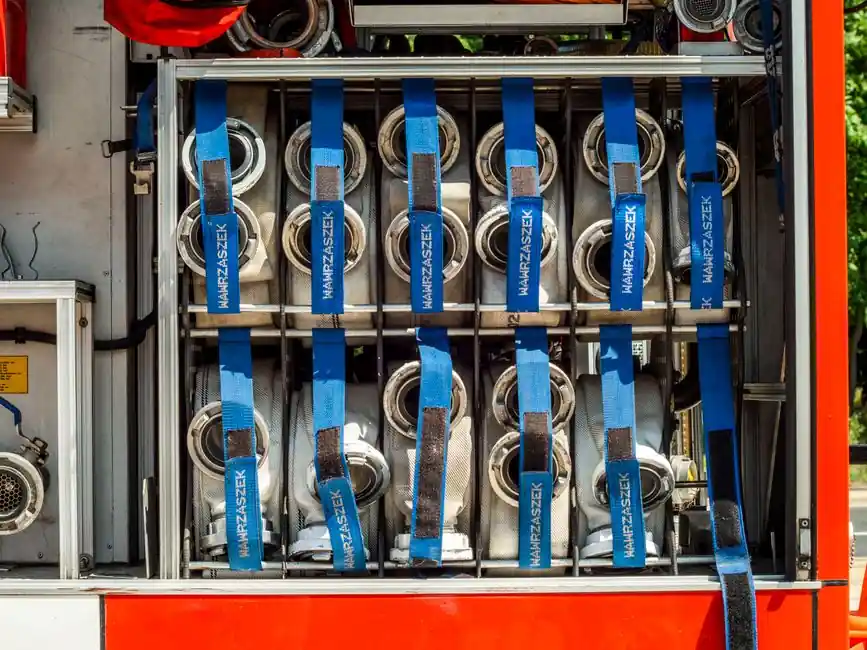
Choose a custom hose assembly when the operating envelope (pressure, temperature, media, bend radius, fitting geometry) sits outside what a standard catalog SKU covers, and choose off-the-shelf when the line is a common SAE dash size on a common machine with no unusual media or routing constraint.
Both paths use the same raw materials, the same inner tube compounds (NBR, EPDM, PTFE, thermoplastic), and the same wire or textile reinforcement; what changes is the cut length, the crimped end fitting, and whether the assembly is built to a part number or to a measured spec.
What "off-the-shelf" actually delivers in a hydraulic or sanitary hose
Off-the-shelf industrial hose is sold in fixed lengths (commonly 25 ft, 50 ft, 100 ft reels, or pre-cut assemblies in 12 in, 24 in, 36 in, 48 in increments) at the four most common dash sizes, -4, -6, -8, and -12, with two or three end-fitting choices per SKU [S5][S7]. Sanitary tri-clamp hose, for example, ships in stock lengths with tri-clamp, camlock, or other common ends and is selected by breweries, dairies, and pharmaceutical auxiliary loops where general-purpose cleanliness and a standard connection will pass validation [S5].
For a general-purpose agricultural loader, a small skid steer, or a temporary line repair, that catalog coverage is usually enough: the hose fits, the pressure rating is on the layline, and the fitting matches the port [S1]. Where off-the-shelf breaks down is any time the catalog assumes "general purpose" for media, temperature, or routing, because general-purpose compounds are not rated for high-temperature hot oil, aggressive chemicals, USP Class VI pharma fluids, or a bend radius tighter than the published minimum [S6].
What a custom hose assembly actually changes
A custom hose assembly is cut to the measured length between two ports, fitted with the specific end connections (NPT, JIC, ORFS, BSPP, flange, sanitary tri-clamp of a non-standard size), built with the inner tube compound selected for the actual media, and rated for the actual working pressure and temperature of the system [S1][S3][S4]. The three-layer construction (inner tube, reinforcement, protective cover) is the same; the difference is that the inner tube is matched to the fluid (thermoplastic, synthetic rubber, or PTFE) and the reinforcement (textile braid, wire braid, spiral-wound wire) is chosen for the working pressure [S4].
The cover compound is then selected separately for abrasion, chemical, UV, or temperature exposure, and a custom shop will document the spec on a hose tag (size, pressure rating, date, application) so the line can be tracked through a preventative maintenance program [S3]. For a hydraulic system on a 24/7 production line, the spec of that tag, not the brand on the box, is what the maintenance planner actually relies on when scheduling replacement [S3][S2].
Pressure, temperature, media: the three numbers that force a custom build
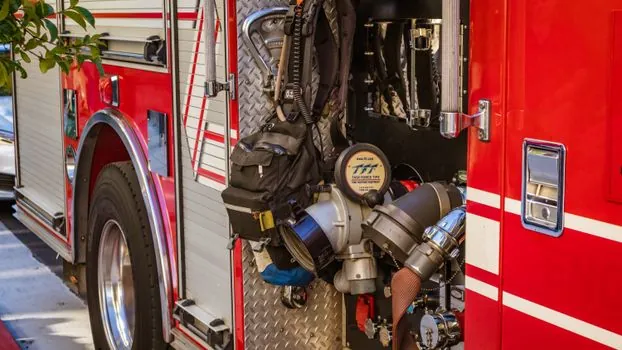
Working pressure above the SAE 100R-series rating of the nearest catalog SKU is the most common reason a custom hose is mandatory; a 5,000 psi continuous-duty hydraulic line, a 6,000+ psi test stand, or any application above the published R12/R13/R15 envelope forces a spiral-wound wire reinforcement and a verified test pressure, which off-the-shelf SKUs in that range are rarely stocked [S1][S4].
Temperature is the second hard trigger: standard NBR-based hose is typically rated for -40 °C to +100 °C continuous, and exceeding either end (high-temperature steam lines, hot oil above 135 °C, cryogenic or low-temperature hydrocarbon service) forces a different inner tube compound (EPDM for steam/water, FKM or PTFE for hot oil, low-temperature compounds for cold service) that off-the-shelf general-purpose hose does not carry [S6]. Media compatibility is the third: aggressive chemicals, solvents, food-grade requirements, or USP Class VI pharma fluids need a documented inner tube and a documented extractables profile, which is only available on hose built to a spec rather than pulled from a rack [S5][S6].
Decision matrix: catalog SKU vs custom build vs rebuilt from original
There is a third route that most buyers miss, and for hose specifically it is often the right one: keep the original end fittings, cut the failed hose off, and crimp new hose between them [S2]. This "rebuilt from original" path fits exactly because the ends are the original machined fittings, needs no part number, and works on equipment whose OEM part is discontinued or three weeks out [S2].
Putting all three options against the same four criteria makes the call mechanical: (1) Lead time: off-the-shelf wins at "today" if the SKU is in stock, custom is one to several days, OEM dealer is days to weeks; (2) Fit precision: rebuilt from original is exact, custom is exact, off-the-shelf is approximate; (3) Unit cost: off-the-shelf is lowest, custom is higher upfront but lower over service life, OEM dealer is highest; (4) Warranty/spec traceability: OEM dealer has a known spec on the box, custom carries a fab shop's test record and tag, and rebuilt-from-original inherits whatever test record the rebuilder issues [S2][S3]. For a line under active dealer warranty on a complex moulded assembly, OEM is still the right call; for a common application on a reputable brand, off-the-shelf is fine; for anything where the spec, not the logo, is what matters, custom or rebuilt is the engineering answer [S2].
Who custom hose is for, and who should not bother
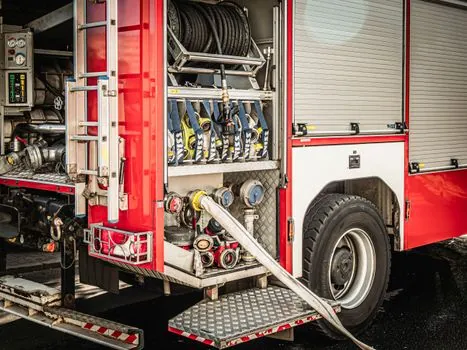
Custom assembly is the right call for: high-cycle production machinery (the industrial hose page lays out the full duty envelope), harsh-environment mobile equipment, pharmaceutical and biotech lines that need a documented extractables profile, food and beverage lines needing specific sanitary end connections beyond stock tri-clamp sizes, and any retrofit where the routing path between two ports is not a straight line [S3][S5][S7]. It is the wrong call for a one-off repair on a common machine, a low-cycle duty tractor, or any application where the catalog SKU's published pressure and temperature already cover the working envelope by a comfortable margin [S1].
For OEM-spec work on fuel, brake, and certain hydraulic circuits, the legally binding rating is DOT (for fuel/brake) or SAE (for hydraulic), not a dealer part number; if the catalog part carries that rating and the geometry fits, there is no engineering reason to pay the dealer premium [S2]. For sanitary tri-clamp lines in a brewery or dairy running a standard catalog SKU on a standard fitting, off-the-shelf is faster, cheaper, and validated the same way a custom build would be [S5].
Limitations, failure modes, and what the spec must cover
Custom does not eliminate failure modes; it concentrates the engineering risk into the spec sheet. The most common failure on any hydraulic hose assembly is still improper installation, exceeding the published pressure rating, or a bend radius below the hose's minimum, and those are excluded from virtually every custom-shop warranty the same way they are excluded from an OEM warranty [S1]. A warranty covers material and workmanship defects, not misuse [S1].
The spec a custom shop must capture in writing is therefore: measured length end-to-end, both fitting types and orientations, working and burst pressure, continuous and peak temperature, media, minimum bend radius, and any abrasion/UV/chemical exposure on the cover [S3][S4]. For sanitary and pharmaceutical service, the inner tube compound, the sterilization method (SIP/CIP), and any extractables or USP Class VI documentation need to be specified up front, because changing the inner tube after the fact means a new validation cycle [S5][S6]. On the standards side, hydraulic hose construction in North America is benchmarked against SAE J517, which covers sixteen hose styles, with conformance voluntary and no SAE-issued certification [S4]. For the routing and pressure-decision logic on a comparable spec-driven component, the selection logic used for industrial valves follows the same pattern of working pressure versus published rating.
For an operation that needs the line back in service today, the rebuild-from-original path is the only option that combines zero lead time with exact fit, provided the old fittings are intact and a competent mobile or shop service is within range [S2]. For a planned PM cycle on a critical line, spec the custom assembly, tag it, and track it; the data is what prevents the next unscheduled stop [S3]. Either path beats guessing from a catalog SKU whose pressure and temperature ratings were never written for your specific working envelope.
Component reference pages worth checking: industrial adhesive, and industrial borescope.