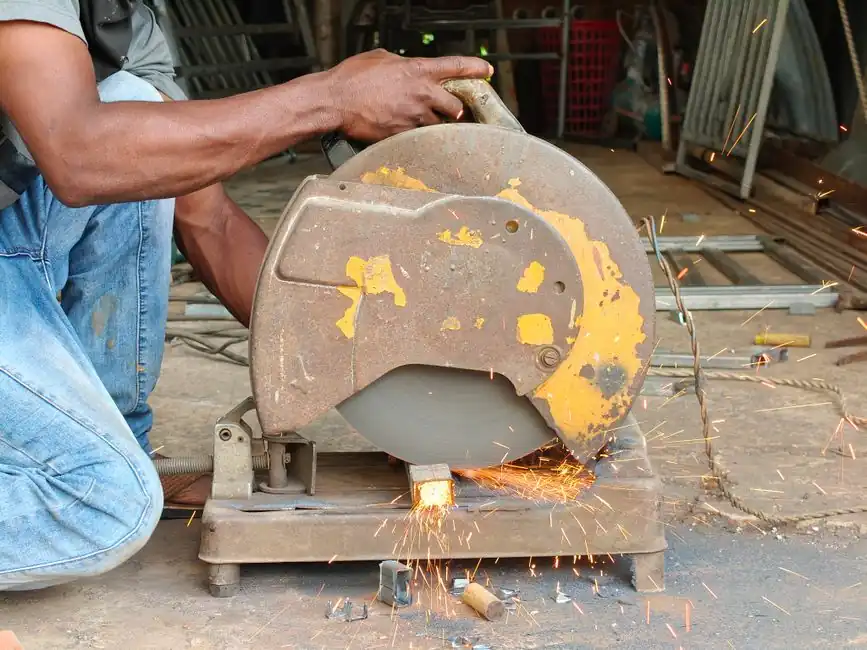
Foundry fettling cost per casting should be calculated from abrasive consumption, metal removal, contact grinding time, labour, overhead, and rejection loss.
Grinding wheel costs can vary with the metal or alloy, casting size, number and size of gates and risers, and type of equipment used [S3].
What Determines Abrasive Cost per Casting?
Fettling is the post-casting removal of gates, risers, flash, sand, and other unwanted material after the casting has been released from the mould [S7]. The work may involve swing-frame, floor-stand, or portable grinding equipment, while some wheels are used specifically to notch or cut off gates and risers [S3].
Grinding wheel costs can vary immensely per ton of castings poured, with differences depending on the metal or alloy, casting size, number and size of gates and risers, and type of equipment used [S3]. A 2 kg casting with three small gates is not a valid benchmark for a 500 kg casting with a 25 mm riser: abrasive wear depends on section, pressure, contact time, and removed volume, not casting mass alone.
Build the Cost Baseline Before Comparing Wheels
One benchmarking method divides total grinding cost by tonnes of castings poured, but this still hides the causes of variance [S3].
Total fettling cost then combines abrasive expenditure with direct labour, machine and consumable overhead, rework, and the value of castings rejected for incomplete cleaning, excessive grinding, or dimensional damage.
A wheel comparison should use time and cost per accepted casting as its criteria [S6].
Compare Wheel Specifications on Total Work Done
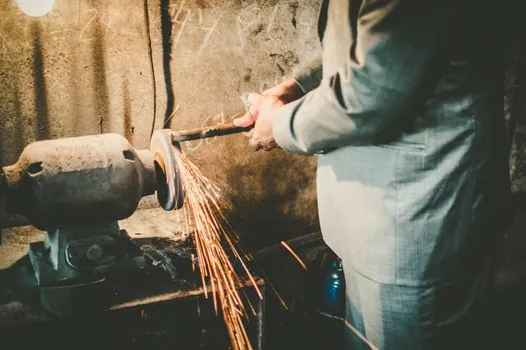
A lower-priced wheel can produce a higher total cost when it wears too quickly, removes metal slowly, varies between deliveries, or changes the final casting quality [S3].
The comparison should use time and cost per accepted casting rather than spark volume or no-load speed [S6].
For large castings, the abrasive belt versus grinding wheel comparison becomes relevant because access, removal volume, and contact geometry can outweigh the unit price of a wheel.
Supplier price is only one variable in wheel value. A technical comparison can use G-Ratio, Q′, U′, and chip thickness to assess grinding performance rather than treating catalogue price as cost per part [S5]. The fettling grinder therefore should be selected around the casting geometry and removal task, not assigned one universal wheel.
Tool and Process Selection Changes Consumption
High-frequency angle grinders and straight grinders must be evaluated against time and cost per accepted casting rather than spark volume or no-load speed [S6]. The test requires a defined casting, fixed work limits, a recorded starting condition, and measurement of time, wheel consumption, metal removed, and accepted output [S6].
Grinding equipment includes swing-frame, floor-stand, and portable equipment [S3]. A casting mould process with excess material distributed across several gates will generate more abrasive-contact events than a casting with one localized riser, even if the two parts have similar mass.
Separate Purchase Price from Operating Cost
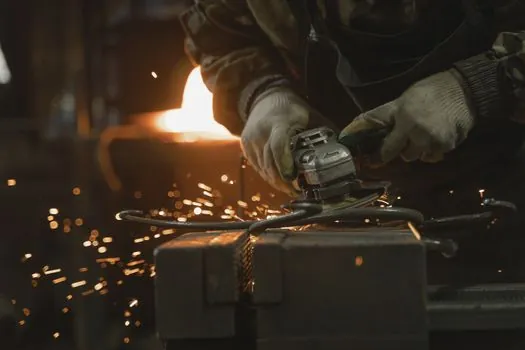
Abrasives comprise on average less than 2 percent of the total cost of a fabricating operation [S2]. Grinding operations contribute heavily to the total cost of an end product, and grinding wheel costs can vary immensely per ton of castings poured [S3].
The principal cost drivers are abrasive purchase and delivery price, wheel life, dressing frequency, metal-removal rate, contact time, machine and labour rates, tooling damage, rework, and scrap. Lower purchase price increases cost when it produces faster wear, longer contact time, inconsistent performance, or more rejected castings [S3].
Total cost of ownership must include installation and setup, wheel changes, dressing, compressed air where applicable, preventive maintenance, operator training, and the opportunity cost of occupied grinding capacity. For the production decision, divide the full trial-period cost by accepted castings. This avoids the common error of quoting only the lowest wheel price or abrasive expenditure per hour.
Control Variability at the Casting and Wheel Levels
Abrasive consumption can be highly variable when operating conditions are not controlled [S1]. Although the detailed consumption ranges in that work concern blast media rather than grinding wheels, the control logic transfers directly: record pressure or work output, equipment condition, delivery or wear state, hose or tool condition, abrasive metering where applicable, and surface condition before comparing consumption [S1].
For a foundry trial, hold casting geometry and metal condition constant, standardize operator pressure and stroke, record wheel condition before use, and replenish or replace the wheel at a defined point. Run enough castings to capture wheel-to-wheel and operator variation, because foundry performance based only on operator opinion will not establish the efficient wheel or the lowest total cost [S3].
The immediate trackable signals are abrasive cost per kilogram removed, contact time per accepted casting, and rejection rate. If wheel life improves but contact time rises, the purchase saving may be offset by reduced machine capacity; if both improve, validate the result across another casting lot before changing the production specification.