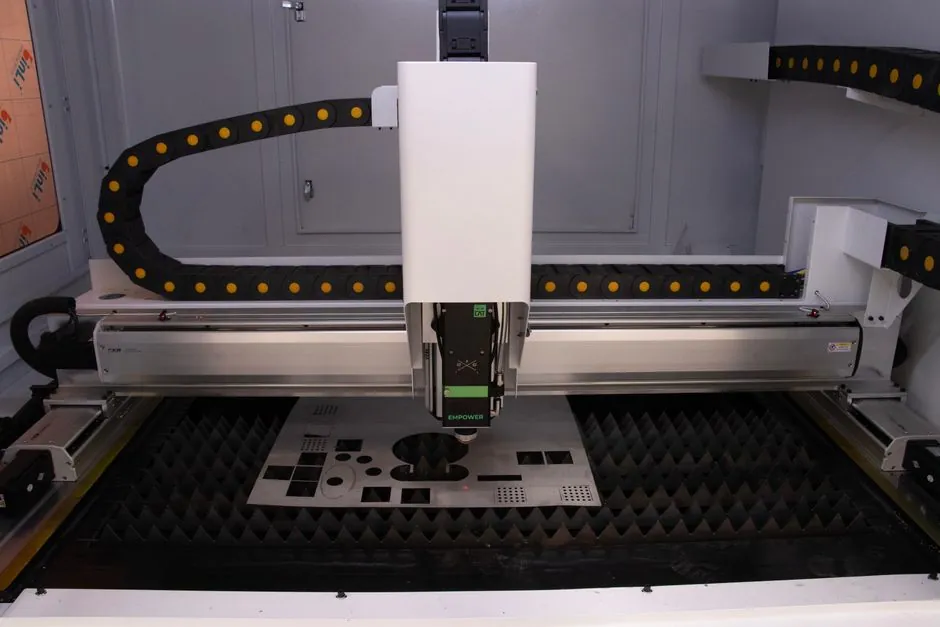
Cut-off machine total cost of ownership is dominated by consumable wheels, energy per cut, and dust-extraction compliance, with a 1.0 kW precision abrasive unit listed at roughly $340 on tier-1 sourcing and industrial cold-saw or plasma variants reaching $3,300 per station [S1][S2]. A buyer comparing sticker price alone understates the five-year cost by a factor of three to five once wheel consumption, coolant, extraction and downtime are added [S5].
The relevant machine class spans bench-top abrasive cut-off saws at 0.8–3.0 kW, carbide-tooth cold saws at 1.5–5.5 kW with flood coolant, and low-rpm diamond-wheel masonry saws at 0.8–2.2 kW, each with a distinct consumable and energy profile that has to be modelled before procurement [S5]. The compact precision variant, exemplified by the GHEXA-CUT-EQP-AUTO-005 at 1.0 kW with a Φ200 mm wheel and 0.01–5 mm/s stepless feed, sits at the laboratory end of that range [S1].
Where the money actually goes: cost drivers ranked
Consumable abrasive wheels are the single largest variable cost on a dry abrasive cut-off saw. A 350×2.5 mm resin-bonded wheel for steel typically delivers 30–60 cuts on 25 mm round stock before replacement, while a 400×4.0 mm heavy-duty wheel on 100 mm billet may yield only 4–8 cuts, a per-cut consumable swing of more than 10× depending on section size [S5]. Carbide-tooth cold saw blades cost 5–10× the price of an equivalent abrasive wheel, partially offset by longer life and a brighter, burr-free cut that can remove a secondary facing operation [S5].
Energy and motor sizing form the second cost tier. A 2.2 kW bench-top abrasive machine severs a 100 mm mild-steel round in 4–8 seconds versus 15–30 seconds for a comparable bandsaw on the same section, so per-cut kWh falls by roughly half even with a larger motor nameplate [S5]. For comparison, a 14-inch 355 mm steel cut-off machine at 2.7 kW and 900 rpm lists at $66–$68 per unit at 201-piece MOQ, while a 220V/380V 3 kW 400 mm heavy-duty model is quoted at $90–$95 at 10-piece MOQ, a clear motor-to-price gradient [S2]. Industrial plasma systems such as the POWERCUT-100HD at $3,300 shift the TCO curve by adding torch consumables, compressed air and HF-start electronics on top of mains power [S2].
Dust extraction and coolant loops are the third cost tier and a compliance gate, not an option. Dry abrasive cutting of stone or concrete releases respirable crystalline silica, and a wet-cutting attachment or hard-arm extraction hood moving roughly 1,500 m³/h per machine is the typical mitigation, with capital and ongoing filter replacement priced into the cell rather than the saw [S5]. For laboratory-class units such as the GHEXA-CUT-EQP-AUTO-005, the cell is closed (570 × 717 × 405 mm) and weighs 63 kg, so enclosure and ducting scale down accordingly [S1].
Five-year TCO: what changes when the model is honest
A first-pass TCO model on an abrasive cut-off cell should carry five line items: capital, wheels, energy, extraction, and unplanned downtime, with downtime valued at the cell's hourly contribution margin. A cut-off cell typically occupies 0.5–1.0 m² of floor space including the vise and coolant tray, so facility cost per machine is modest relative to a core machine or coding machine downstream in the same fabrication line [S5].
Wheel cost per cut is the multiplier that flips the ranking. On 25 mm mild-steel round, a $4–$8 abrasive wheel amortised over 30–60 cuts lands at $0.07–$0.27 per cut in consumables alone; on 100 mm billet with a $20–$40 heavy wheel amortised over 4–8 cuts, the same line item jumps to $2.50–$10.00 per cut, which dominates electricity and labour combined [S5]. Buyers who spec the wrong wheel diameter for the largest routine section pay this premium on every cut for the life of the machine.
Carbide cold saws invert that arithmetic: the blade is expensive, but per-cut consumable falls sharply on HSS and tool-steel rounds, and the cut runs cold enough (typically under 80 °C with flood coolant) to preserve heat-treated condition, which removes a separate re-hardening or re-tempering step on hardenable alloys [S5]. Where the cell feeds an automated cutting machine cell or a labeling machine downstream for part marking, the burr-free cold-saw finish also reduces marking-rejection rates.
Comparison: abrasive vs cold saw vs diamond on four decision axes
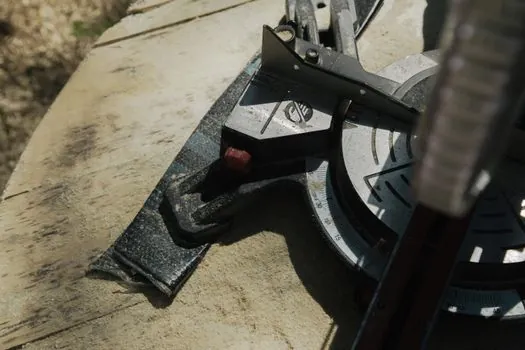
The three cut-off variants line up against four buyer criteria as follows, drawn from published variant data [S5]:
Abrasive chop saw (250–400 mm, 1.5–3.0 kW): lowest capital ($66–$510 for 14-inch steel models, $90–$95 for 3 kW 400 mm units), accepts ferrous and non-ferrous plus rusty or painted stock, but generates the highest HAZ (cut interface can exceed 200 °C on tool steel) and the highest dust load, with wheel cost per cut scaling sharply on heavy sections [S2][S5].
Carbide-tooth cold saw (250–350 mm blade, 1.5–5.5 kW, flood coolant, 40–120 rpm): higher capital and strict ferrous-only scope, but per-cut consumable falls on HSS and tool steel, cut stays under 80 °C, and the bright burr-free finish removes a secondary operation, which is the strongest TCO case for high-mix tool-steel shops [S5].
Diamond cut-off wheel (200–350 mm continuous rim, 0.8–2.2 kW, low rpm): limited to masonry, tile and abrasive stock, with a low capital and low energy footprint but a near-zero overlap with metalwork; the right answer for a stone or concrete cell and the wrong answer for a steel fabrication shop [S5].
Precision metallographic unit (Φ200 mm, 1.0 kW, 0.01–5 mm/s stepless feed, 63 kg bench-top, 5-inch touchscreen, laser alignment): a separate category optimised for low-deformation sectioning of PCBs, ceramics, quartz and small metal samples, where TCO is driven by sample-prep yield and rework avoidance rather than cut rate [S1]. This class does not compete with the three production variants above on cost per cut.
Who this class is for, and who should look elsewhere
Abrasive cut-off saws fit fabrication and MRO shops that need to part mixed ferrous and non-ferrous stock without re-tooling, with published duty examples including 60×60×8 mm angle cut in 25 seconds on heavy-duty machines and 25 mm solid round cut in roughly 20 seconds on the same class [S4]. Plasma cut-off variants fit shops that need to part thicker plate faster than 120 mm/min stainless and accept torch consumables plus compressed air in the cost stack [S2].
Carbide cold saws are the right pick for tool-steel and HSS blanks where the cut must stay under 80 °C, where flood coolant is already plumbed, and where per-part cost dominates per-cut capital recovery [S5]. Diamond-wheel saws are the right pick only for stone, tile, concrete and abrasive stock; on metal they are simply the wrong tool.
Buyers who do not need this format are shops whose bottleneck is already at a bandsaw (lower kerf, similar cut time on thin stock) or a torch (heavier sections above the abrasive wheel's glare zone), and any cell where stainless wall thickness above 4–5 mm is being asked of a 350 mm dry wheel, since the wheel will glaze and per-cut time will rise faster than consumable cost [S5]. For lab-grade failure analysis, the GHEXA-CUT-EQP-AUTO-005 platform with overload protection, automatic fixture option and laser alignment is the relevant alternative to a hand-fed sectioning saw, and the cost model there is sample yield, not cut rate [S1].
Procurement signals and what to track next
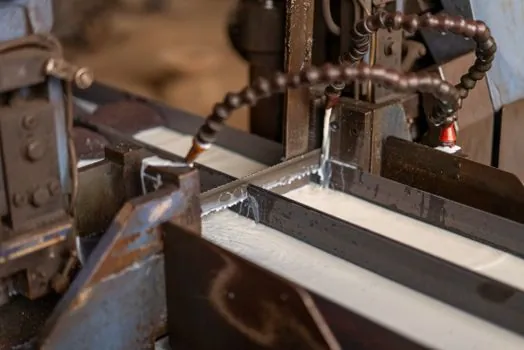
For buyers running RFQs in Q3 2026, the two trackable signals are abrasive-wheel price per cut on the largest routine section (a single number that swings five-year TCO more than any other line item) and dust-extraction compliance status for the jurisdiction of the receiving site, since silica rules and general workshop OELs are tightening independently of machine choice [S5]. Industrial plasma and cold-saw listings continue to cluster in the $340–$3,300 band on tier-1 sourcing, with abrasive 14-inch steel units anchoring the low end at $66–$95 at volume [S2].
For context on adjacent cells, the cutting machine and core machine reference pages line up the upstream and downstream cost stacks a cut-off cell sits between, and the filling machine page covers the packaging-side equivalent for plants running a continuous material flow. A practical TCO close-out is to re-run the model with the actual wheel consumption from the first 30 days of production rather than catalogue life, since resin-bonded wheel life on 100 mm billet in real shops often falls below the 4–8 cut figure vendors quote [S5].
See also our earlier report, Shotcrete Machine Spec Map for Plumbing Installation Embedment.