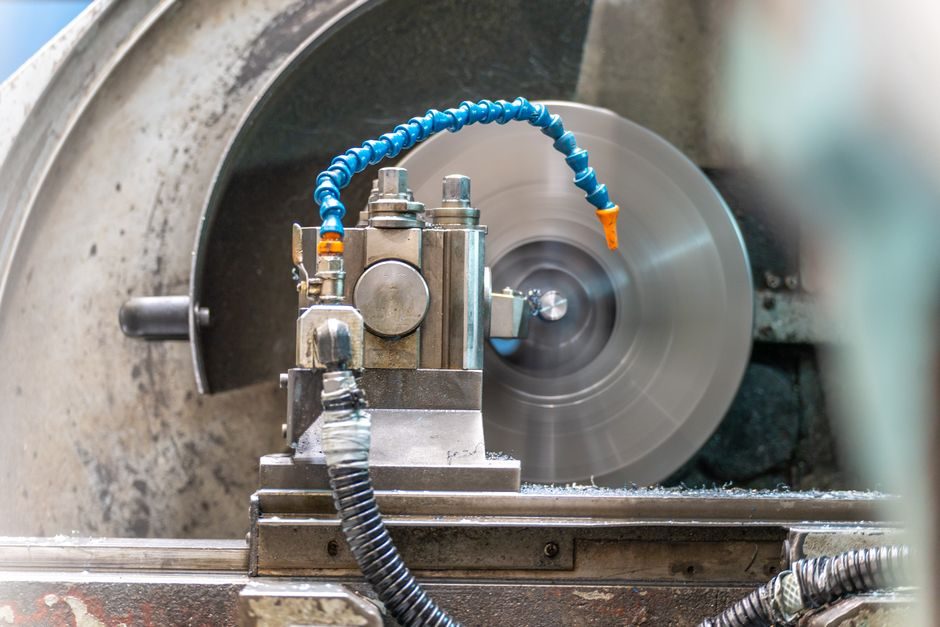
Cut-off machines (also called abrasive cut-off saws, chop saws or cold saws in their carbide-blade variant) part stock using a thin reinforced wheel rather than a toothed blade, producing a narrow kerf of roughly 1.0–1.6 mm for standard resin-bonded abrasive wheels used on stationary and portable machines [S3]. On steel sections the abrasive variant cuts dry or with cutting fluid, while carbide-tooth cold saws typically run at 40–120 rpm and deliver a brighter, burr-free finish with HSS, alloy and tool-steel rounds.
Engineers reach for a cut-off machine when a band saw is overkill, a torch is too hot, or a handheld grinder is too rough. Compared with a cutting machine fitted with a plasma or laser head, an abrasive cut-off saw needs no power supply beyond a standard 3-phase or single-phase mains feed, accepts a much wider range of material grades, and tolerates rusty, painted or coated stock without parameter retuning.
Where cut-off machines beat bandsaws and torches
Abrasive cut-off wheels run at peripheral speeds in the 60–80 m/s range on 350–400 mm diameters, so a 100 mm solid round of mild steel severs in roughly 4–8 seconds on a 2.2 kW bench-top machine, versus 15–30 seconds for a comparable bandsaw on the same section [S3]. The thin kerf also means less material loss: a 1.2 mm abrasive kerf against a 1.0–1.5 mm bandsaw kerf is comparable, but a 3 mm abrasive kerf for heavy sections is still tighter than a 6–10 mm oxy-fuel cut.
Cut-off saws accept mixed stock without re-tooling between jobs — a fabricator can move from 304 stainless bar to A36 angle to rebar to thin-wall tube on the same wheel, whereas a bandsaw requires a tooth pitch swap. The machines also fit in a fabrication cell where a core machine or coding machine downstream already handles the part; a cut-off cell typically occupies 0.5–1.0 m² of floor space including the vise and coolant tray.
Where the format loses to alternatives
Heat-affected zone (HAZ) and wheel burn are the two structural penalties of abrasive cutting. Dry abrasive cutting of tool steel or stainless can push the cut interface past 200 °C, enough to draw the temper on hardenable alloys; carbide-blade cold saws hold the cut under 80 °C with flood coolant, but cost 5–10× the wheel price and run at far lower rpm. Wall thickness above roughly 4–5 mm in stainless on a 350 mm dry wheel also starts to glaze the wheel, increasing both cut time and wheel consumption per cut. [S1]
Wheel life and consumable cost dominate the economics. A 350×2.5 mm resin-bonded cut-off wheel for steel typically delivers 30–60 cuts on 25 mm round stock before the wheel must be replaced, and a 400×4.0 mm heavy-duty wheel for 100 mm billet may give only 4–8 cuts. That 100 mm cut also throws a kilogram-class chip, and the resin bond releases fine particulate plus respirable crystalline silica when cutting stone or concrete — dust extraction at the cut zone is mandatory, not optional, for compliance with general workshop OELs. A wet-cutting attachment or a hard-arm extraction hood moving roughly 1,500 m³/h per machine is typical.
Cut-off machine variants on a spec sheet
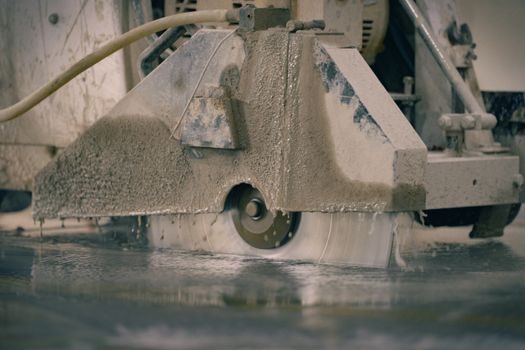
The three variants a buyer will see on a single RFQ are: (1) abrasive chop saw / cut-off saw, 250–400 mm wheel, 1.5–3.0 kW, dry or wet, ferrous and non-ferrous; (2) carbide-tooth cold saw, 250–350 mm blade, 1.5–5.5 kW with flood coolant, ferrous only, HSS and tool steel friendly; (3) diamond cut-off wheel on a low-rpm tile/stone saw, 200–350 mm continuous rim, 0.8–2.2 kW, masonry and abrasive stock only. Wheel change is the through-line, so a quick-release arbor, a wheel guard that opens without tools, and a vise that grips rounds, flats and angle in one setup are the three shop-floor features that separate a daily-driver from a paper-only spec. [S2]
For a hand-fed operator, a cutting machine with hydraulic or pneumatic feed is the only way to keep cut time and wheel consumption within ±10% across shifts; manual feed tends to vary ±30% on cut time, and operators compensate by forcing the cut, which is the most common cause of wheel shatter and serious injury. Fixed-guard machines with a positive stop at the bottom of the stroke and a no-load interlock are now the baseline in CE-marked equipment.
Selection gates and what to spec
Four parameters drive 80% of a cut-off machine decision: (1) maximum section diameter, (2) material grade family (carbon steel, stainless, tool steel, masonry), (3) tolerance and HAZ limit on the cut face, and (4) duty cycle (cuts per shift). Below 50 mm section in mild steel, a 250 mm bench-top abrasive saw is the lowest cost per cut; above 100 mm, the math flips to a 400 mm wheel on a 3.0 kW+ machine or a carbide cold saw, because the wheel cost per cut drops faster than the machine price difference amortises. For stone, tile, or refractory, a diamond rim on a water-fed low-rpm saw is the only sensible choice — abrasive wheels glaze immediately and burn the part. [S3]
For a fabricator running mixed material, the practical gate is machine versatility versus cut quality. Abrasive wins on versatility and capital cost; cold saw wins on finish, repeatability and per-cut consumable cost on long runs; diamond saw wins on masonry and nothing else. The wrong machine is not a safety hazard on its own, but the wrong consumable on the right machine is — fitting a steel-specification wheel on stainless, or running a stone-spec wheel on steel, is the most common cause of wheel failure I see in a fabrication audit. The general-purpose A30R-BF type wheel covers roughly 80% of carbon-steel shop work [S3]; A36R-BF or A46R-BF types step up for stainless where a free-cutting, iron-free formulation is required to avoid contamination.
Limits, failure modes and shop signals
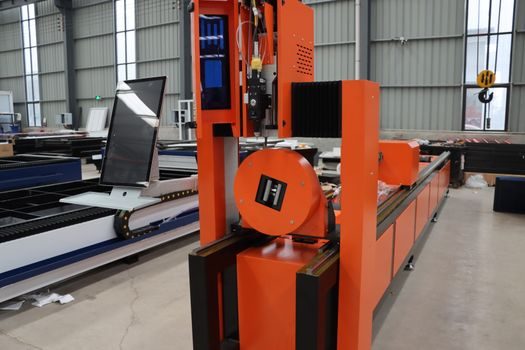
The hard limits on a cut-off machine are wheel diameter × rated peripheral speed, which together set the maximum safe rpm on the spindle. Over-speeding a 350 mm wheel from 3,800 rpm to 4,500 rpm is the single most common wheel-shatter cause in incident reports — the burst energy scales with the square of the rim speed. Side loading is the other killer: lateral force on a thin abrasive wheel, from a twisted workpiece or a jammed cut, cracks the reinforcement matrix before the operator sees the wheel deflect. [S4]
Any one of these is a 90-day replacement signal; two of them is a 30-day signal.
Standards and the sourcing path
Wheel safety is governed by standards that apply to the consumable, not the machine: the wheel itself must meet the relevant bond-strength and burst-speed test in its product standard, the spindle must be guarded to a fixed-guard or interlocked-guard pattern, and the operator-side eye and face protection is non-negotiable. Buyers should request the wheel manufacturer's batch test certificate and confirm the rated maximum operating speed on the wheel marking matches the spindle rpm printed on the machine nameplate — a 3,800 rpm wheel on a 4,500 rpm arbor is the textbook mismatch to reject at goods-in. [S1]
For sourcing, a July 2026 buy of cut-off machines and wheels is most efficient through three channel tiers: (1) domestic abrasive specialists carrying stocked 300–400 mm cut-off wheels with batch traceability for general carbon-steel work [S3]; (2) cold-saw OEMs for ferrous-only production cells above 50 cuts per shift; (3) diamond-tool specialists for stone and refractory lines. The abrasive channel is also where a shakeout machine or labeling machine integrator typically bundles the cut-off cell into a turnkey foundry or tube-mill line, which is worth asking the integrator about if a 2026 capex scope is wider than the saw itself.
Trackable signals for the next planning cycle: abrasive cut-off wheel price movement on 350×2.5 mm general-purpose grades through Q4 2026, and the rate at which carbide-tooth cold-saw lead times compress from the 12–16 week range seen in early 2026 as more European and Japanese OEMs restock. Both are verifiable from supplier RFQ responses and distributor price lists, and both will set the floor on per-cut consumable cost for the rest of 2026.
For related coverage, see Vibratory Feeder Suppliers in July 2026: Sourcing Tiers, Spec Gates and Lead Times.