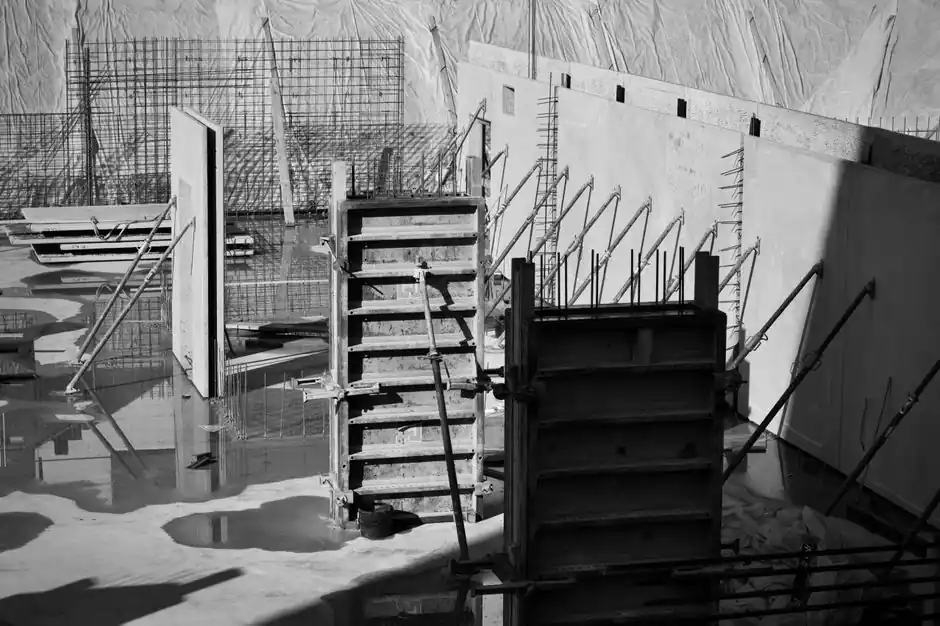
Cantilever climbing formwork models CB-180 and CB-240, with main platform widths of 180 cm and 240 cm and a 6 m maximum one-time concreting height, are the dominant specification for tunnel, dam, pier, and basement wall pours [S1][S4].
The lateral pressure of fresh concrete is carried by embedded climbing anchors and wall-through tie rods, so the formwork itself does not need a separate backstay or opposing scaffold [S1]. For tunnel work where the heading geometry forces single-sided pours, this anchor-and-tie path is the engineering reason cantilever systems are the baseline pick.
Why Cantilever Geometry Matches Tunnel Single-Sided Pours
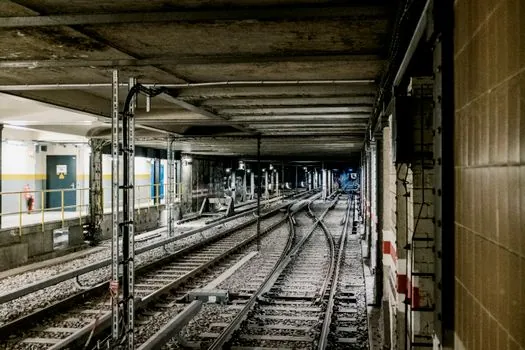
Cantilever climbing formwork is engineered for single-sided concreting: the M30/D20 climbing cones are designed to transfer high tensile and shear forces into still-fresh, unreinforced concrete, removing the need for wall-through tie-rods in dam-class pours [S1]. For tunnel sidewalls and invert extensions where a tie-rod through the section is impossible, the anchor-only load path is what makes the system workable.
CB-180 and CB-240 differ only in main bracket width (180 cm vs 240 cm), and the wider CB-240 is offered in two lifting unit variants: diagonal brace type for general use, and truss type for cases with heavier construction load, higher formwork erection, and a smaller scope of inclination [S1][S4]. Pick the truss variant when cycle time on the tunnel face depends on fewer climbing lifts per metre.
Standardized, serialized components keep lead times short and reusables (climbing cones and tensile bolts) in inventory across pours, which lowers the per-metre cost on long tunnel drives [S4].
Auto-Climbing Hydraulic Systems: When Cranes Cannot Serve the Face
The QPMX-50 auto-climbing formwork lifts via an onboard hydraulic system (oil cylinder plus commutator); a single cylinder unit delivers 50 kN of lifting force, and the steel rail and bracket climb alternately so the whole system rises steadily without crane support [S2].
The QPMX-50 climbs both vertically and slantwise, with forward or backward inclination up to 18 degrees, and can climb as a single unit or split into sub-units while keeping the process synchronous [S2]. That slant-climb range is the practical reason QPMX-50 is specified for inclined shafts and tapered piers rather than straight tunnel bores.
The ZPM-100 follows the same rail-and-bracket alternate-climb logic for chimney, bridge tower, and high-rise core pours, with cleaning done in situ so tower-crane lifts are greatly reduced and plywood face damage is almost eliminated [S2].
Decision Criteria: Pour Height, Crane Access, Geometry
Three criteria separate the candidates for a given tunnel package:
1. Maximum one-time casting height. CB-180 and CB-240 reach 6 m per pour, which covers most tunnel sidewall lifts in a single shift [S1][S4]. Auto-climbing QPMX-50 and ZPM-100 cycle lift by lift rather than by a fixed pour height, so they win on continuous vertical shafts where the limiting factor is climbing time, not lift height.
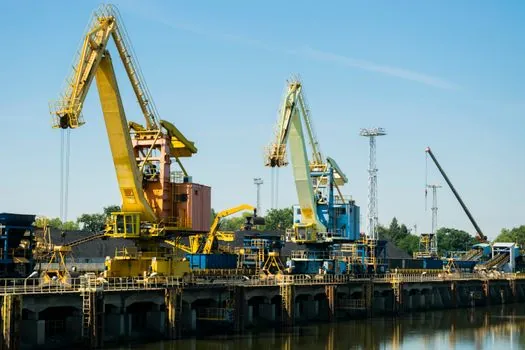
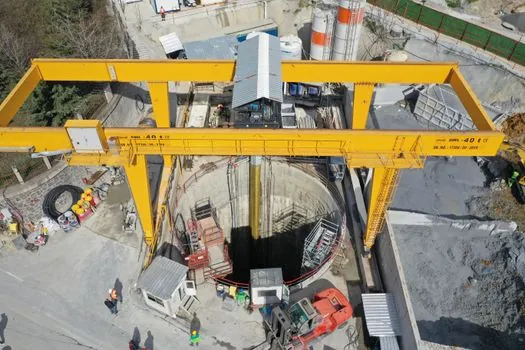
2. Crane dependency on the face. Cantilever systems are typically moved as a single unit by crane (CB-240 explicitly: formwork and climbing scaffold moved together) [S1]. QPMX-50 and ZPM-100 self-climb, which matters where tunnel crane coverage is intermittent or the heading is too tight for a lift.
3. Geometry tolerance. CB-180 handles circular structures and inclined walls without special measures because additional concrete loads and lifting forces transfer into the structure through the anchor [S1]. QPMX-50 quantifies this differently: forward or backward inclination up to 18 degrees, with the climbing process held synchronous across the unit [S2].
Quick comparison for spec sheets:
- CB-180 cantilever: 180 cm platform width, anchor + tie-rod load path, 6 m one-pour height, crane-lifted, suited to dam and tunnel walls [S1][S4].
- CB-240 cantilever: 240 cm platform width, diagonal-brace or truss lifting units, 6 m one-pour height, 600 mm horizontal retraction, single-unit crane lift, suited to heavier tunnel pier and large basement walls [S1][S4].
- QPMX-50 auto-climb: 50 kN per oil cylinder, hydraulic self-climb, vertical or up to 18 degrees slant, suited to inclined shafts and towers [S2].
- ZPM-100 auto-climb: hydraulic self-climb, in-situ cleaning, suited to chimneys, bridge towers, and high-rise cores [S2].
Who Cantilever Climbing Is For, and Where It Fails
Cantilever climbing formwork is built for crews that need to pour large single-sided concrete surfaces (dams, piers, anchors, retaining walls, tunnels, basements) with predictable surface quality from double-sided coated plywood and a 600 mm horizontal retraction that simplifies rebar tying and release-agent work [S1][S4].
It is the wrong pick when the structure geometry forces pure vertical self-climb without crane coverage, or when the wall inclination exceeds what a cantilever bracket can stabilise: that is the niche for the hydraulic QPMX-50 and ZPM-100 [S2]. For a related spec walkthrough on adjacent systems, the climbing formwork selection for steel-core high-rise page covers core-wall logic, while climbing formwork picks for demolition: self-climbing vs crane-climbed lines the same CB versus hydraulic split up against a different duty cycle.
Component Logic That Drives the Tunnel Spec Sheet
The cantilever package is a stack of matched parts: imported double-sided coated plywood faces for finish quality, H20 timber beams as vertical ribs, steel walers connected via flange clamps, and a retrusive set for crane-free striking on large elements [S1][S4].
Embedded climbing anchors plus tensile bolts are the reusable wear items, and on CB-240 the bracket-formwork connection is stiff enough that crane moves the assembly as one climbing unit rather than stripping and re-rigging at each lift [S1][S4]. For tunnel crews that already run a rebar and concrete-placing inventory, the power mixer selection for concrete work spec map lines up drum capacity and motor class with the pour rates these climbing cycles demand.
Limitations, Failure Modes, and Site Constraints
CB-180 and CB-240 are single-sided systems: the lateral pressure path depends entirely on the anchor cone and tie-rod capacity into the cured (or in the dam case, still-fresh) concrete, so a mislocated anchor or under-cured lift is a direct safety event [S1]. Auto-climbing QPMX-50 and ZPM-100 remove that risk for the climbing motion but introduce hydraulic dependency: one oil cylinder unit is rated at 50 kN, and a hydraulic fault stalls the whole face until the rail and bracket are resynchronised [S2].
Cantilever systems also need crane time at every cycle, which constrains them on tight tunnel headings; in contrast, the QPMX-50 bracket does not return to the ground until the structure is topped out, reducing on-site work-at-height exposure and plywood bumping damage during repetitive lifts [S2].
Sourcing, Standards, and Trackable Signals
CB-180 and CB-240 are documented by Lianggong Formwork as a paired product line with shared 6 m one-pour height and 600 mm horizontal retraction, with the only structural delta being bracket width and lifting-unit type [S1][S4]. PJ-200 and PJ-240 are an alternative cantilever naming from a second supplier covering the same pier and high-rise pour use case, useful as a second-source check during tender [S2].
Trackable signals for tunnel buyers in the next planning cycle: (1) any OEM release extending CB-240 truss-type reach above 6 m pour height, since that is the current published cap; (2) hydraulic auto-climb variants quoting slant-climb angles beyond the 18 degree QPMX-50 limit, which would re-open inclined-shaft packages currently funnelled to cantilever + crane.
For the relevant spec sheets and selection criteria, see climbing formwork, construction tools, and construction machinery and equipment.