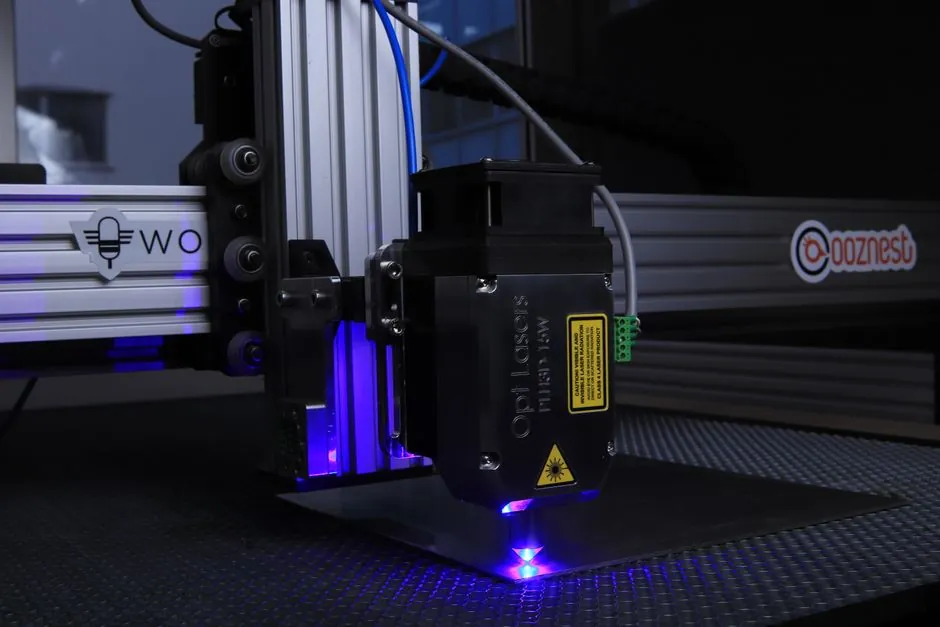
A cut-off saw may cut a listed 100 mm solid round bar but lack the clamping stability, blade support, or capacity for 100 mm OD tube with a 12 mm wall.
For repeated cuts to length, compare the largest solid bar, largest tube, shortest securely held piece, required angle, and permissible length tolerance before accepting a machine rating.
Separate solid-bar capacity from tube capacity
Outside diameter alone cannot define a saw’s usable capacity. Tube wall thickness changes how the tooth or abrasive wheel enters the material, while solid bar presents a continuous cross-section; fence position and cutting angle can also change the stated limits [S1]. A procurement specification should therefore list solid round bar and tube as separate capacity lines rather than accept one maximum diameter.
The example below demonstrates the distinction. A shaft 610 mm long, with 38.1 mm OD and a 19.1 mm bore, can begin as 38.1 mm solid bar that must be bored, or as 38.1 mm OD by 19.1 mm tube that mainly requires cutting and end finishing [S3]. The final part is identical, but the cut-off operation sees fundamentally different stock: continuous solid metal versus a hollow section with two walls.
Specify at least four machine limits: maximum solid round diameter, maximum tube OD, maximum tube wall or section, and minimum clampable length. Include the required 45° or 90° cut because a straight-cut chart does not establish angled capacity [S1]. Support the stock at the saw’s working height and require a manufacturer-approved arrangement that prevents round material from rotating [S1].
Compare the principal cutting methods
Abrasive cut-off saws provide fast setup and can handle larger sections, but published examples reach only 4 in. solid round diameter and may leave substantial kerf, burr, and a heat-affected zone [S4]. Some abrasive cutting machines can handle solid round stock up to 4 in. OD [S4].
Band saws are the general-purpose automated option for rod, bar, pipe, and tubing and can be arranged for bundles and shuttle feeds [S4]. They are productive for larger volumes but are less suitable for thin-walled products and generally do not deliver cold-saw levels of length accuracy or squareness [S4]. For automatic production, the MC-425CNC is identified as an automatic circular saw for metal rod and round bar, illustrating the use of a dedicated automatic saw rather than a general wood miter saw [S7].
The practical comparison is capacity against required geometry, cut quality, and automation. Abrasive equipment favors larger capacity and low setup; cold sawing favors square cuts and tight tolerances; band sawing favors flexible production and cut-off throughput; CNC cut-off machines favor controlled repeatability. None should be selected from blade diameter alone, because blade diameter describes the tool rather than every workpiece that the machine can safely hold and cut [S1].
Set tolerance and end-condition requirements
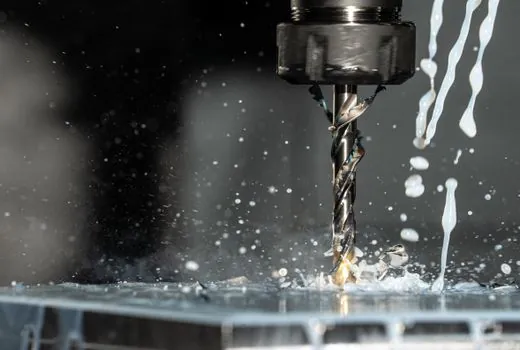
An abrasive saw cannot provide a square cut or tight tolerances [S4]. These figures are process-specific, not universal guarantees for every saw.
For 0.75 in. OD by 0.12 in. wall 4130 tubing, practical production advice identified a cold saw or lathe as preferable to a band saw for this tolerance requirement. One operating band saw was reported to hold ±0.010 in. only marginally, leading to the opinion that twice that variance should be expected in practice [S2]. The same discussion notes that abrasive cutting may damage heat-treatment properties and that cold sawing can leave a burr, while a lathe can deburr the cut [S2].
Do not define accuracy only as a length tolerance. Specify the cut-face condition, internal and external burr limits, perpendicularity or squareness, stock condition after cutting, and whether the parts will be heat-treated or tumble-deburred. A 45° cut requires square cuts against the required angle, and a 90° cut must also meet length and squareness requirements. A machine that reaches the diameter but cannot retain the short workpieces consistently is not a complete production solution [S1].
Match the machine to material and volume
Material grade, section, and production volume determine whether a low-cost abrasive saw, cold saw, band saw, or automatic cut-off machine is defensible. The job involved cutting a bunch of 0.75 in. OD by 0.12 in. wall 4130 tubing to a tolerance of ±0.010 in. [S2]. Abrasive cutting can be economical for hand loading and small runs, while band sawing is described as a common automated process for large-volume cut-to-length work [S4].
Large solid bars create greater cutting loads than smaller bars and place higher demands on machine rigidity and cutting-system support [S6]. Tube adds a separate concern: thin walls can vibrate, deform under clamping, or emerge with a heavy burr, while a poorly restrained round section can roll into the wheel [S1]. The vise must restrain the stock without crushing it, and long material needs support at working height so separation does not pull the cut out of alignment [S1].
Do not use a sliding miter saw or a wood saw for round metal tubing. A cutting tooth can engage the section and turn it into a projectile, and inadequate clamping can allow a large piece to shoot out of the machine [S5]. A proper metal cut-off saw with a correctly rated blade is the safer architecture, while a portable band saw is a practical option where capacity is modest and capital budget is constrained [S5].
Verify the supplier capacity chart

Ask the supplier to demonstrate the exact largest routine workpiece, including its material, wall thickness, solid section, cut angle, and finished length [S1]. Test the shortest piece that must be held securely, because a large nominal capacity can conceal weak holding at small lengths [S1]. The approval must cover the machine, blade or wheel, workpiece, speed, and permitted configuration.
For production acceptance, run sample parts before the production batch and inspect cut length, squareness, wall deformation, burr condition, and fit-up. Thin-wall tube needs a stable position against the fence, and round stock needs an approved anti-rotation arrangement [S1]. For critical alloy-steel parts, record actual length variation rather than accepting a catalog tolerance as a production guarantee [S2].
The procurement record should list the saw model, maximum solid-bar diameter, maximum tube OD and wall, minimum clampable length, approved cutting tool, cutting-fluid requirement, available angles, and measured sample results. If the supplier provides only one maximum diameter, request a separate capacity chart for solid round, round tube, square tube, and rectangular stock [S1].
Do not remove guards, force the head, or change wheel or blade diameter beyond the approved specification to defeat a capacity limit [S1]. Confirm that long stock is supported at working height and that short pieces remain restrained throughout the cut [S1].
Select by workload and end quality
Choose an abrasive cut-off saw for occasional, manually loaded cuts where rapid setup outweighs precision, burr removal, and heat effects. Choose a cold saw for square cuts, clean end faces, tight length control, and materials that cannot tolerate a heat-affected zone; published cold-saw capability reaches 3.5 in. round tube OD and 2 in. solid round, with strongest performance at 1.75 in. maximum OD [S4].
Choose a horizontal or vertical band saw for flexible automated cut-off of rod, bar, pipe, and tube, particularly when bundle handling and production volume matter more than very tight end tolerances [S4]. Choose a CNC automatic circular saw for controlled repeat feeding and repeat cutting of round products, with the MC-425CNC serving as one identifiable automatic rod and round-bar machine class [S7].
Use a cold saw or lathe when a documented requirement is ±0.010 in. on 0.75 in. OD by 0.12 in. wall 4130 tubing and heat treatment or burr control must be managed [S2]. The cut-off saw category should then be screened by the manufacturer’s solid and tube capacity charts, not by maximum blade size.
Before release, record sample results for the largest solid bar and largest tube, plus the shortest production piece, at every required cut angle. A machine passes only if it cuts all three without loss of clamping, unacceptable burrs, wall distortion, heat damage, or out-of-tolerance length.