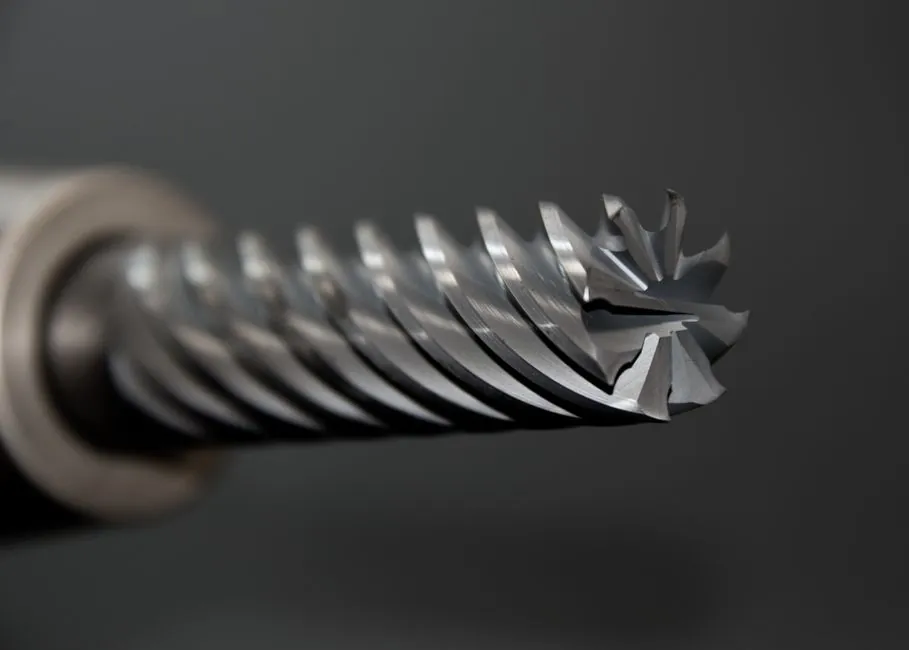
Cutting tools procurement accounts for 5-15% of direct manufacturing cost in metal-cutting operations, yet most plants still buy inserts, end mills, and saw blades through decentralized, request-driven purchasing with no standardized specification sheet [S1][S4].
A spec-first cutting tools strategy replaces price-per-piece shopping with a documented grade (carbide grade ISO classification, coating family, tolerance class), tool-life KPI, and supplier risk tier for every tooling family, aligning purchasing with the cutting machine fleet's actual workload envelope.
Spend Analysis: Map Cutting Tools by Family, Not by Vendor
Strategic spend analysis for cutting tools starts with grouping purchases by tool family and operation type, not by supplier name, because the largest savings typically come from mid-spend categories, not the top 20% of suppliers that consume 80% of spend [S5]. For a typical job shop, families worth isolating include indexable inserts (turning, milling, drilling), solid carbide end mills, HSS taps and drills, bandsaw and circular saw blades, abrasive welding and cutting tool consumables, and toolholding (collets, chucks, hydraulic holders).
Within each family, buyers should track three numbers: annual consumption in units, average unit cost, and tool life expressed in parts-per-edge or minutes-per-edge. A 2% saving on a $1M annual insert spend is real money, but a 40% saving on a $100K tap spend achieved through grade consolidation often delivers the same dollar result with less negotiation friction [S5]. Mapping the families before contacting vendors also exposes duplicate SKUs, a common leak in shops where three engineers buy the same end mill from three different distributors.
Specification Sheet: Lock the Cutting Tool Before You Lock the Vendor
A cutting tool specification sheet should lock the cutting tool before vendor selection, because engineering-grade parameters are far harder to change mid-contract than commercial terms [S1][S4]. The minimum spec set covers substrate (carbide grade ISO K10-K45 for cast iron, P10-P30 for steel, M30-M40 for stainless; HSS M2 or M35 for taps; bi-metal or carbide-tipped for saw blades), geometry (rake angle, clearance, nose radius, helix 30-45 deg for aluminum, edge preparation for interrupted cuts), coating (CVD TiN/TiCN/Al2O3 for steel turning, PVD AlTiN for hardened milling, diamond for CFRP and graphite), and tolerance class (e.g., end mill shank h6, runout under 0.005 mm for finish mills).
Adding the application envelope (workpiece material group per ISO 513, machine spindle speed window in rpm, depth-of-cut and feed-per-tooth in mm, coolant pressure in bar) turns the spec sheet into a tool-selection filter. Once these parameters are written, vendors compete on a level surface, and the comparison criteria reduce to: price per cutting edge, declared tool life in minutes or parts, coating consistency between batches, and lead time against the plant's riser cutting machine and bandsaw production calendar.
Supplier Segmentation: Tier Carbide Suppliers by Technical Depth, Not Catalog Size

Tier cutting tool suppliers by technical depth, application engineering support, and geographic redundancy rather than catalog size, because a 50,000-SKU distributor with no on-site applications engineer is a higher operational risk than a 5,000-SKU specialist with two engineers in your region [S1][S2]. The standard three-tier model applies cleanly: Tier 1 strategic suppliers receive long-term contracts, joint cost-down programs, and forecast sharing for safety stock; Tier 2 preferred suppliers fill family gaps and provide price benchmarks; Tier 3 transactional suppliers handle spot buys and capacity overflow.
Financial health and operational stability checks belong on the Tier 1 review cycle, ideally quarterly for carbide inserts and solid end mills where supplier bankruptcy risk can shut a production line within 30 days [S1]. Two-source qualification is non-negotiable for the top three insert grades a plant consumes, because single-source exposure on a P20 steel-turning insert grade converts a vendor outage into a 2-3 week production stoppage. Documenting the second source in the same spec sheet format means the alternate supplier is pre-qualified, not a cold start.
Tool-Life KPIs and Total Cost-per-Part: The Numbers That Drive Negotiation
Tool-life KPIs and total cost-per-part metrics are the negotiation leverage that turns a cutting tool RFQ from a price conversation into a productivity conversation, and companies that track them consistently outperform peers on tooling spend efficiency [S2][S5]. The core KPI set is straightforward: tool life in minutes per edge (or parts per edge for indexable inserts), cost per part (insert price divided by parts-per-edge, plus machine time at the shop's loaded hourly rate), machine downtime attributed to tool change, and scrap rate tied to tool wear.
Real ranges anchor expectations: a coated carbide insert in finishing 4140 steel at 180 m/min typically delivers 15-30 minutes per edge, while the same insert in roughing at 120 m/min drops to 4-8 minutes per edge. On the bandsaw side, a bi-metal blade cutting 100 mm solid bar of mild steel commonly delivers 20-40 m² of cut area before tooth breakage, and pushing beyond that range with worn blades is the most common cause of saw-flush scrap. Tracking cost-per-part by operation exposes the 1-2 tool families that drive the bulk of opportunity, almost always a different list than the top-spend families [S5].
Inventory, Lead Time, and Risk: Match Stocking Policy to Tool Criticality
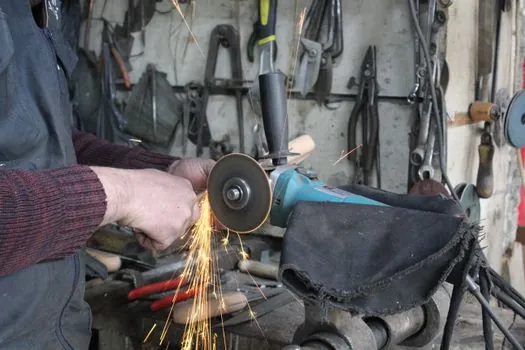
Cutting tool inventory policy should follow tool criticality, not blanket rules like "30 days of every SKU," because a one-size-fits-all stocking model overstocks slow-moving taps and understocks the inserts that stop a 5-axis cell [S1][S4]. Apply an ABC segmentation: A items (the 20% of SKUs causing 80% of downtime risk) carry 2-3 months of safety stock at the plant or at a vendor-managed consignment; B items carry 4-6 weeks; C items move to vendor-stocked with a 5-7 day lead time and reorder triggers tied to the procurement construction tools and consumables schedule.
Lead time contracts for Tier 1 inserts should lock a 4-6 week replenishment window for repeat SKUs and a 10-14 day emergency-response commitment, with the latter priced at a documented expedite premium. The contingency plan is more than words: every critical insert and end mill should have a pre-qualified cross-reference, and the linear guide or crossed-roller guide machine tool that depends on the tooling should have its tool magazine mapped to the alternate-SKU list so the controller can accept the substitute without a parameter edit.
Contract Structure and Continuous Improvement: Write the Audit Trail In
The contract is where the procurement strategy becomes auditable, and a well-built cutting tool contract reduces total cost-of-ownership risk while creating a quarterly review cadence for grade and coating upgrades [S1][S2]. Key clauses to include: price validity 12 months with a raw-material index trigger (tungsten, cobalt, tantalum reference prices), volume rebate tiers, quality clauses on coating-batch consistency, a tool-life guarantee tied to a defined test workpiece, and a 30-day decommit clause for grades that fail the in-plant trial.
Continuous improvement runs on data, so the contract should require quarterly supplier business reviews with shared cost-per-part trend charts, tool-life test results on the plant's actual workpieces, and a roadmap for new grades entering the market. Plants that adopt this structure for metal powder selection in mold and die making and adjacent consumables tend to extend the same spec-first discipline to inserts within two budget cycles, which is the signal that the strategy has taken root.
The next trackable signal: watch for ISO 513 application-group updates and any 2026-vintage carbide grade launches that re-cut the P20/K10 cost-per-part benchmark; cross-reference those releases against the Tier 1 supplier's quarterly review.