
China controls an estimated 80-83% of global tungsten supply, and the U.S. Department of Defense has mandated non-Chinese sourcing compliance after 2027, which together force procurement teams to redesign their tungsten sourcing playbook around diversification, due diligence, and contract leverage [S3]. Tungsten is also formally a conflict mineral under EU Regulation 2017/821, so any inbound shipment into the EU triggers Union-importer obligations aligned with the OECD Due Diligence Guidance [S2]. The same mineral underpins defence alloys, semiconductor interconnect thin films, aerospace balance weights, and high-pressure industrial valve trim, which is why a single concentration point becomes a strategic liability rather than a normal commodity risk [S3].
A 2026 tungsten procurement strategy therefore has to do three things at once: map the upstream chain against the four diversification pathways, embed risk-based due diligence into the supplier qualification gate, and apply a strategic spend analysis to the long tail of tooling, die, and electrode spend. Procurement leaders who treat these as separate workstreams typically overspend on the top-20% of vendors while leaving OECD and conflict-mineral compliance gaps on the smaller invoices.
Define the buy: form, grade, and end-use scope before any RFQ
The first move in a tungsten procurement strategy is fixing the technical scope, because the same metal ships as APT, ammonium paratungstate, ferrotungsten, tungsten oxide, tungsten carbide powder, and finished mill products, each with its own price curve and its own set of qualified converters [S3]. Procurement specs should pin a minimum WO3 assay for concentrates, an ISO 4499 grain-size envelope for carbide powders, and a maximum cobalt binder range for hardmetal inserts, so the RFQ can be scored on like-for-like data rather than on a generic "tungsten" line. For a downstream buyer wiring tungsten into pressure transmitter sensor housings, the relevant spec is usually a sintered W-Ni-Fe or W-Cu alloy with controlled density, not a powder specification, and writing the wrong line on the PO will silently push the order into a higher-cost converter tier.
End-use scope also fixes the standards stack. Cutting-tool buyers need ISO 513 application codes and ISO 9001-based mill certs; defence buyers need traceability back to the smelter per the OECD five-step framework and EU 2017/821 reporting fields; semiconductor and flow meter component buyers need material declarations aligned with REACH and RoHS plus a low-alpha or low-U/Th assay where the tungsten contacts silicon. Locking these requirements into the sourcing policy before the RFQ prevents the classic failure mode where the lowest-bid mill has no compliant smelter chain.
China dependency: quantify the exposure, then apply the four diversification pathways
Current market analysis cited by risk researchers puts Chinese control of global tungsten supply at 80-83%, a level that exceeds prudent critical-minerals concentration thresholds and that drives the post-2027 U.S. DoD non-Chinese sourcing mandate [S3]. Tungsten is not the only concentration risk procurement teams carry, but it is the one with the deepest single-supplier exposure, so the strategic move is to map current spend by origin and set a hard Chinese-origin reduction target per part family rather than a vague "diversify" slogan. A useful target structure is to cap any single converter at 35-40% of category spend, ceiling any single country at 60%, and reserve 10-15% of qualified volume for development partners so the supply base stays contestable.
Four diversification pathways show up consistently across the strategic-minerals literature, and each maps to a different risk profile and lead time [S3]:
Pathway 1 is the only one with an already-delivered first-ore milestone, the Sangdong mine shipped first ore to its run-of-mine pad in December 2025, which makes it the lowest technical-risk entry point for non-Chinese APT [S3]. Pathway 4 should be the first to be activated even when the long-term pathways are still in development, because tungsten swarf and used inserts reclaimable through zinc-process recyclers can offset 10-20% of virgin demand inside a single planning cycle.
Due diligence: anchor the program to OECD five-step and EU 2017/821

Umicore's 2026 Sustainable Procurement Framework for Tungsten codifies a risk-based due-diligence model aligned with the OECD Due Diligence Guidance for Responsible Supply Chains of Minerals from Conflict-Affected and High-Risk Areas, with explicit reference to Regulation (EU) 2017/821 as the binding instrument for Union importers of tungsten ores and metals [S2]. The framework covers both primary and recycled feedstock and applies to every supplier involved in mining, trading, processing, refining, and recycling, so it cannot be bypassed by routing material through a trader. The five OECD steps (establish strong company management systems, identify and assess risks in the supply chain, design and implement a strategy to respond to identified risks, carry out independent third-party audit of smelter/refiner due diligence practices, and report annually on supply chain due diligence) translate directly into supplier onboarding checkpoints and into a clause set that should appear in every tungsten master purchase agreement.
Procurement teams that treat the conflict-mineral question as a checkbox almost always miss the severity test. The Umicore framework explicitly prioritises "the most severe and likely risks" and flags forced labour, child labour, inhumane treatment, conflict-financing, and security-force involvement as the red flags that override any price or lead-time argument [S2]. For the RFQ stage, that means a supplier must produce a current Responsible Minerals Assurance Process (RMAP) conformance letter or an equivalent independent assessment, the chain-of-custody must identify the smelter and the country of origin for every lot, and any red-flag origin has to trigger a documented risk-management plan before material is accepted. Suppliers working in tungsten-reclaim flows for pressure sensor diaphragm or linear guide roller materials still fall inside this scope, because the EU regulation follows the metal, not the form.
Strategic spend analysis: look past the top 20% of suppliers
The conventional Pareto rule says 80% of spend sits with 20% of suppliers, but on tungsten the largest invoices are usually locked into long-term converter contracts where prices are index-linked and negotiation leverage is thin [S4]. The bigger savings live in the long tail: smaller carbide-tool and electrode vendors where a 30-40% price reset is realistic, and in license-style line items such as grade surcharges, re-melt fees, and minimum-order breakage charges. A practical approach is to benchmark every tungsten PO line against at least two alternative suppliers, map utilization data so the team knows which grades are actually being machined, and segment users into retention, optimisation, and reduction buckets so negotiations can be evidence-based instead of flat-rate renewal [S4].
Pairing the spend analysis with a 120-day intake horizon turns procurement from a reactive desk into a planning function [S4]. For tungsten specifically, that 120-day window is the minimum needed to clear an OECD step-2 risk assessment, run a sample lot through QA, and qualify a secondary supplier, which is why any tungsten RFQ with a required-on-site date under 90 days almost always defaults back to the incumbent Chinese-origin mill. Building the intake template so it captures grade, form, expected annual volume, end-use, and required compliance documents at the request stage is the single change that moves tungsten from "urgent repurchase" to "managed category".
Selection criteria: how to score a tungsten supplier in 2026
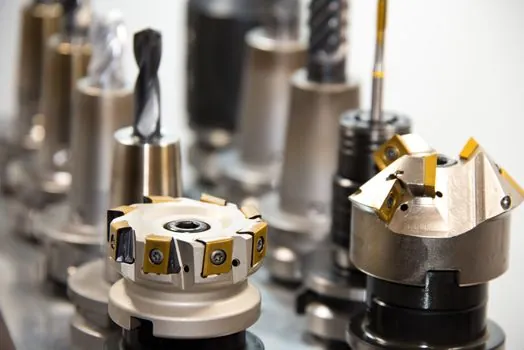
A defensible supplier scorecard for tungsten needs four weighted dimensions: origin and due-diligence posture, technical capability and capacity, commercial and ESG terms, and logistics resilience. Origin and due-diligence covers OECD five-step status, RMAP or equivalent conformance, conflict-mineral reporting template (CMRT) version, and country-of-origin distribution; technical capability covers mill cert alignment to the spec, lot-level assay data, capacity in tonnes per year, and the ability to hold narrow grade bands for carbide powder; commercial and ESG terms covers price formula transparency, recycled-content disclosure, and adherence to a published sustainability framework such as Umicore's [S2]; logistics covers port-of-origin, dual-route options, and minimum order quantities. The relative weights should tilt toward origin and due-diligence for any tungsten destined for the EU or U.S. DoD end-use, and toward technical capability for carbide cutting-tool and crossed-roller guide rail applications where grade consistency drives tool life.
Three engineering decisions usually tip the score: whether the supplier's smelter is on the current RMAP conformant list, whether the proposed grade sits within the converter's published capability rather than at its edge, and whether the proposed Incoterm keeps title transfer inside a jurisdiction where the OECD chain-of-custody can be evidenced. Suppliers who fail any of those three are automatically downgraded regardless of price. A useful side-by-side comparison structure for two candidate suppliers is shown below.
Trackable signals and a related reference
For procurement teams that already work a tungsten manufacturing quality standards spec map, the next two signals to watch are the 2027 U.S. DoD non-Chinese sourcing compliance deadline and any new RMAP conformant smelter additions outside China, both of which will directly change the supplier scorecard in the table above [S3]. A second trackable item is whether allied-nation APT converters (Pathway 3) reach published nameplate capacity, because that is the gating constraint on converting the Sangdong and similar mines into qualified tonnes for EU Union-importers under the same OECD-aligned framework Umicore documents [S2]. Together those two data points will tell a 2026 procurement team whether the diversification thesis is converting into real qualified tonnage or stalling at the smelter gate.