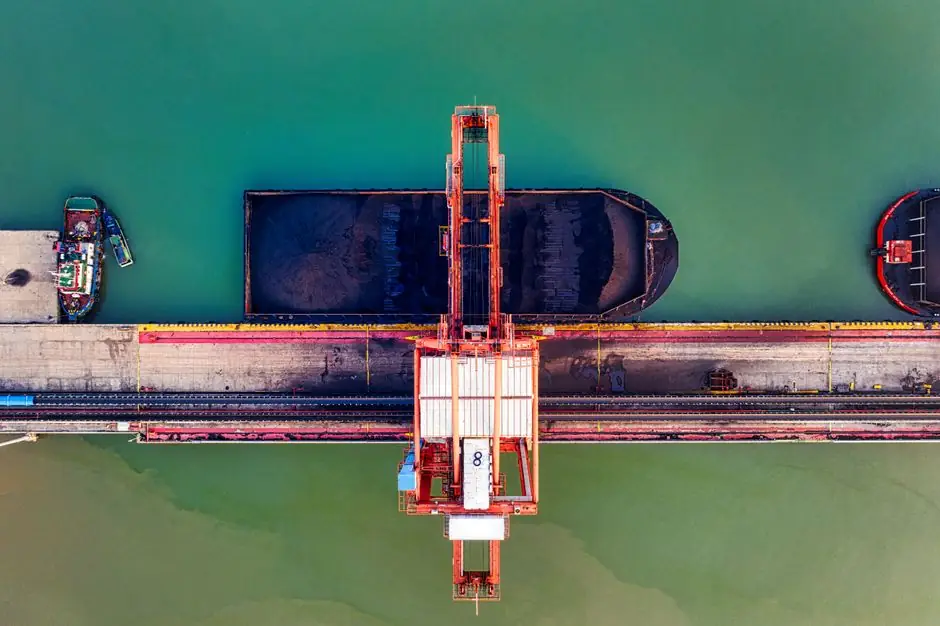
China produced roughly 150,000–160,000 tonnes of vanadium in 2025 (V₂O₅ equivalent) and accounts for the largest share of operating global capacity alongside South Africa, Russia, and Brazil, with those four origins covering about 95% of output [S2][S3].
Demand is splitting: Chinese steel still consumes about 100,000 tonnes in 2026, while vanadium flow batteries (VFBs) are projected to consume 35,000–40,000 tonnes (V₂O₅ equivalent) and could push storage's share of domestic demand above 30% [S3]. For a buying team, that dual demand structure means lead time, price, and alloy-versus-electrolyte grade now move on different signals than in the prior decade.
Vanadium Forms and What Each One Buys You
Vanadium is traded in at least four distinct commercial forms, and form drives both specification and price: vanadium metal ingots for alloying, vanadium powder for advanced metallurgy and catalysts, V₂O₅ for ceramics and battery electrolyte feed, and ferrovanadium (typically 50% V or 80% V) for steelmaking [S1].
Purity is the dominant spec lever inside each form, with common bands of 99.5% and 99.9% for metal, and 98% V₂O₅ as the working reference grade for both steel and electrolyte feed. On the price axis, 98% V₂O₅ averaged around RMB 79,000 per tonne and ferrovanadium (50% V) around RMB 95,000 per tonne in early March 2026, a level buyers should anchor RFQs against rather than against headline indices [S3].
Where in China the Material Actually Comes From
Sourcing in China is regional, not national, and the regional cluster dictates the form you can realistically buy: Sichuan holds the largest vanadium deposits and the most mature smelting footprint, Hebei and Liaoning host steel-tied alloying and downstream ferrovanadium plants, and Inner Mongolia is the fastest-growing hub for VFB-grade electrolyte and battery materials [S1].
Vanadium is on the U.S. Critical Minerals List, and between 70% and 80% of a complete VFB system is already sourced from and built in China before being shipped to finishing locations for power-assembly integration, which is why region choice inside China is also a logistics and export-control decision, not just a price decision [S5].
Supplier Vetting: Certifications, Capacity, and Lab Evidence
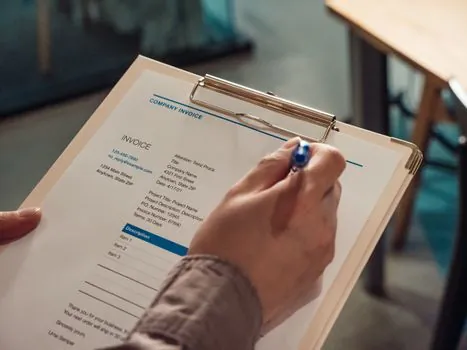
A defensible Chinese vanadium supplier should hold a current export licence, ISO 9001 and ISO 14001 management certification, and, for any shipment touching the EU market, REACH and RoHS conformity documentation that the supplier will actually share on request [S1].
Capacity claims need to be backed by named equipment, not brochures: vacuum arc melting furnaces for ingot production, powder atomization lines for metal powder, high-temperature refining kilns for V₂O₅, and an in-house analytical lab for incoming and outgoing chemistry. Buyers should ask for monthly tonnage by form, the lab's instrumental setup (XRF, ICP-OES, LECO for C/S/N/O), and a third-party test report on a recent heat before issuing a trial purchase order [S1].
Pricing, MOQ, and Incoterm Discipline
Vanadium prices out of China are usually quoted in RMB per tonne for V₂O₅ and ferrovanadium or in USD per kg for high-purity metal, and the spread between 99.5% and 99.9% metal is wide enough that an unstated purity assumption will distort an RFQ by double-digit percent [S1].
Lock three things in writing before any deposit: minimum order quantity in kg or tonnes, lead time in weeks from PO to FOB or CIF, and the Incoterm (FOB Shanghai, CFR, DAP, etc.), plus payment terms (typically 30% T/T deposit, 70% against copy of B/L for first orders). For procurement teams that benchmark a spec-first workflow, the measuring-instrument procurement logic for industrial buyers translates directly: write the spec, then the Incoterm, then the price, in that order.
Form vs End-Use: A 4-Criteria Comparison
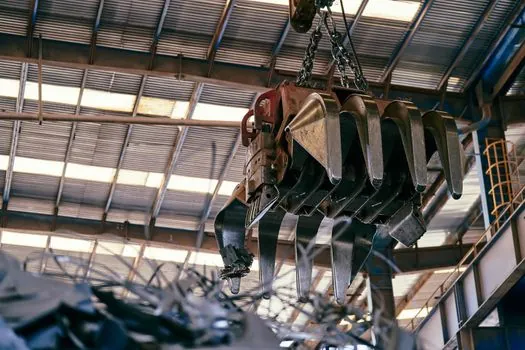
Buyers who skip this step routinely over-spec one form and under-spec another. On four decision criteria the four main Chinese-supplied forms line up as follows: [S1]
1. Ferrovanadium (FeV 50% / 80%): lowest cost per unit of V, primary use is HSLA and rebar steel, fits the GB1499.2-2024 high-strength rebar standard driving domestic Chinese demand [S3]. 2. V₂O₅ 98%: the reference intermediate for both ceramic/glass and VFB electrolyte production, priced around RMB 79,000/t in early March 2026 [S3]. 3. Vanadium metal ingot 99.5–99.9%: high melting point, used in titanium alloys and aerospace-grade master alloys, where impurity control on Fe, Al, Si, O, N is the gating spec [S1]. 4. Vanadium powder: required for powder-metallurgy and certain catalyst routes, where particle-size distribution (often D50 in the 10–45 µm band) and apparent density are as important as purity [S1].
For battery buyers specifically, the comparison shifts: ferrovanadium is unsuitable, V₂O₅ is the precursor, and the spec that matters most is soluble V content and impurity limits on Fe, K, Na, and Si, which directly impact electrolyte yield per tonne of feed. The industrial catalyst market 2026 OEM landscape is a useful parallel because catalyst buyers run the same precursor-spec discipline.
Supply Risk: Why Western Buyers Are Re-evaluating China
China is the major producer of vanadium electrolyte today, consumes a large share of that electrolyte in its own VFB installations, and the bulk of the global VFB pipeline, including a 200 MW / 1 GWh facility in Xinjiang, sits inside China [S3][S5].
For U.S. and EU buyers, that concentration translates into a single-supplier risk on long-duration energy storage (LDES) inputs, and the Western pipeline response is to friend-shore: the Gibellini project in Nevada has cleared federal permitting and is sized at roughly 10 million pounds of V₂O₅ per year, while a Utah site is being designed for 6–8 million pounds of V₂O₅ per year with initial output targeted for 2026 [S5]. Until those ramp, NATO-friendly volumes from Brazil and recycled spent catalyst are explicitly described as the bridge supply [S5].
What a 2026 RFQ to a Chinese Vanadium Supplier Must Contain
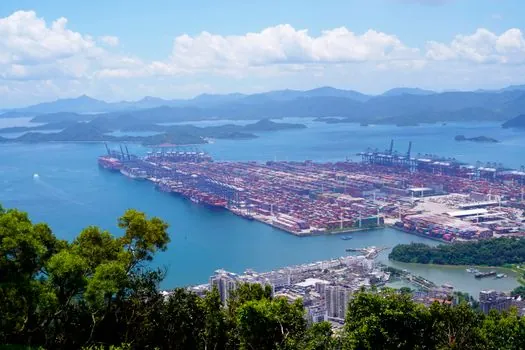
A 2026-ready RFQ should fix, in this order: form (FeV grade, V₂O₅, ingot, powder), purity (with impurity limits and not just a headline percentage), reference standard or customer spec, MOQ, lead time, Incoterm, payment terms, packaging (200 L steel drums, 1 t big-bags, or 25 kg bags for powder), and third-party inspection rights (SGS, Bureau Veritas, or Cotecna) with cost allocation [S1].
Add a sample clause: request 5–10 kg of production-lot material for ICP-OES verification at the buyer's lab before releasing the bulk PO, and reserve the right to reject lots outside the agreed chemistry window. The same spec-first discipline is the core of spec-driven material selection for 3D-printed medical devices, where chemistry-window acceptance is the gate between a usable and a rejected lot.
Trade Flow, Export Direction, and What It Means for Lead Time
Chinese vanadium oxide production is predominantly directed outside the EU or consumed domestically, which means EU-bound volumes face a different logistics lane than Asia-bound or U.S.-bound volumes and may carry longer lead times in tight market windows [S6].
Export pricing by destination is part of the same picture: average export and import price series for 2019–2024 diverge enough that a CFR quote to a European port and a CFR quote to a U.S. Gulf port are not directly comparable, so buyers should normalize on a single destination port before comparing two Chinese offers [S4].
Trackable signals for the next 90 days: the next Vanitec/ASIACHEM price print for 98% V₂O₅ and 50% FeV out of China, any update on Xinjiang 200 MW / 1 GWh VFB commissioning, and the first production-volume disclosure from the Utah vanadium-uranium-cobalt plant, all of which will move both Chinese export availability and the friend-shore premium Western buyers currently pay.
Spec-level background on the components involved: linear guide, crossed roller guide, and pressure transmitter.