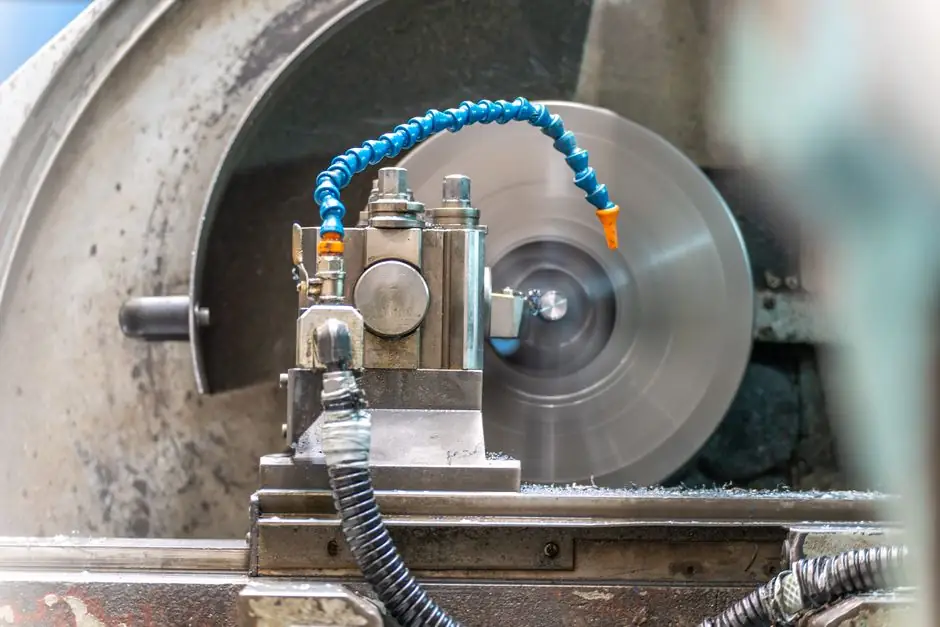
As of 2026-08-11, the global cutting-tool supplier directory still concentrates volume in two clusters: the Dongguan-Chang'an corridor in Guangdong for indexable carbide and micro end mills, and the Pune/Ahmedabad belt in Maharashtra for special carbide cutters exported to automotive and aerospace lines [S2][S5]. Echaintool (Suzhou, Jiangsu), Chai Tools (Hangzhou, +86-571-83502022) and 7-Leaders Corp. (Dongguan, established 1990) all list as audited manufacturer/factory entries, with 7-Leaders specifying raw stock from Swiss EXTRAMET tungsten carbide [S4][S5][S7].
The taxonomy is consistent across listings: solid carbide, brazed carbide plus HSS, PCD/CBN, indexable, and "special cutters" (profile, form, trepan, combination) form the five mainstream families. Vega Tools in Pune explicitly serves automobiles, engineering, forging, aerospace, power and farming customers with that exact five-family split, and the Vega site lists Solid Carbide Drills, Reamers, End Mills, Slitting Cutters, Milling Cutters, and Lugged Tools under one roof [S2].
Material families and what each supplier actually makes
Solid carbide end mills and drills dominate Chinese OEM output, with Dongguan Daofeng and 7-Leaders both using tungsten carbide rod stock as the base material for end mills, reamers and drills [S3][S5]. Chai Tools in Hangzhou publishes seven sub-categories, including end mills, face mills, solid carbide drills, indexable drills, indexable insert U-drills, grooving cutters and inserts (turning, milling, drilling) under a CNC tooling system aimed at automotive, wind, rail and aerospace lines [S4].
Brazed carbide plus HSS covers the older, lower-cost tier: milling cutters, countersinks, centre drills, CT brazed reamers, CT brazed drills, form tools, profile tools and side-and-face cutters all sit in this band, and most Indian suppliers pair it with solid carbide in the same catalogue [S2]. PCD/CBN tooling, by contrast, is treated as a dedicated product line at Vega (drills, reamers, end mills, multi-dia cutters, profile tools, inserts, turning and milling tools) because of the cost premium and the specialised braze/edge-prep process [S2].
Selection criteria: material, ISO 513, geometry, supplier gate
Buyers should lock four decisions before RFQ: (1) workpiece material and hardness, which fixes ISO 513 application class (P for steel, M for stainless, K for cast iron, N for non-ferrous, S for HRSA, H for hardened steel > 55 HRC); (2) operation type, drill vs mill vs turn vs groove vs bore, which selects indexable versus solid tooling; (3) tolerance and surface finish, which separates HSS from carbide from PCD/CBN; and (4) supplier gate, typically audited ISO 9001:2015 plus documented carbide grade [S1][S4]. Emeads Tools on Made-in-China.com publicly carries Diamond Member status, ISO 9001:2015 audit, and 16 years in steel-cutting tool lines, with MOQ 2 sets for the EP-15t/20t hydraulic construction plier line [S8].
For volume shops running aluminium or copper, PCD tooling is the correct economic pick over carbide because of the 4-10x edge-life gain on N-class work; for HRSA and titanium aerospace blisks, PCD is wrong and carbide with AlTiN/AlCrN coating plus through-tool coolant is the working choice. For stainless and high-silicon aluminium, veined-edge or polished-flute carbide outperforms standard carbide, and this is exactly the differentiation Vega highlights in its Special Cutters line (profile, circular form, combination, injection bore, trepanning) [S2].
Comparison of the main options
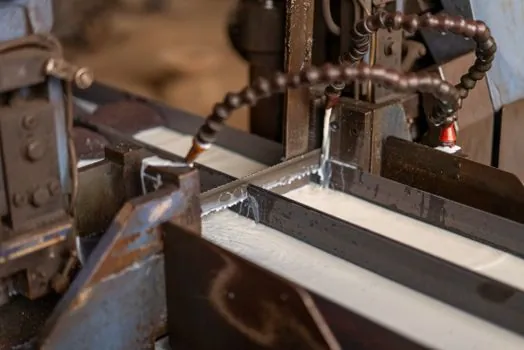
Across the major families a decision table looks like this. (a) HSS, including M2/M35/M42 cobalt grades: lowest cost, regrind-friendly, used for low-HRC steels, non-ferrous, and one-off specials. (b) Brazed carbide on HSS body: legacy choice for slot and side-and-face cutters where a tipped edge is cheaper than a full carbide blank. (c) Solid carbide, including sub-micron grain grades: the default for CNC end mills, drills, reamers at HRC 30-55 work, in TiN/TiAlN/AlCrN coatings. (d) Indexable carbide with coated inserts (CVD/PVD): best for turning, face milling, heavy roughing on lathes and horizontal machining centres. (e) PCD/CBN: dedicated to non-ferrous (PCD) and hardened steel/HRSA finishing (CBN), with price points 5-15x solid carbide [S2][S4].
For each family the practical differences are concrete. Solid carbide end mills typically run 1.5-3x the cutting speed of HSS on the same workpiece and tolerate 1.5-2x the feed per tooth, which is why a shop on HSS will buy a new tool to bridge to carbide once batch volume justifies it. PCD tooling pushes speeds another 3-5x over uncoated carbide on aluminium-silicon alloys above 12% Si, where standard carbide suffers built-up edge. CBN inserts can finish HRSA and hardened bearing steel at HRC 60-65 in a single pass where carbide would need EDM or grinding downstream [S2].
Supplier-directory layout: who lists what, where
Made-in-China.com remains the densest single directory for Chinese carbide and PCD tooling, with category pages such as Wuxi Cutting Tool products and dedicated Construction Cutting Tools Factory listings pulling together multiple audited manufacturers under one URL [S1][S8]. The Wuxi page surfaces carbide milling cutters with a "special cutting edge" feature claim aimed at extending tool and machine life, which is the standard marketing claim across the segment [S1]. Outside China, UK-focused directories such as eSources.co.uk list British wholesalers for circular knives, granulator knives, slitter blades and machine knives, mostly serving food processing and converting rather than metal cutting [S6].
For Indian and European buyers, Vega Tools (Pune) is a representative one-stop shop with its own export desk, and it cross-lists into Make in India style portals with full contact data; the same five-family taxonomy (Solid Carbide, Brazed Carbide plus HSS, Special Cutters, PCD/CBN, Indexable) recurs across catalogues, which is a useful sanity check when vetting a new supplier [S2].
Use cases, limitations and failure modes
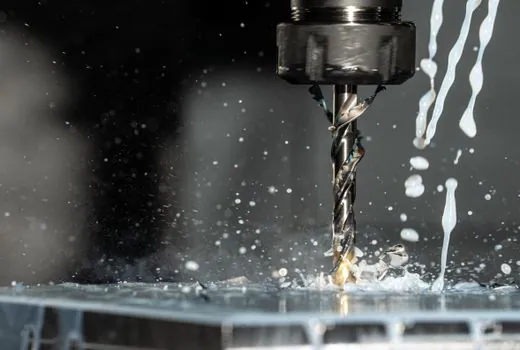
Construction cutting tools are a separate sub-segment from metalworking cutters, and the directory data confirms it: Made-in-China.com's Construction Cutting Tools Factory page lists hydraulic cutting pliers (Zhejiang Emeads EP-15t/20t at US$421.00 per set, MOQ 2 sets), rebar cutters, and 16-year steel-cutting tool factories, all with ISO 9001:2015 audit status [S8]. These are hand-held or battery-hydraulic tools, not CNC inserts, and the spec gates (cutting force in tonnes, jaw opening in mm, weight in kg) are entirely different from a milling cutter.
Common failure modes buyers should pre-empt: (1) premature flank wear on carbide end mills signals wrong grade for the workpiece, often a P-grade insert running an M-class stainless job; (2) chipping on PCD indicates interrupted cuts or wrong hone edge prep; (3) crater wear on coated inserts points to excessive cutting speed or insufficient coolant; (4) Built-Up Edge (BUE) on tooling running aluminium points to either uncoated carbide or insufficient cutting speed. Each mode has a standard corrective (grade swap, geometry change, speed/feed trim), and good audited suppliers such as Emeads, Chai Tools, Vega and 7-Leaders publish application notes on request [S2][S4][S5][S8].
Standards, sourcing risk and how to vet a factory
No single ISO standard governs "cutting tool quality" as a whole, but the operational gates are well defined: ISO 9001:2015 for the supplier's QMS, ISO 513 for the application-class letter on the tool (P/M/K/N/S/H), ISO 3685 for turning inserts, and ISO 18285 for insert dimensional fit [S1][S8]. Material-side, cemented carbide grades typically reference ISO 513 plus the C-grade family (K10-K45 for steel, M10-M45 for stainless, etc.) rather than a single global table, and buyers should ask for the grade designation in writing.
For the broader sourcing picture, the 2026 cutting-tool supply chain analysis covers lead-time volatility, tariff exposure and dual-source strategies, while the global abrasives supplier directory landscape, August 2026 maps the upstream grain and bond side that feeds grinding-wheel and honing-stone production, both relevant to a tooling buyer running a finishing cell. For the metal-removal side more broadly, the cutting machine reference and the riser-cutting machine reference cover the equipment those tools plug into, while the welding and cutting tool reference covers the thermal-cutting sister segment.
One trackable signal to watch in Q4 2026: the gap between Chinese and Indian lead times for solid carbide specials is widening on long-tail orders (specials under 100 pieces) as Dongguan and Wuxi factories prioritise high-volume indexable runs; expect Indian suppliers such as Vega to pick up special-cutter share into EU and US aerospace Tier 2s on that basis [S2][S5]. A second signal: the rise of PCD tool refurbishment services in Pune and Ahmedabad, where a used PCD drill can be re-tipped at 30-40% of new-tool cost, which will shift the lifetime-cost calculation for aluminium machining shops in 2027 [S2].