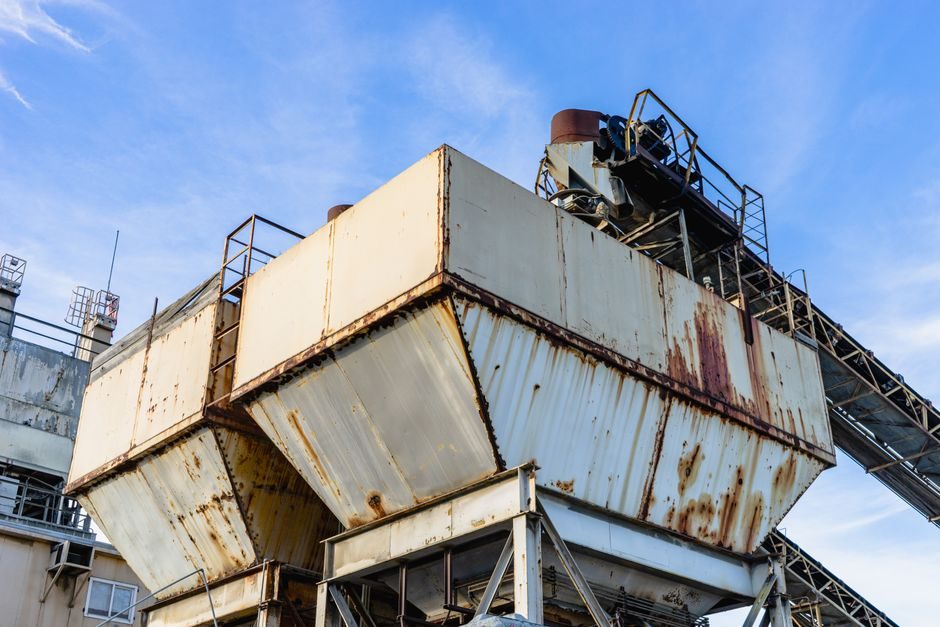
Industrial cyclone separator pricing spans roughly $120 for a 5-gallon shop-vac pre-separator kit to over $50,000 for large-capacity mining hydrocyclones, with the spread governed by flow rate, body alloy, and certification tier [S3][S8].
The product universe tracked by one major industrial directory lists 77 manufacturers offering 100 cyclone-related units, with flow rates from 0.64 m³/min compressed-air condensate traps up to 52,000 m³/h air classifiers [S1]. For process engineers, the four real cost levers are material of construction, volumetric flow class, cut-diameter / pressure-drop target, and hazardous-area certification.
What a Cyclone Separator Is and What It Costs to Buy
A cyclone separator is a no-moving-parts inertial device that uses tangential gas or liquid flow to spin out denser particles or droplets — a design that makes purchase price one of the cheaper line items in a 20-year asset life [S1]. Ferraroni AFP's AISI 304 steel cyclone for pneumatic conveyors is a typical small-shop example; the listing directs buyers to request a quote because published price bands for industrial units in this class rarely appear publicly [S2].
On the consumer end, a Oneida Air Systems Dust Deputy Deluxe kit (5-gallon bucket, caster mount, wet/dry rated) sold on Amazon for $119.95 on the snapshot date, including free shipping — the most concrete retail price point in the research [S3]. At the other extreme, mining hydrocyclone vendors quote per-unit pricing tied to diameter, liner material, and manifold configuration; large-capacity units used in tailings thickening and closed-circuit grinding are quoted in the multi-thousands to tens of thousands USD depending on polyurethane versus rubber lining and on feed-pipe pressure rating [S8].
Cost Drivers: Material, Flow Class, Pressure Drop, Certification
Material of construction is the single largest price lever on a per-vessel basis. Standard carbon steel with epoxy lining is the budget tier; AISI 304 stainless (the Ferraroni default) sits one step up for food, dairy, and mild chemical service; AISI 316 / duplex grades push pricing further for chloride, pharmaceutical, or high-temperature service [S2]. For mining hydrocyclones, the inner liner is typically wear-resistant polyurethane or natural rubber, and the quoted price scales with liner thickness and the diameter of the spigot (apex) and vortex finder [S8].
Volumetric flow class sets the second cost tier. Compressed-air condensate cyclones on the MGXG platform handle 35 to 600 m³/min at a 7–15 mbar optimal pressure drop — a body size class that requires heavier fabrication than the 2.5 m³/min units in the same family [S1]. Air classifiers for powder handling reach 52,000 m³/h (≈867 m³/min) and are priced as integrated systems, not bare vessels, because of the integrated turbine, classifier wheel, and downstream filter [S1]. Water-separator condensate traps sit at 0.64–63.16 m³/min and 180–517 mm lengths, giving a useful size-to-cost reference for skidded compressed-air installations [S1].
Pressure-drop and cut-diameter targets move both capex and opex. Higher collection efficiency (finer cut diameter) requires a longer residence time, which means a taller cyclone body and a higher inlet velocity, both of which raise fan or blower power draw. The published cyclone calculator's pressure-drop proportionality expression is P_drop = 3950 × K × Q² × P × ρ_g / T, so doubling flow rate quadruples pressure drop — a critical sizing check before purchase [S6]. The same reference defines cut diameter d_cut = √(9·μ_g·W / (2π·N·v_i·(ρ_p − ρ_g))), which is the engineering contract a buyer should pin the vendor to in writing [S6].
Cyclone Type Comparison Across Decision Criteria
Three design variants dominate the 2026 industrial catalog, and the choice between them is best made on a 2-4-criteria matrix rather than a single flow number. Reverse-flow gas cyclones (the classic Stairmand / High-Efficiency type) lead on dry dust collection at 2.5–600 m³/min; uniflow / straight-through cyclones lead on wet or sticky service where fouling is a concern; hydrocyclones (liquid-phase) lead on classification and dewatering at high solids loadings [S1][S8].
On material suitability: gas cyclones are routinely offered in carbon steel, AISI 304, and AISI 316, with rubber or polyurethane lining available for abrasive dust [S1][S2]. Hydrocyclones for mining are almost always polyurethane-lined cast iron or fabricated steel, with rubber as the budget option for low-pressure tailings service [S8]. Condensate / compressed-air water separators are a commodity in cast iron or aluminum with epoxy coating [S1].
On capital cost per unit of flow: condensate traps are cheapest per m³/min, dry gas cyclones mid-range, and air classifiers (which bundle a turbine) are the most expensive per m³/h because of the integrated classifier wheel and fabric filter downstream [S1]. On maintenance access: reverse-flow dry cyclones need a top-access door for cleanout and rotary-valve discharge; uniflow designs are simpler but less efficient on sub-10 µm dust, which is why the latter are commonly paired with HEPA secondary filtration as a documented system configuration [S1].
Total Cost of Ownership: Installation, Wear, Energy
Purchase price is the smallest of three cost buckets over an industrial cyclone's life. Installation cost scales with the ductwork or piping run to the cyclone inlet and outlet, with support steel, and with explosion-protection hardware (rupture panels, flameless vents, ATEX rotary valves) — the latter being a real line item for any European installation handling combustible dust, where post-cyclone HEPA filtration and explosion venting are explicit system features called out in manufacturer literature [S1]. For a related reference on adjacent separation hardware, see this flame arrester buying guide covering gas-group certification tiers.
Wear life is the second bucket and is dominated by the abrasive nature of the dust or slurry. A polyurethane-lined mining hydrocyclone in a closed-circuit grinding loop will typically outlast a bare carbon-steel reverse-flow cyclone in a cement or foundry application by a factor of three to five, justifying the higher upfront liner cost over a single campaign [S8]. For shop-vac style dry cyclones, the clear polycarbonate bucket on the consumer-grade unit is designed to be replaced as a wear item rather than the cyclone body itself [S3].
Energy is the third bucket and is driven by pressure drop. Because P_drop scales with Q², doubling gas flow quadruples fan power; on a 24/7 process, even a 10 mbar pressure-drop difference on a 5,000 m³/h stream is roughly 1.4 kW continuous, or about 12,000 kWh/year — orders of magnitude larger than the purchase-price delta between two competing cyclone designs [S6]. For a broader pumps-and-flow-cost frame of reference, see this peristaltic pump price guide on cost drivers and spec tiers. For sizing and selection logic when a cyclone is paired with another filter stage, see this self-cleaning filter vs cyclone separator comparison.
Who a Cyclone Is For — and Who Should Pick Something Else

Cyclones are the right primary separation stage when bulk particulate removal at 10–50 µm cut size is acceptable, when the dust is non-fibrous and non-sticky, and when handling combustible dust requires an explosion-protection strategy that pre-separates the coarse fraction upstream of a fabric filter [S1]. They are also the correct choice for liquid-phase classification in mining and mineral processing, where a hydrocyclone replaces a mechanical classifier in closed-circuit grinding [S8]. For an entry-level reference on the broader separator class, see the cyclone separator overview.
Cyclones are the wrong primary tool when sub-5 µm collection efficiency is required without downstream HEPA, when the gas stream is wet and below the dew point (causing fouling and corrosion), or when the unit is being asked to do a duty better handled by a wet scrubber, an electrostatic precipitator, or a fabric-filter baghouse. In compressed-air condensate service the small cyclone-style water separator is acceptable as a pre-filter ahead of a coalescing filter, with the manufacturer documentation explicitly stating its role as bulk-contamination protection rather than fine filtration [S1].
Standards, Sourcing, and Buyer Verification
There is no single ISO or ASME standard that universally governs cyclone-separator design; instead, compliance is split across pressure-vessel codes (ASME BPVC Section VIII for pressurized bodies), ATEX 2014/34/EU for European explosive-atmosphere certification, IECEx for international hazardous-area approval, and NACE MR0175 for sour-service metallurgy where the service demands it. Material traceability is typically to EN 10204 3.1 for European builds and to ASTM A240 / A276 for stainless plate and bar in US builds.
Verified sources for current pricing and selection data in 2026 include the DirectIndustry manufacturer index of 77 suppliers and 100 cyclone-related products, the Ferraroni AFP product page for AISI 304 pneumatic-conveyor cyclones, the Amazon retail listing for the Oneida Dust Deputy Deluxe kit, and the kitairu.net mining-hydrocyclone vendor listing for large-capacity pricing [S1][S2][S3][S8]. Calculated cut-diameter and pressure-drop values for vendor comparison should be derived using the published geometric and proportional formulas, which explicitly tie body length, inlet width, gas viscosity, and density differential to separation performance [S6].
Two trackable signals to monitor before issuing a PO: first, the effective number of turns N in the cyclone body, calculated as N = π/h × (2·L_cyl + L_cone) per the published geometry equation — request this from every vendor in writing because it is the single biggest determinant of real-world efficiency at the quoted cut size [S6]. Second, the manufacturer-stated pressure drop at the rated flow and gas density, expressed in mbar at standard conditions, not as a generic "low pressure drop" claim — this is the figure that drives your fan or compressor energy cost for the next 20 years [S1][S6].
Spec-level background on the components involved: linear guide, and steam separator.
