
Battery cell cans for the two dominant rigid-case lithium-ion formats are built from different materials, in different sizes, and to different vent tolerances, and the supply market is now large enough to specialize by format. Cylindrical cans (18650, 21700, 26650, 4680) use wound jelly rolls in steel or aluminum cylinders rated roughly 2-5 Ah per cell; prismatic cans use stacked or flattened electrode assemblies in welded aluminum or steel rectangular enclosures typically rated 20-100+ Ah per cell [S1][S5].
Neither format is universally cheaper or safer. Cylindrical cells win on mechanical robustness, radial heat flow, and the broadest global supply chain; prismatic cells win on volumetric pack efficiency, lower connection count, and custom form-factor flexibility [S1][S2]. Procurement teams that treat cell cans as interchangeable commodity hardware tend to over-spec on weight or under-spec on venting.
Cylindrical Can Geometry and Material
The cylindrical cell can is a rigid metal enclosure with a circular cross-section sized to a small set of industry standards. Common diameters and lengths include 18650 (18 mm x 65 mm), 21700, 26650, and Tesla's 4680 (46 mm x 80 mm) large format; internal construction is a wound electrode jelly roll in a steel or aluminum can with a pressure-relief vent and a positive cap terminal [S1][S3]. The circular cross-section distributes internal stress evenly across the cell wall, and the cylinder geometry itself resists compression, which is why cylindrical cells deform less than flat formats under impact or external pressure [S3].
Capacity per cell sits in a narrow band because of the standard diameters. Typical cylindrical cells deliver 2-5 Ah per cell in the common formats, with the larger 4680 pushing the upper end of that range to support EV pack consolidation [S1]. Built-in passive safety components are a structural feature of the can, not an accessory: pressure relief vents and Current Interrupt Devices (CID) that activate at 212 +/- 15 deg C are integrated into the cap and operate independently of the external BMS [S3]. For procurement, this means the cell can itself is part of the safety case; substituting a can without equivalent vent geometry is not a like-for-like swap.
Prismatic Can Geometry and Material
Prismatic cell cans are rectangular welded aluminum or steel enclosures designed for stackability. Standard nomenclature is thickness x width x length in millimetres, for example 103450 (10 mm x 34 mm x 50 mm); larger prismatic formats scale this up to EV and grid-storage footprints [S4]. Inside, electrodes are either stacked in layers or rolled and flattened, and both terminals are typically brought to the top surface on threaded studs [S1][S4].
Prismatic cans trade thermal margin for energy density per pack. A single prismatic cell can carry the same energy as roughly 20 to 100 cylindrical cells, and the larger aluminum or steel case reduces weld count at the module level because fewer cells and busbars are needed for a given kWh [S5]. The same geometry that improves pack-level energy density also creates longer core-to-surface heat paths, which is why prismatic cells in moderate-to-high power duty almost always need liquid cooling plates rather than forced air [S1]. The harder, welded casing is robust but the cell is less flexible in shape and harder to fit into non-rectangular pack volumes [S2].
Thermal Management and CID Venting

Cylindrical cans have a measurable thermal advantage that comes from geometry, not chemistry. An 18650 cell with 18 mm diameter has roughly 3 mm maximum heat travel from core to surface, which is short enough that forced-air cooling is viable at moderate C-rates and liquid cooling is straightforward to integrate via cooling plates or tubes around the cylinder [S1]. The radial heat path is well-characterized and supports uniform cell-to-cell temperatures inside a module, which is a structural reason 21700 and 4680 cells remain the format of choice for new liquid-cooled EV packs [S3].
Prismatic cans have lower surface-to-volume ratio, longer heat paths, and steeper internal temperature gradients, so thermal headroom is the limiting factor for prismatic pack power density [S1]. Cylindrical cans also integrate a CID that opens the circuit at 212 +/- 15 deg C independently of the BMS, an irreversible mechanical action baked into the cap [S3]. Engineers specifying prismatic cans should confirm equivalent pressure-relief and CID behaviour from the cell maker's datasheet, because prismatic vent mechanisms vary by manufacturer and are not standardized across the format the way the 18650/21700 cap geometry is.
Format Comparison: Cylindrical vs Prismatic vs Pouch
A structured comparison helps procurement and cell-format selection. The table below lines the three rigid and semi-rigid formats up against the criteria that drive can and casing supply decisions. [S5]
Cylindrical (18650/21700/4680): pack-level space efficiency is lower because of the cylindrical packing gaps; thermal management is strong (radial heat flow, short core-to-surface path); mechanical robustness and vent standardization are best in class; supply chain is the broadest of the three formats because the can sizes are industry standards; cost per kWh benefits from the largest production scale [S1][S3][S8].
Prismatic (aluminum/steel welded rectangular): pack-level space efficiency is high because flat faces stack with minimal gap; thermal management is weaker and usually needs liquid cooling for moderate power; mechanical robustness of the case is good but format flexibility is low; supply chain is narrower than cylindrical and lead times depend on whether the can is a catalog size or application-specific; cost per kWh benefits from fewer cells and welds per pack [S1][S2][S4][S5].
Pouch (aluminum-polymer laminate): pack-level space efficiency is the highest of the three because the flexible laminate conforms to the cavity; thermal management is reasonable but swelling during cycling degrades stack pressure over life; there is no rigid can, so mechanical robustness depends on the module housing; supply chain is mature for consumer formats and growing for large-format ESS [S2][S4]. For an engineer balancing cell can procurement against pack architecture, the decision typically reduces to: do you need the broadest catalog of standard cans (cylindrical), the highest volumetric energy at custom footprints (prismatic), or the lightest packaging with the most swelling risk (pouch).
Selection Criteria and Sourcing Constraints
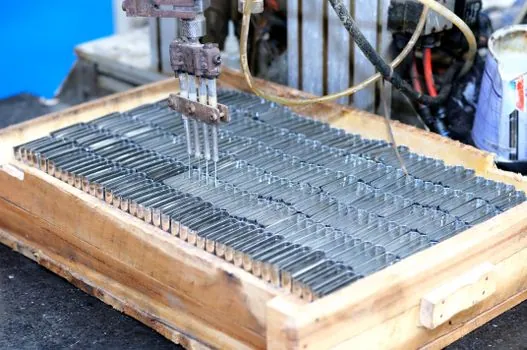
Cylindrical cell cans are bought as catalog items at industry-standard dimensions, which makes them the lowest-risk procurement choice. 18650 and 21700 cans are produced at scale by multiple steel and aluminum can makers worldwide, and capacity has expanded in lockstep with EV demand for the 21700 and 4680 formats [S3]. Lead times are the shortest of the three formats, pricing tracks steel and aluminum coil markets, and second-source qualification is feasible because the cap, vent, and CID geometry are documented in public cell datasheets [S1][S3].
Prismatic cell cans are bought closer to a project-specific drawing. Standard prismatic sizes like 103450 exist, but most EV and grid-storage prismatic cans are application-specific rectangular footprints with custom terminal busbar locations, so the can often comes bundled with the cell vendor's electrode stack and formation process [S1][S4]. Procurement teams should treat the prismatic can as a vendor-specific sub-assembly rather than a commodity: switching cell suppliers typically means requalifying the can, vent behaviour, and terminal layout, and that drives longer qualification cycles than swapping 21700 lots. Authorized cell-maker channels are the safer route during allocation, a point that mirrors the channel vs broker decision logic during battery-grade material shortages.
For both formats, the can material is part of the safety case. Cylindrical cans are typically steel for 18650/21700 production lines, with aluminum used where weight matters; prismatic cans are most often aluminum for large-format automotive and ESS cells, with steel used in some industrial and ruggedized packs [S1][S4]. Substitution between steel and aluminum cans without revisiting the vent, CID, and current-collector's electrochemical compatibility is not a like-for-like change. Silicon-anode 21700 cells that entered early commercial production in 2025 sit in the same cylindrical can footprint but at roughly 25% higher energy density than graphite-anode equivalents, which is a chemistry-level change that does not alter the can spec but does change formation and pressure-relief tuning [S3].
Format Fit by Application
Cylindrical cells dominate where the format's standardization, radial cooling, and proven safety record matter most. EVs (Tesla Model S through current 4680 programs, Formula E race packs), e-bikes, power tools, robotics, satellites, and Mars-rover power systems all use cylindrical cells because the same cell can be sourced from multiple vendors and the can's mechanical behaviour is well characterized from consumer-electronics heritage [S1][S3][S5]. The 21700 is the current mainstream cylindrical EV format, with 4680 designed to reduce total cell count and pack complexity at higher per-cell capacity [S3].
Prismatic cells dominate where volumetric efficiency and weld count outweigh thermal headroom. EV packs from manufacturers building around large-format prismatic cells, grid-scale stationary storage, and energy-intensive industrial systems use prismatic cans because a single cell can replace 20 to 100 cylindrical cells and cut module busbar welds accordingly [S5]. Pouch cells sit between the two and remain common in thin consumer devices, drones, and some automotive programs where packaging shape flexibility is the primary constraint [S2][S4].
Failure Modes and Specification Traps
Three specification traps catch buyers who treat cell cans as commodity cans. First, the can's vent and CID geometry is part of the cell safety case; substituting a can without a verified pressure-relief and CID rating (212 +/- 15 deg C for cylindrical cells) invalidates the cell-level safety file [S3]. Second, prismatic cans are not interchangeable across vendors because terminal layout, weld geometry, and stack pressure tolerance are design-specific; an EV-grade prismatic can from one supplier rarely drops into a competitor's module without rework. Third, swelling is a real failure mode for pouch cells but not for rigid cylindrical or prismatic cans; specifying a rigid can to solve a swelling problem is valid, but the trade is added weight and lower pack-level energy density.
Second-sourcing cylindrical cans is the lowest-effort path. For prismatic cans, dual-source qualification should be planned at the cell vendor level rather than the bare-can level, because the can, jelly-roll or stack, and formation process are typically bundled. Specs that should be on every cell-can purchase order include: can material and grade, dimensions with tolerance, vent burst pressure, CID activation temperature and tolerance, terminal geometry, electrolyte fill port location, and UN 38.3 transport certification status [S1][S3].
Trackable signals for the next 6 months: 4680 can capacity additions from major steel and aluminum can suppliers, prismatic can standardization efforts around the VDA/Chinese GB/T automotive footprints, and any updates to UN 38.3 transport-test guidance for large-format prismatic cells. Engineers comparing cell price per kWh between LFP and NMC chemistries should note that can and casing cost is a non-trivial share of total cell cost, and the LFP vs NMC cell price per kWh spec map is the place to start before locking format choice.
The underlying component specifications are covered under load cell, load cell module, and construction machinery and equipment.