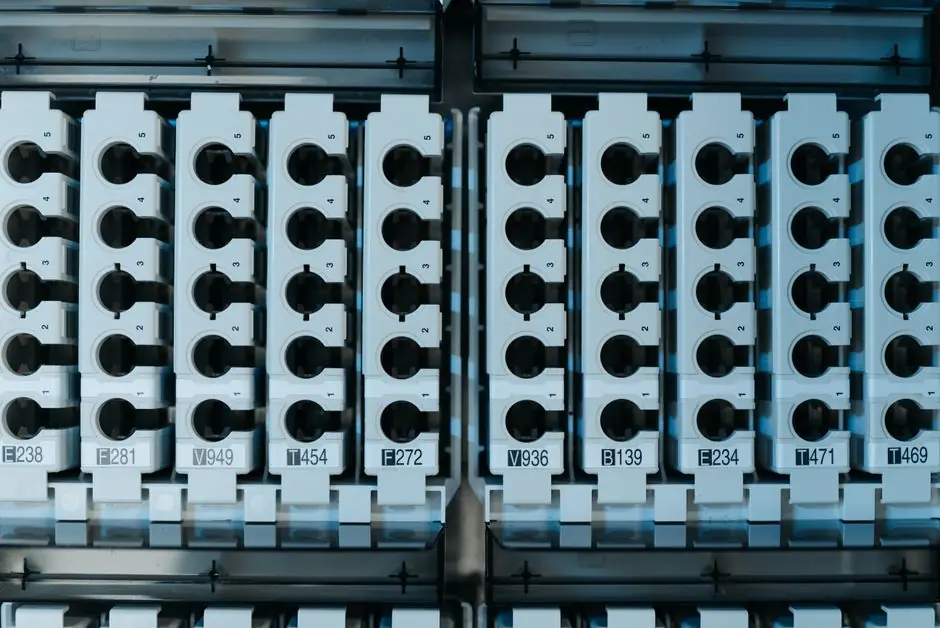
More than 18 data logger manufacturers and over 250 distinct models are catalogued by major B2B distributors as of 2026, covering everything from single-use USB temperature loggers to multi-channel industrial data acquisition systems [S1][S4].
The competitive landscape groups into three tiers: tier-1 full-stack suppliers (Testo, Vaisala, Onset, Hioki, Yokogawa, Campbell Scientific), mid-tier specialists (OMEGA, Rotronic, T&D, Lascar, MadgeTech, Delphin, Sensitech, Dickson, Graphtec, Advantech, Keysight, National Instruments, OMRON, ELPRO-BUCHS, Monnit) [S5], and a long tail of regional or application-specific builders. Buyers can pull a full data logger linecard from this combined pool without sourcing gaps.
Major Suppliers by Geography and Specialization
Testo SE & Co. KGaA (Germany), Vaisala Oyj (Finland), and ELPRO-BUCHS AG (Switzerland) lead the European temperature and humidity segment, with Rotronic AG (now Process Sensing Technologies) holding a strong humidity-only position [S5][S9]. Onset Computer Corporation (US, HOBO brand) and MadgeTech (US) cover North American general-purpose and compliance-grade loggers, while Hioki E.E. Corporation (Japan), Yokogawa Electric Corporation (Japan), and Graphtec Corporation (Japan) anchor Asia's industrial and high-speed acquisition market [S5][S8].
Sensitech Inc. (a Carrier company) and Dickson/Unigage focus on pharmaceutical cold-chain, with Dickson explicitly marketing FDA 21 CFR Part 11 and GxP compliance alongside ISO 9001 certification [S2][S9]. Campbell Scientific, Advantech, Keysight, National Instruments, and Delphin Technology AG serve the industrial process and laboratory DAQ tier, where channel count, sample rate, and protocol support drive selection [S5].
Product Categories and Core Specifications
Standalone data loggers split into four form factors: USB single-use or multi-use loggers, Bluetooth Low Energy loggers for phone-based readout, Wi-Fi loggers for cloud push, and LoRaWAN loggers for long-range facility coverage [S2][S3]. Industrial data acquisition systems (DAQ) are separate: multi-channel chassis with thermocouple, voltage, current, strain, and digital inputs, used for process monitoring rather than compliance.
Representative specs from a stocking distributor: the LogTag TRIX-8 measures -40 to 85 degrees Celsius at plus or minus 0.5 degree Celsius accuracy, runs 2 to 3 years on a coin cell at 25-minute sampling, and ships with FDA 21 CFR Part 11 digital signatures, at a 35 USD price point [S3]. The LogTag HAXO-8 adds 0 to 100 percent relative humidity over the same -40 to 85 degrees Celsius range, at 79 USD [S3]. For comparison, Dickson ships Wi-Fi, LoRaWAN, Bluetooth, and USB variants in parallel product families, with the same sensor electronics but different radios and cloud back-ends [S2].
Selection Criteria and Compliance Drivers
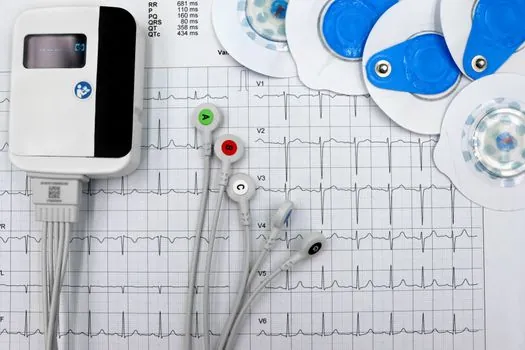
Buyers in pharmaceutical, vaccine storage, food, and blood/tissue banks should filter on FDA 21 CFR Part 11 digital signature support, A2LA-accredited calibration, and validated mapping services, since these are the audit items most often cited in 483 letters and GxP inspections [S2][S3][S6]. Dickson holds an A2LA certificate and runs a dedicated Mapping Suite service, which sets the benchmark for the temperature segment [S2]. For VFC (Vaccines for Children) program storage units, the spec floor is typically plus or minus 0.5 degree Celsius accuracy with a calibrated 2-year certificate and USB or Wi-Fi readout [S6].
For industrial users, the decision matrix hinges on input type, isolation, sample rate, and protocol: thermocouple types K/J/T/R/S/E/N cover most process work, while 4-20 mA current loop inputs tie into existing pressure transmitter and flow meter signals, the same 4-20 mA analog standard that lets HART overlay digital data on the existing two-wire loop. Protocol options include Modbus RTU/TCP, Ethernet/IP, and Foundation Fieldbus for plant-floor integration [S3][S7]. Channel counts scale from 8-channel USB loggers up to 1000+ channels in a PXI or DAQ chassis from Keysight or National Instruments [S5].
Distribution Channels and Sourcing Routes
B2B distributors and aggregators carry most of the catalog and are the practical entry point for one-off or low-volume orders. CAS DataLoggers (Chesterland, OH) lists more than 18 manufacturers under one roof for high-speed, high-accuracy data acquisition, medical and life-sciences temperature alarming, and strain or vibration recording [S4]. MicroDAQ distributes over 30 brands including LogTag, HOBO, Lascar, AEMC, Monarch, Testo, and T&D, and breaks its catalog out by measured variable (temperature, humidity, voltage, current, pressure, thermocouple, CO2, pH, shock, sound level) [S3].
General lab suppliers such as Fisher Scientific stock data loggers alongside meters and chart recorders for research and QA buyers [S10], while industry-specific OEMs like VFC DataLoggers curate VFC-compliant vaccine-storage units as a focused subset [S6]. For buyers in heavy industry, the same distributor model that drives construction machinery and equipment parts sourcing also covers environmental and process loggers, since the regional channel structure overlaps.
Use Cases by Application Vertical
Cold-chain and pharmaceutical: Sensitech, Dickson, LogTag, ELPRO-BUCHS, and Testo dominate, with single-use USB loggers for parcel shippers and multi-use Wi-Fi loggers for fixed refrigerators and freezers [S2][S8][S9]. Industrial process and energy: Yokogawa, Hioki, Campbell Scientific, OMEGA, and AEMC provide multi-channel DAQ for plant monitoring, motor testing, and power quality [S3][S5].
Environmental and meteorological: Campbell Scientific, Onset HOBO, and Vaisala supply weather stations, soil moisture, and CO2 monitoring for agriculture and research [S3][S5]. HVAC and building automation: Dickson, Lascar, T&D, and Monnit cover ambient temperature, humidity, CO2, and differential pressure for cleanroom and hospital monitoring [S2][S3]. Specialized niches include strain and bridge monitoring (AEMC, Measurement Computing), pasteurization validation (S3 Cases-supplied HOBO), and remote tank or well-level monitoring via cellular or LoRaWAN loggers [S3]. For a comparable niche-supplier map in adjacent instrumentation, see this portable gas detector suppliers 2026 maker map and the fixed-installation counterpart at fixed gas detector selection for data centers.
Limitations, Failure Modes, and Specification Gaps
Standalone USB and Bluetooth loggers fail in three predictable modes: battery exhaustion at cold-storage temperatures (lithium coin cells lose 20 to 30 percent capacity below -20 degrees Celsius), condensation on humidity sensors during warm-side door openings, and lost USB connectors in washdown environments [S3]. Wi-Fi and LoRaWAN loggers add radio-coverage risk: a Wi-Fi logger out of range drops data until reconnection, and LoRaWAN gateways must be sized for building attenuation, typically 2 to 4 dB per interior wall.
Industrial DAQ systems have a different failure profile: thermocouple cold-junction compensation drift, ground loops on unisolated analog inputs, and SD card write failures in high-vibration mounting [S4]. Buyers should verify channel-to-channel isolation (typically 500 V or 1000 V RMS), sample rate at full channel count (not just single-channel spec), and onboard memory depth versus expected deployment interval. Compliance buyers also need to confirm that the vendor's 21 CFR Part 11 software supports full audit trails, electronic signatures, and time-stamped data export, since not all "Part 11 ready" claims include the validation documentation auditors expect [S2].
Standards, Calibration, and Documentation
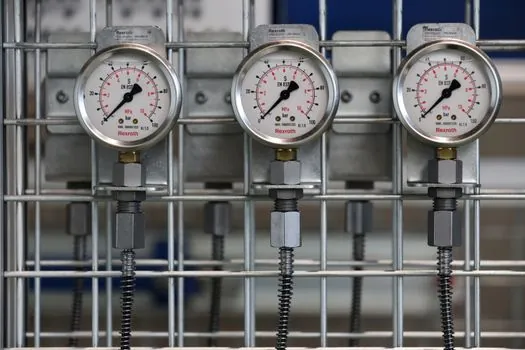
The dominant compliance standard for regulated-environment data loggers is FDA 21 CFR Part 11, covering electronic records and signatures; A2LA-accredited calibration to ISO/IEC 17025 supports traceability [S2][S3]. GxP, ISO 9001, and HACCP documentation sit on top of that stack for pharmaceutical and food buyers respectively [S2]. For industrial process DAQ, the relevant instrumentation standards are IEC 61131 for programmable controllers, IEC 60584 for thermocouple tables, and the 4-20 mA current loop standard (also shared with lighting equipment and electric lamps building-automation integration).
Buyers should request the calibration certificate with measured accuracy data, not just a statement of conformance, and should verify the recommended recalibration interval, which ranges from 1 year for VFC units to 3 years for general industrial loggers [S2][S3]. Sample procurement specs worth standardizing across the supplier list: temperature accuracy of plus or minus 0.3 to 0.5 degree Celsius across 0 to 65 degrees Celsius, humidity accuracy of plus or minus 3 percent RH, battery life at 5 to 15 minute logging, and IP65 or higher enclosure for washdown or outdoor sites [S3].
Next data points worth tracking: vendor 2026 product-line refreshes around LoRaWAN 1.0.4 and Wi-Fi 6E loggers, and any new 21 CFR Part 11 enforcement letters naming specific logger models, both of which are public-record signals that will tighten or loosen this supplier map within 6 to 12 months.