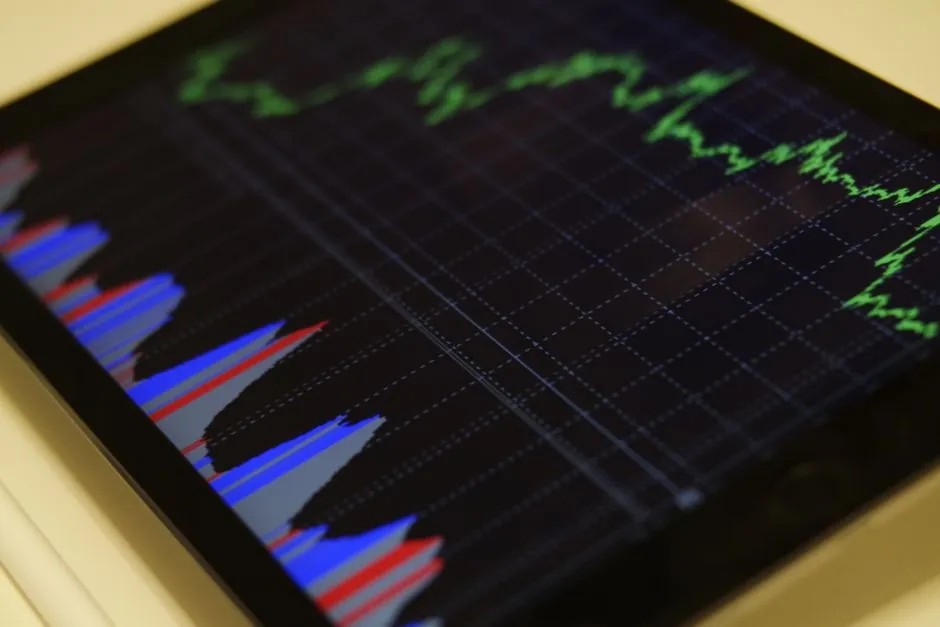
Data logger selection is driven first by the measurand, then by channel count, sampling rate, memory depth, and environmental rating, with modular units such as the HIOKI LR8450-01 supporting expansion to 4 direct-connection modules plus 7 wireless modules for distributed measurement [S4]. Buyers should anchor the spec sheet to the worst-case duty cycle: a logger that can sample at 10 ms on one channel but only 1 s across all channels is a different product than one rated for simultaneous high-rate acquisition [S4].
Standalone USB-connected loggers suit benchtop and short-term field trips, while all-in-one loggers with integrated LCDs and removable storage cards fit portable unattended deployments [S4]. Industrial plants increasingly pair loggers with pressure transmitters and flow meters on the same Ethernet or wireless backbone, so protocol support (Modbus TCP, Ethernet-APL, MQTT, or vendor cloud APIs) is now a first-class selection criterion rather than an afterthought [S1][S3].
Measurand and Sensor Input Match
The first cut is the physical quantity: temperature, relative humidity, pressure, CO2, voltage, current, pulse, or strain, because each maps to a specific transducer family and signal conditioner inside the logger [S1][S5]. Thermocouple types (K, J, T, N, R, S) and RTD curves (Pt100, Pt1000) require matched cold-junction compensation and linearisation tables, while 4-20 mA loops from process transmitters need a shunt resistor and 16-bit or better ADC resolution to preserve loop accuracy [S3][S4].
Buyers should confirm the logger's stated accuracy in engineering units, not just ADC bits: a 16-bit logger reading a 0-50 mV thermocouple input typically delivers effective resolution of about 0.05 °C at best, and noise rejection at 50/60 Hz must be specified for plant environments [S2]. For humidity, look for devices that report both relative humidity and temperature with a stated accuracy band, e.g. ±2.0 %RH and ±0.3 °C, rather than generic "high accuracy" marketing language [S7]. When the measurand originates from a pressure sensor or pressure transmitter on a long cable, verify the logger's common-mode voltage range and isolation rating to avoid ground-loop errors [S3].
Channel Count, Sampling Rate, and Memory
Channel count and sampling rate are coupled: a 30-channel logger running at 10 ms per channel produces 3,000 samples per second, which fills a 16 MB internal buffer in roughly 90 minutes at 16-bit resolution [S4][S6]. For multi-point process monitoring, multi-channel loggers with 16 to 120 analog inputs are common, while high-speed transient capture (e.g. inverter switching, drop tests) requires dedicated loggers with 1 MS/s or faster digitiser modules and streaming to SSD or SD card rather than internal RAM [S3][S4].
Memory planning is arithmetic, not guesswork: required storage in bytes equals channels × samples per channel × bytes per sample × retention period in seconds, and a 1 GB SD card comfortably holds a 16-channel logger at 1 Hz for over a year [S6]. For long-term environmental compliance, look for units that support both internal flash and removable storage, plus optional cloud upload over 4G, Ethernet, or LoRaWAN so the data leaves the site before the card can be lost or damaged [S1][S3]. Users running PLC-integrated SCADA stacks should prefer loggers that publish over Modbus TCP or OPC UA, since proprietary CSV-only formats create integration debt later [S3].
Environment, Power, and Form Factor
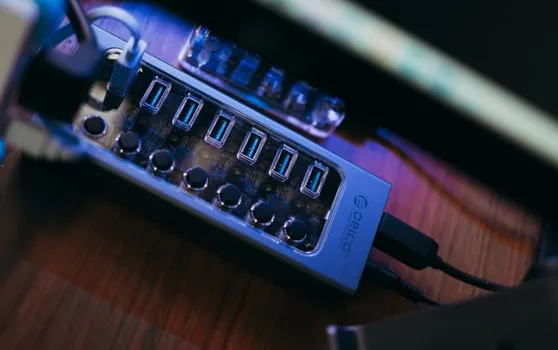
IP rating, operating temperature, and vibration tolerance decide whether a benchtop unit is usable in the field, and most industrial loggers are specified for 0-50 °C indoor duty, while outdoor or washdown deployments need IP65 enclosures and -20 to +70 °C operating ranges [S3][S6]. Battery-powered loggers for cold-chain or remote telemetry commonly run on 2-3 AA cells for 1-3 years at 1-minute logging intervals, but that figure drops sharply if the radio duty cycle is high or the temperature falls below -10 °C, so verify the battery life claim against your real sampling interval [S1][S5][S7].
Form factor matters when the logger mounts inside a control panel, on a machine frame, or inside a vehicle: compact puck-style loggers fit inside enclosures and behind dashboards, while 19-inch rack or DIN-rail units suit permanent plant installations alongside industrial valves and process instrumentation [S3][S6]. For intrinsically safe zones, confirm ATEX or IECEx certification to the correct group and temperature class for the gas or dust present; never assume a generic "hazardous area" label covers Zone 0 or Zone 20 without checking the certificate schedule [S1].
Connectivity, Software, and Compliance Records
Modern data loggers expose data through USB, Ethernet, Wi-Fi, Bluetooth, cellular, or proprietary 900 MHz / 2.4 GHz wireless, and the choice has audit consequences: pharmaceutical and food-grade deployments typically require 21 CFR Part 11 compliant software with encrypted audit trails, while industrial QA applications need CSV or PARADOX export that loads cleanly into statistical packages [S2][S3]. Real-time alerts via email, SMS, or MQTT push are now standard on mid-range loggers and should be specified with a defined trigger latency, e.g. alarm within 10 s of threshold breach, rather than a vague "immediate notification" [S1][S2].
Cloud platforms add value only if they preserve raw data, allow scheduled export, and offer role-based access; avoid closed ecosystems that lock historical data behind a subscription that can be cancelled mid-project [S1][S3]. For regulated industries, also confirm the logger's calibration certificate is traceable to NIST or equivalent national standards, with a recommended recalibration interval of 12 months for temperature and RH loggers and 6-12 months for pressure and electrical units [S7].
Application Fit: When Not to Use a General-Purpose Logger
A standalone temperature/RH logger is the wrong tool for high-voltage power monitoring, where isolation to 600 V CAT III or 1000 V CAT II and dedicated current shunt inputs are mandatory for both safety and measurement integrity [S2][S3]. Likewise, a 1 Hz sampling interval is inadequate for vibration, shock, or rotating-machinery analysis, which demands at least 1 kHz per axis and matched IEPE or charge-mode inputs [S3][S4].
For data logger selection in marine, outdoor, or chemical-exposure settings, generic IP54-rated consumer units will fail within months; specify IP66/IP67 housings, 316 stainless or UV-stable polymer enclosures, and conformal-coated PCBs to survive salt spray or H2S exposure [S1][S6]. Buyers chasing the lowest unit price should also weigh the hidden cost of proprietary software licences, proprietary batteries, and mandatory annual cloud fees, which often exceed the hardware saving over a 5-year deployment [S1][S7].
Shortlist Logic and Final Checks
A four-step shortlist keeps the decision disciplined: (1) lock the measurand list and required accuracy band; (2) set the minimum channel count and sample rate that captures the fastest event of interest; (3) match the environmental rating and certification to the worst-case installation point; (4) confirm connectivity, software, and audit-trail requirements against the end-user's workflow [S2][S3][S5]. Two practical thresholds worth memorising: logging intervals faster than 10 ms across more than 8 channels usually justify a dedicated high-speed digitiser, and any deployment beyond 6 months unattended should pair internal memory with scheduled remote offload to eliminate single-point data loss [S1][S4].
Trackable signals to watch: vendor moves toward Ethernet-APL and OPC UA over 100 Mbit/s single-pair cable, IEC 62443 cybersecurity hardening on connected loggers, and tighter FDA / EMA guidance on electronic records for cold-chain pharma logistics. For related industrial selection criteria, see this spec-driven walkthrough of PCB raw-material sourcing and this field-tested marble cutter failure-mode map, both of which use the same duty-first spec methodology.