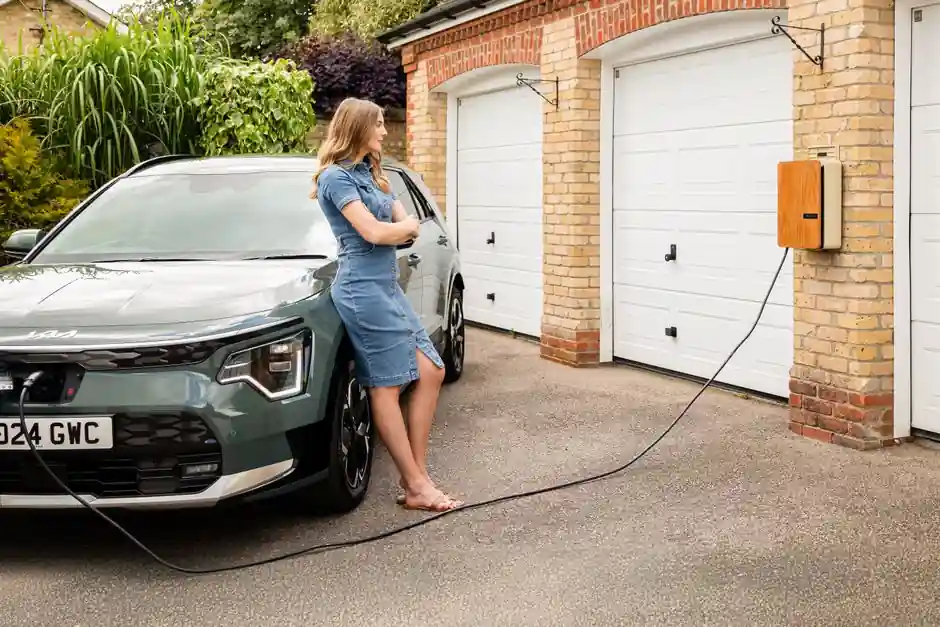
A single 150 kW DC fast charging stall, fully commissioned with utility interconnection and telematics, costs between $57,000 and $174,500, with the DCFC cabinet itself running $18,500–$42,000 [S1]. The remaining 70–80% of the invoice covers transformer upgrades, switchgear, trenching, ADA-compliant civil work, and OCPP-compliant backend integration that is increasingly the make-or-break line item for commercial fleets [S1][S3].
For procurement teams writing RFPs in 2026, the 12-month rolling benchmark from 217 medium- and heavy-duty fleets shows a 150–350 kW DCFC project splitting into five cost lines: hardware (11–24%), electrical infrastructure (13–39%), site prep and civil (4–14%), utility interconnection plus demand-charge mitigation (3–18%), and commissioning plus telematics integration (2–5%) [S1]. That range is per stall, not per charger, because each DCFC needs its own dedicated service feed, thermal monitoring, and UL 1998 / UL 2594 certification path [S1].
Spec the Power Curve, Not the Sticker Wattage
A 350 kW nameplate does not deliver 350 kW to every vehicle in every shift; ambient temperature, battery state of charge, and the vehicle's own charging curve all throttle real-world throughput [S5]. At 32°F ambient, NMC chemistries in Ford E-Transit and Rivian EDV packs cut peak charge rate by 35–42% until the coolant loop reaches 68°F, while LFP packs in BYD T3 and newer Chevrolet Silverado EVs are less cold-sensitive but still require active cooling above 95°F ambient [S1].
Buyers who spec only rated output power without confirming voltage range, maximum current per connector, and dual-port load-sharing rules are the ones calling service vendors at month three [S5]. Common current mistakes: a 240 kW cabinet cannot sustain 240 kW at every voltage, dual CCS connectors may share cabinet output rather than run independently, and high nameplate power can be unavailable if the cable hits its current ceiling first [S5]. Confirm that the station simultaneously covers both 400V and 800V battery platforms expected at the site, and that each connector can sustain its rated current across the full operating temperature window [S4][S5].
Compliance Stack: UL 2594, OCPP 1.6J/2.0.1, ISO 15118
Top-performing fleets target 90-day rolling charger uptime at or above 99.2% versus a 2026 fleet average of 94.7%, with the 0.8% QoQ improvement correlating to UL 2594-certified hardware and a switch to SiC-based AC/DC converters that are cutting conversion losses toward 3.1% [S2]. Required certifications split by region: North America runs UL 2202, UL 2251, and NEC Article 625; Europe uses IEC 61851 and EN 62196; China mandates GB/T 18487 and GB/T 20234; Japan layers in CHAdeMO 3.0 and JIS C 8815 [S4].
OCPP is a procurement control point, not a checkbox: a station that "supports OCPP" but lacks tested integration with your FMS can wreck uptime, billing, and remote diagnostics for the life of the asset [S3]. Geotab requires OCPP 1.6J, Samsara integrates over Modbus TCP, and Fleetio's API demands kWh-level metering accuracy within ±1.5% per ANSI C12.20 [S2]. Field-procurement checklist items include firmware remote-update support, fault-reporting granularity, load-management inputs, user authorization logic, and meter-data alignment with the chosen backend [S3].
Hardware Triage: Connectors, Thermal, Cybersecurity
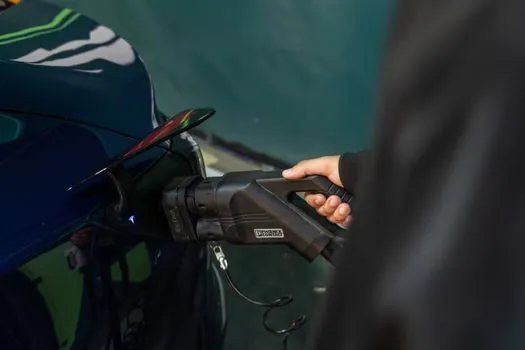
Connector mismatch cannot be fixed in software: CCS1, CCS2, GB/T, and CHAdeMO each lock the station into a vehicle and market segment, so the connector decision must be locked before the quotation lands [S4][S5]. For DC hardware, demand insulation tested to 400–1000V DC with IP65 or higher ingress protection, enclosures at UL94 V-0 flame rating across -40°C to +85°C, and metal salt-spray resistance exceeding 500 hours per ASTM B117 [S4].
High-power liquid cooling is non-optional above 50 kW per station, and insulation resistance plus leakage current must be validated under simulated rainy conditions with a per-serial-number digital test report accessible through a cloud portal [S4][S7]. Cybersecurity weight in vendor scoring sits at 15% under the 2026 framework, anchored by ISO/SAE 21434 conformance, while MTBF weighting runs 25% at the >50,000-hour benchmark and OEM backward compatibility across CCS1/CCS2, CHAdeMO, and GB/T runs 20% [S4].
Lifecycle TCO: Demand Charges Eat the Sticker Savings
A 90-day rolling uptime target of ≥99.2% versus the 94.7% fleet average is now a procurement clause, and a four-column comparison framework against the typical install helps keep TCO honest: charger uptime, energy loss from AC→DC conversion, MTBF, and OEM warranty overlap all roll into the per-kWh-delivered cost [S2]. On PG&E's EV-A tariff, two 150 kW chargers running simultaneously at peak add $22/kW of demand charge, a $6,600 monthly penalty that disappears the moment a load-management controller is added to the spec [S1].
Modular power stacks that scale from 50 kW to 350 kW through 3–5 hot-swap modules cut CapEx 15–25% versus fixed-configuration cabinets, and they also reduce mean time to repair because a failed module is swapped, not a full unit [S4]. Plug & Charge per ISO 15118, V2G/V2H bidirectional capability, and OCPP 2.0.1 backend support are the three future-proofing axes the 2026 shortlist keeps coming back to, with charging standards now evolving on a 3–5 year cycle [S3][S4]. Maintenance must be contracted as a service plan, not a warranty, with stated response time, labor coverage, spare parts commitment, remote support, and clear repair responsibility lines [S5].
Site and Grid: The Step Buyers Skip Most
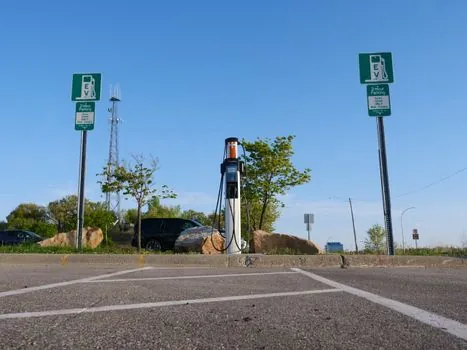
The single most expensive DC procurement mistake is ordering the charger before defining the site: vehicle demand, dwell time, electrical supply, and operating model should drive the spec, not the other way around [S5]. Pre-installation work that prevents the 42-vehicle-hour fault event documented in a Phoenix fleet retrofit includes a transformer capacity and voltage-stability audit, NEC 220.53 load calc with 125% continuous-load factor, and a grounding-and-bonding audit against the 25-ohm ceiling per NFPA 70E, since ground resistance above 100 ohms has triggered phantom CAN bus errors (P0A0F, U0100) and regen-braking dropouts in 68% of retrofits surveyed [S2].
Pulling this engineering into a dedicated pre-design step is also where fleet managers start to overlap with adjacent instrumentation work, from current-loop telemetry behind a pressure transmitter on the utility feed to encoder feedback chained to a linear guide inside a robotic dispenser arm. For mixed-vendor sites, demand interoperability tests covering vehicle communication, payment, RFID, backend, and remote-control flows before any large deployment rolls out, and keep expansion headroom in the layout so additional power, cabling, and parking bays can be added without re-civil [S5]. Trackable signals worth watching next: a second-quarter 2026 industry push on SiC inverter pricing, and any revision to UL 2594 / ISO 15118 conformance test benches that broadens the qualified-vendor list.
For component-level specifications, see crossed roller guide.
Background reading: EV Traction Motor Procurement: Spec Bands, Topologies, and 2026 Shortlist Criteria.