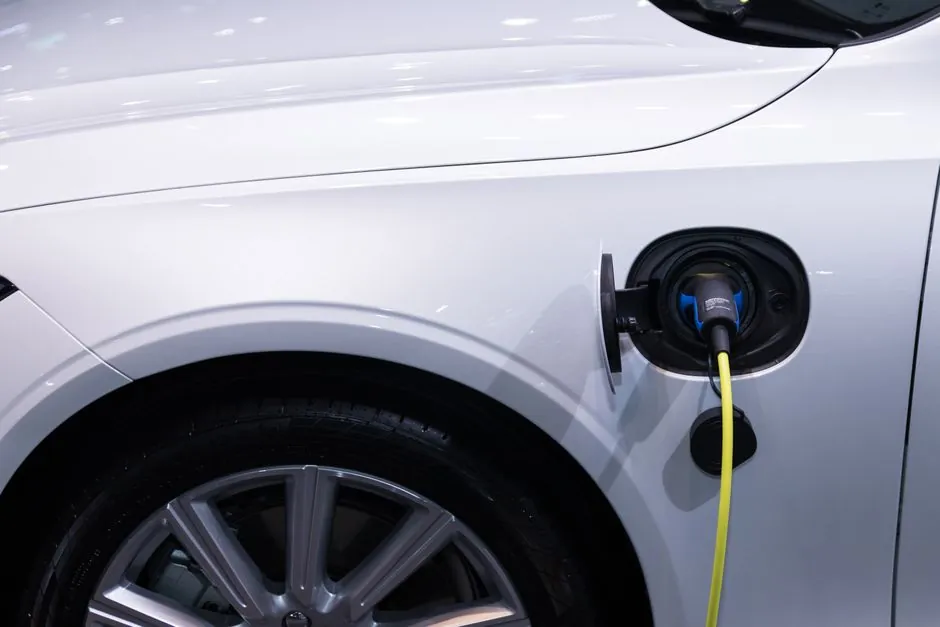
EV traction motors sized for passenger cars in 2026 cluster in a 60-250 kW single-motor radial-flux envelope, with the 200-400 kW band representing nearly 24% of the global market by value, the most versatile slice for mid-size passenger EVs and regional trains [S1].
The working assumption for any spec engineer is that a 2026 RFP can credibly request NdFeB PM, ferrite-PM, wound-rotor externally-excited synchronous, or squirrel-cage induction architectures, each with different cost, efficiency, and continuous-power profiles, because permanent-magnet motors held above 75% share of the electric car market every year from 2015 through 2024 [S4]. Procurement teams that lock the topology question first, then size the inverter DC-link, are the ones that avoid costly requalification when magnet supply tightens again.
Binding Spec Criteria: Voltage, Torque, Speed, Cooling
Voltage class is the first gate: 400 V/800 V silicon-carbide inverters now define the passenger-EV DC bus, with 1.5 kV and 3 kV DC rails for heavy commercial, and 25 kV AC mainline for rail traction, which is why a single 230 kW Bosch unit (150-230 kW continuous, 430 N·m peak, 0-14,000 rpm) targets 800 V fuel-cell and high-voltage battery applications inside the 200-400 kW mid-band [S1][S5].
Peak torque versus continuous torque is the second gate, with 2,200 N·m flagged as a 2026 ceiling in the WEMS family; rotational speeds span 900 rpm geared low-end to 7,000 rpm direct-drive, and 100,000 rpm in a 42 mm BLDC such as the ZIEHL-ABEGG PBL4208025 [S5]. Cooling and IP envelope close the spec: ABB's AMXE250L3GLC heavy-vehicle synchronous unit delivers 436 kW peak with 1,500 N·m continuous at 3,150 A, IP66, water-glycol coolant (40-60% mix) at 65 °C nominal, with Amphenol PowerLok X-coded high-voltage connectors and M12 low-voltage signal connectors, mass 490 kg [S1]. Compare that with GEM Motors' G1-3 2.3 kW / 160 N·m peak / 7 kg / IP67 micro-mobility unit: the IP rating and coolant strategy matter as much as the kW number on the nameplate.
Topology Decision: PM, Wound-Rotor, Induction, Axial-Flux
Permanent-magnet synchronous motors (PMSM) still dominate passenger-EV programs, with switched-reluctance and asynchronous (induction) variants gaining share as OEMs target rare-earth-free designs [S1]. The diversification is concrete: Renault and BMW adopted wound-rotor synchronous machines, Audi uses induction motors, and Tesla announced a 2023 next-generation PM motor that eliminates rare earths and instead uses ferrite-based alternatives, a 2026 sourcing reality [S4].
Axial-flux machines route magnetic flux parallel to the rotation axis (versus perpendicular in radial-flux), giving higher power and torque density in a flat pancake form factor that suits in-wheel, transaxle, and eVTOL packaging; Turntide's AF430D double-stack unit produces 190-720 kW peak, 90-201 kW continuous, with 1,938-1,948 N·m peak torque at 582-1,172 A on water-ethylene-glycol coolant, mass 105 kg at 3,700 rpm [S1][S4]. The trade-off is supply base: axial-flux tooling lead times remain long, and in-wheel mounting adds unsprung-mass and NVH penalties even though the global in-wheel motor sub-segment is projected to grow from USD 808 million (2021) to USD 4,395 million (2026) at 40.3% CAGR [S4].
Supplier Landscape and Power-Band Mapping

Roots Analysis lists 20+ named manufacturers including ABB, BorgWarner, BHEL, Continental, DENSO, GE, GKN Automotive, Hitachi, Hyundai Mobis, Jing-Jin Electric, Mahindra Electric, Mitsubishi Electric, Nidec, Parker-Hannifin and Regal Beloit; The Business Research Company separately names Siemens, ABB, Hitachi, CRRC, Robert Bosch, Parker-Hannifin, BHEL, Nidec, Kawasaki Heavy Industries, AMETEK, Mitsubishi Electric, CG Power, Toshiba, Alstom and Continental [S1]. Below 200 kW covers most light-duty passenger cars, 200-400 kW covers mid-size and performance EVs plus passenger rail, and above 400 kW covers heavy commercial vehicles and locomotives, so the supplier pool splits cleanly by band [S1].
DirectIndustry's 2026-06-24 sweep of 26 manufacturers and 101 products shows the mid-power segment dominated by Chinese rail specialists CRRC Yongji Electric and CRRC Zhuzhou Electric, Italian system integrators (COMER S.r.l., C.F.R. Srl, Cantoni Motor), and German mid-power players including ABM Greiffenberger and ZIEHL-ABEGG, with a 54-205 kW / 80-7,000 rpm / 205-2,200 N·m envelope in the WEMS series [S5]. CRRC Yongji's 2006 market-share disclosure, near 80% in Chinese diesel locomotives and 40% in electric locomotives, still anchors its position as the principal domestic traction-motor source for both rail and oil-drilling duty, and the firm holds ISO 9001, IRIS, ISO 14001 and OSHMS certifications with technology-transfer lineage from GE, EMD, ALSTOM, HITACHI and Siemens [S5].
Rare-Earth Risk and the Magnet-Free Sourcing Path
Neodymium supply is the upstream variable that gates PM-motor cost: the neodymium market is tracked from USD 2.1 billion (2025) to USD 5.0 billion (2036) at 8.0% CAGR, with magnet prices peaking in 2021/2022, settling in 2023, and remaining a live risk into 2025 [S4]. The Chinese supply concentration plus export controls means any 2026 RFP that locks in NdFeB without a written alternate-source clause is exposed to a price shock that can invalidate a fixed-price contract.
Procurement teams that issue a magnet-optional RFQ, asking bidders to quote both NdFeB and ferrite-PM or wound-rotor alternates, can compare like-for-like on cost per kW continuous. The wider automotive motor market sits at USD 39.38 billion in 2025 forecast at 6.22% CAGR through 2031, with DC brushed units as the fastest-growing segment, and the EV-traction slice grew from USD 17.77 billion (2025) to USD 24.83 billion (2026) at 39.7% CAGR per the same Roots Analysis dataset [S1][S4]. For context on how this compares to another magnet-heavy procurement category, see the LFP-dominant BESS sourcing map at LFP-Dominant BESS Procurement: 2026 Spec, Cost, and Risk Map.
Compliance, Hazardous-Area, and Rail-Certified Builds

Compliance gates the spec sheet before the price does: ISO 26262 is the automotive functional-safety baseline that any traction inverter + motor pair has to be designed against, while rail builds need EN 50126 / EN 50128 / EN 50129 evidence at the system level, and ATEX/IECEx zone-classified duty, for example in mining or hydrogen fuelling, is met by flameproof Ex db / Ex eb units such as the (E)cSTe(b)80-IE3 frame covering 0.55-1.1 kW at 1,500-3,000 rpm, -20 °C to +40 °C, VSD-ready ("-f") execution [S3][S5].
AC-motor efficiency tiers per IEC 60034-30-1 and EU Commission Regulation 2019/1781 (amended by 2021/341) define the IE3/IE4 bands that mid-power European suppliers publish; IE4 four-pole general-purpose motors (4SIE200 series) sit in the 18.5-37 kW, 20.7-63 A, 97-212 N·m band at 50 Hz S1 duty, insulation class F [S5]. For hazardous-area or hydrogen-handling builds, the AC motor reference clarifies why zone classification, not just IP rating, is the binding spec for spec sheets. Traction drives in the 60-250 kW band overlap with industrial drive motor selection on the inverter and field-oriented-control (FOC) question, so cross-referencing that encyclopedia entry helps align motor and inverter sourcing on the same control-loop assumptions.
Shortlist Criteria: Seven Filters to Apply Before Quoting
The 2026 shortlist should apply at least seven binding filters in this order: (1) voltage and DC-link class, 400 V/800 V SiC inverters, 1.5 kV DC rail, 3 kV DC rail, 25 kV AC mainline; (2) peak torque versus continuous torque, with 2,200 N·m as the WEMS 2026 reference ceiling; (3) peak speed and field-weakening range, where BLDC drives such as the 100,000 rpm PBL4208025 demonstrate the upper bound and traction units cluster at 7,000-14,000 rpm direct-drive; (4) cooling architecture and IP rating (IP66/IP67 are the common traction benchmarks); (5) topology and magnet exposure (NdFeB PM, ferrite-PM, wound-rotor EESM, induction); (6) functional-safety evidence to ISO 26262 and any sector overlays (EN 5012x for rail, ATEX/IECEx for hazardous area); (7) supplier financial health and dual-source feasibility [S1][S5].
Filter (5) deserves a magnet-free sub-quote on every 2026 RFP: induction motors used by Tesla on certain Model 3/Y variants and externally-excited synchronous machines on the Renault and BMW paths drop the rare-earth dependence at the cost of either heavier packaging or more complex rotor control [S7]. Pricing reality is that the low-power and two-wheeler tier (sub-3 kW) is served by GEM Motors, Johnson Electric, and similar micro-mobility specialists and is not in the same bid pool as the 200+ kW Bosch / ABB / CRRC suppliers, so the RFQ should be tiered rather than mixed [S1]. For a structured comparison of how torque density and power-band weight differently across radial-flux, axial-flux, and in-wheel layouts, the linear motor encyclopedia entry clarifies the flux-path trade-offs that apply to axial-flux traction machines in a different geometry.
Failure Modes and Trackable Signals for 2026 H2
Three failure modes dominate EV traction-motor warranty data: insulation breakdown from coolant-glycol leaks at the stator end-windings, bearing fluting from SiC-induced common-mode voltage at high switching frequency, and demagnetisation under field-weakening at sustained high rotor temperature. The 2023 Tesla rare-earth-free PM announcement and the 2023-2025 wound-rotor shift at Renault and BMW are the procurement-relevant signals that the magnet-free path is no longer experimental [S4].
Two trackable signals to monitor into 2026 H2 are the neodymium spot-price index and CRRC Yongji's export share to non-Chinese rail customers, both of which directly affect landed cost on a 100 kW PMSM e-axle. Procurement teams that capture the magnet-vs-ferrite cost delta on every quote, even when the chosen topology is PM, will be the ones that can requote inside a 60-day window if a supply shock lands. A reference baseline for the magnet-vs-alternate trade-off and how it shows up in cell-level sourcing of other EV subsystems is given in the cathode material OEM vs ODM manufacturing map, which uses the same rare-earth exposure logic for the battery side.