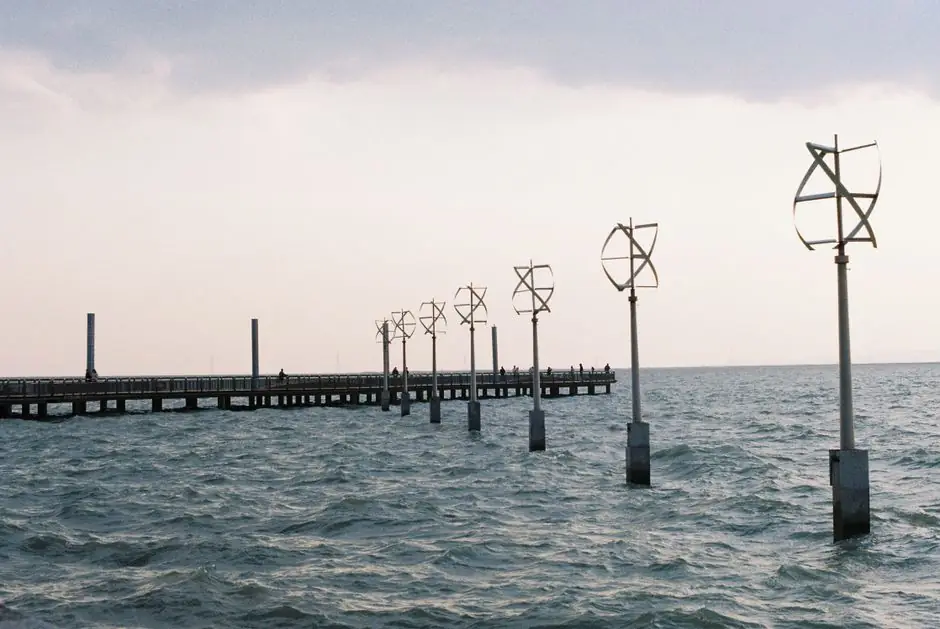
Mainland Chinese fabricators supplied 26% of all offshore wind turbine foundations installed outside Asia-Pacific in 2025, up from near zero in 2020, a structural shift Westwood quantified in April 2026 [S1][S9]. That share sits inside a fixed-bottom segment that still accounts for 99.62% of installed volume, with monopile diameters now routinely passing 8 m and piling depths beyond 40 m [S1][S5].
The global market value is on a path from USD 45.2B in 2026 to USD 93.5B by 2033, and the 15-20 MW turbine class is the demand wedge pulling Chinese yards, European mills, and Korean fabricators into a single bottleneck [S1]. A spec engineer who treats the Chinese supply base as a single low-cost block will miss the real differentiation by plate grade, weld class, and yard geography.
Where Chinese Fabricators Sit in the 2026 Supplier Stack
CS WIND Offshore (Denmark) holds roughly 20% of the global monopile foundation market, the single largest share, while the top tier is completed by Haizea Wind Group (Spain) and Rainbow Heavy Industries (China) [S1]. Chinese yards captured their 26% non-APAC share through a five-year build-out that combined large-diameter plate rolling capability with competitive EUR-denominated bids on European tenders [S9].
Fixed-bottom foundations are forecast to remain 99.62% of the market by installation volume through the late 2020s, and floating semisubmersibles, while posting a 42.1% CAGR, will not displace monopile and jacket volume inside the 10-60 m water-depth window that defines most operating sites [S1]. For a buyer comparing a foundation vehicle tender, the practical question is which substructure family matches the metocean envelope, not which country is cheapest this quarter.
Standards That Gate a Chinese-Yard Monopile Order
Two design codes frame every serious 2026 monopile purchase: DNVGL-ST-0126 (Support structures for wind turbines) and ISO 19902 (fixed steel offshore structures), both of which are now being pushed past their original oil-and-gas databases by diameters triple the legacy pile sizes [S5]. Procurement specifications should require mill test certification to EN 10204 3.2, plate grades S355 or S420, and through-thickness Z-grade where transverse loading governs the welds [S5].
Weld procedure qualification to EN 1090-2 EXC3 or EXC4 has become the default ask on primary tubular joints, with project-specific fatigue spectra layered on top, and DNV fatigue class D or E is common for grouted connections on turbines above 10 MW [S1][S5]. On the Chinese side, GB/T 36569-2018 sets the domestic technical baseline for offshore wind turbine foundations, covering environmental conditions, design selection, and O&M, and any Chinese yard tendering into Europe must show that its GB/T 36569-2018-based design is reconciled against DNVGL-ST-0126 site-specific CPT data [S2][S4]. For floating substructures, NB/T 11378-2023 is the equivalent Chinese guideline for mooring and foundation design, again as a reference, not a substitute, for the DNVGL-ST-0119 and IEC 61400-3-1 floating-wind code set [S7].
Selection Criteria: Plate Thickness, Yard Geography, Weld Class
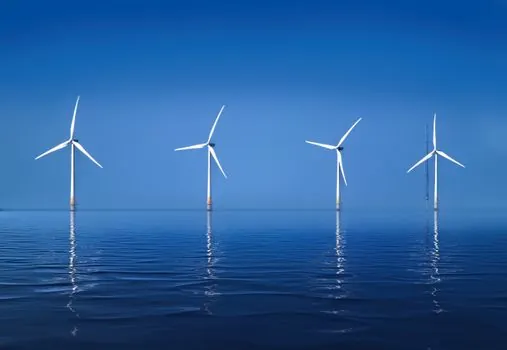
Three decision criteria separate a working shortlist from a low-cost trap in 2026. First, plate availability above 100 mm wall thickness: European mills and CS WIND hold the deepest order books for heavy-gauge S355/S420 plate, and that is the binding constraint before assembly bay length even matters [S1][S5]. Second, yard geography: marshalling-port draught and tow distance to the wind farm beat headline unit price, which is why Spanish yards win Mediterranean work and Chinese yards dominate Asia-Pacific tenders despite longer North Sea transits [S1]. Third, weld and execution class: EN 1090-2 EXC4 plus a project-specific WPS list is the new minimum for any 15 MW monopile, and buyers should require recent weld procedure qualification records on plate of equal or greater thickness [S1][S5].
For jacket and tripod substructures, weight per foundation runs 800-1,200 t versus 800-1,500 t for a current monopile, but the fabrication is more distributed, modular node castings and grouted sleeve connections are the cost levers, and the supplier base is wider and less concentrated than the monopile top three [S1][S3]. Spec engineers planning hydraulic packs and linear guide assemblies for jacket pin sets should plan for that distributed supply chain rather than single-yard sourcing.
Vessel and Installation Constraint: The 2026 Bottleneck
Foundation demand in 2026 is gated by self-propelled jack-up (SPJ) fleet leg length, deck load, and crane reach, not by mill order book intent, and hostile-weather downtime is the structural drag that breaks installation campaigns above certain sea-state thresholds [S3]. A2SEA, Fred. Olsen Windcarrier, Gaoh Offshore, Geosea, Jack-Up Barge, MPI-Offshore, SEAFOX, Seajacks, Swire Blue Ocean, and Van Oord remain the active installation contractors shaping what can actually be lifted in any given quarter [S3].
The implication is concrete: a 2026 monopile PO needs an installation window contractually tied to SPJ availability, not just a steel-mill delivery slot, and the same wave-and-current loading that drives structural sizing also sets the operating envelope for the hammer and the grouting crew [S3]. Buyers running long Chinese-yard-to-North-Sea transit chains should price the schedule risk of bad-weather windows into the industrial valve and grout-line instrumentation spec, since rescheduling a tow costs more than upgrading a sensor.
What Chinese Yards Can and Cannot Deliver in 2026
Chinese fabricators are now competitive on monopile diameters above 8 m and on jacket fabrication for the 30-60 m water-depth band, and their EUR-denominated bids have reset European tender pricing over the last 24 months [S1][S9]. They are weaker on gravity base structures (GBS), which need nearshore graving docks and concrete-batch logistics that few Chinese yards have built out, and on serial XXL monopile production above 15 MW that requires >100 mm wall plate and tight through-thickness Z-property control [S1][S5].
For floating semisubmersibles, the Provence pilot offshore France reached full power on 2026-07-15, and floating concepts are now past pilot scale, but Chinese floating-wind supply chains are still in build-out and most credible floating bids are still European or Korean [S5]. A spec engineer matching a crossed roller guide slew bearing on a floating turbine should expect a different supplier map than for a fixed-bottom monopile.
Reliability and Sourcing Checklist for a 2026 Chinese-Yard PO
Use this four-point gate before signing. (1) Design reconciliation: the yard's GB/T 36569-2018 design pack must be cross-checked against DNVGL-ST-0126 site-specific p-y and t-z curves from CPT data; the legacy API 2W/2Y database is not a substitute [S2][S5]. (2) Plate traceability: EN 10204 3.2 mill certificates, S355 or S420 grade, through-thickness Z-grade where the monopile is transverse-loaded, and documentary evidence of rolling-mill capability above 8 m diameter [S5]. (3) Welding: EN 1090-2 EXC3 or EXC4 execution class, fatigue S-N curve class D or E for grouted connections above 10 MW, and project-specific WPS on equal or greater plate thickness [S1][S5]. (4) Logistics: confirmed marshalling-port draught at the loading berth, tow-route survey, and a contractual installation window aligned to a named SPJ vessel class [S3].
For buyers who want the broader drivetrain picture, the parallel escalation in the gearbox, main versus yaw, onshore versus offshore, is mapped in a turbine gearbox sourcing reference that follows the same Chinese-yard logic. Chinese fabricators are not the answer to every 2026 foundation need, but inside the 6-10 m monopile, 30-60 m jacket, and standard S355/S420 plate envelope, they are now a default line item, not a discount option.